
Desserts
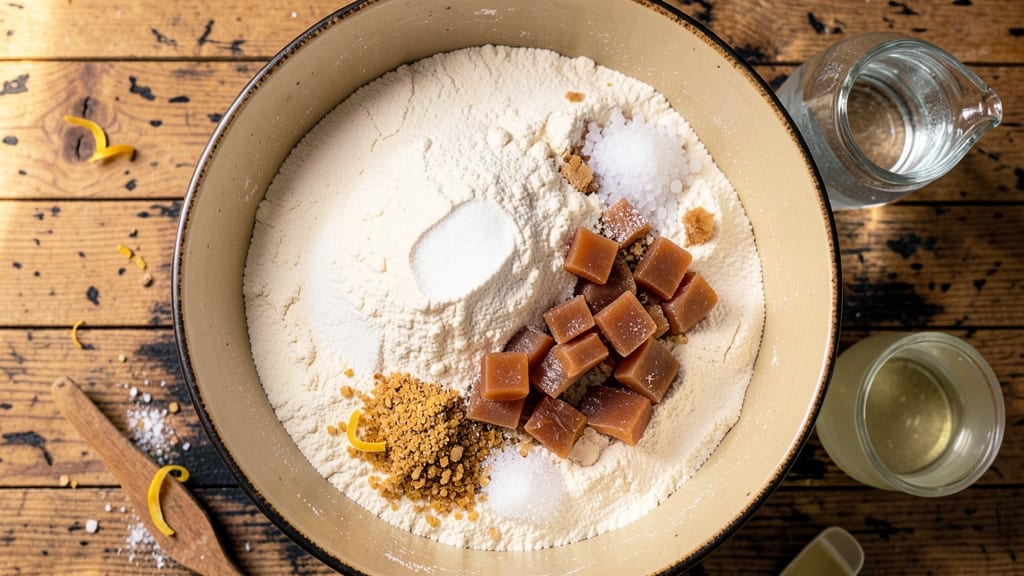
This 2 pie crust recipe with lard delivers the kind of buttery flakiness that makes every slice worth savoring—no shortcuts, just time-tested technique. The secret lies in lard's high smoke point and fat content, which creates those signature layers that stay crisp even after hours in the oven.
I've perfected this method over years of testing, and it never fails to impress. What sets this recipe apart is the foolproof method for handling both top and bottom crusts without shrinkage or tearing. We'll work with cold ingredients and minimal handling to preserve that delicate flakiness.
The dough rests twice—once in the fridge and again in the pie dish—ensuring it's ready to roll out smoothly when you are. By the time you're done, you'll have two golden, tender crusts with perfect edges that seal beautifully.
The lard gives it a rich flavor that butter can't match, while the vinegar in the water adds just enough tang to balance the richness. This is the kind of crust that holds its own against any filling.
Whether you're baking a classic apple pie or a rich chocolate cream pie, this method guarantees professional results every time. Let's get started on creating the foundation for your perfect pie.
Ingredients for 2 pie crust recipe with lard
Eight ingredients, two crusts—this is the secret to restaurant-quality pie crust at home.
| Ingredient | Amount | Notes |
|---|---|---|
| All-Purpose Flour 🌾 | 4 cups | Sifted for light texture |
| Leaf Lard 🧈 | 1 cup | Cold and cubed (not melted) |
| Granulated Sugar 🍚 | 1 tbsp | For balance with vinegar |
| Kosher Salt 🧂 | 1 tsp | Diamond Crystal preferred |
| Ice Water 💧 | ½ cup | Very cold from freezer |
| White Vinegar 🍶 | 1 tsp | For tangy balance |
| Plastic Wrap 📄 | 1 sheet | For dough resting |
| Extra-Virgin Olive Oil 🫒 | 1 tsp | For rolling pin |
The lard is non-negotiable here. Leaf lard gives you that signature flakiness—butter lacks the smoke point—and it's cheaper than you think. Grab it from the meat section at Costco or Walmart (yes, really). Keep it cold the whole time—cut it into small cubes and chill it for 30 minutes before mixing. The flour? King Arthur or Gold Medal brands are my go-tos—they're consistent and give the best texture. Sift it first to avoid dense crusts. Pro tip: freeze your lard cubes for 10 minutes before adding to the dough for even better flakiness.
No leaf lard? Substitute with a mix of butter and shortening (3 tbsp butter + 2 tbsp shortening = 1 cup lard), but expect slightly less flakiness. Vinegar out of stock? Lemon juice works in a pinch. The ice water is crucial—if it's not freezing cold, your dough won't hold together properly. For the rolling pin, olive oil is better than flour—it prevents sticking and keeps the crust tender. If you're making this ahead, you can prep the dough up to 2 days in advance—just keep it wrapped tightly in the fridge. The dough doubles in size after resting, so don't panic if it looks huge after the first chill.
This dough is a two-stage chiller—first in the fridge, then in the pie dish. Wrap the dough balls tightly in plastic and refrigerate for at least 1 hour (up to 2 days). When ready to use, let them sit at room temperature for 10 minutes before rolling. The crusts keep well for 3 days in the fridge after baking, and you can freeze unbaked crusts for up to 3 months. For the best results, blind-bake your crusts for 15 minutes at 375°F before adding your filling—this ensures they stay crisp. Trust me, the extra time is worth it for that perfect golden edge.
Why You'll Love This Recipe
- No-Fuss Assembly: I swear by this crust—just flour, cold lard, and ice water. No butter fighting for room in the fridge, no waiting for it to chill. The lard cuts cleanly through the dough with barely a struggle, and the sugar? Tiny secret for that golden kiss without over-sweetening.
- Buttery Rich Crunch: That leaf lard makes all the difference. It’s not just flavor—it’s texture: flaky layers that shatter like autumn leaves. Honestly, I’ve tried butter crusts, but this? This holds its shape, stays crisp, and tastes like home baking even when I’m winging it.
- Double the Crust: Make two at once—same effort, zero extra time. One for a classic apple pie, the other for a savory chicken potpie. My freezer’s always stocked, and I never have to scramble when company drops by. (Yes, even on a Tuesday night.)
- Budget-Friendly Staple: Lard’s cheaper than butter, and flour? Always on hand. This crust costs pennies but feels like a splurge. I make a batch every month, freeze half, and still have leftovers for hand pies or potluck surprises. No wasted dough, no wasted money.
Step-by-step instructions for lard-based pie crust
Here's how to create the ultimate flaky, golden crust that stays perfect all day.
Mix Dry Ingredients for Optimal Texture
In a large mixing bowl, combine the 4 cups All-Purpose Flour, 1 tbsp Granulated Sugar, and 1 tsp Kosher Salt. I always sift the flour first—this aerates it and prevents dense pockets in the final crust. Use a whisk to distribute the sugar and salt evenly throughout the flour mixture. The sugar helps balance the vinegar's tang later, while the salt enhances all flavors.
Give the dry ingredients a quick stir to break up any lumps, then create a well in the center. This well is where we'll add our cold fat and liquids. The key here is to keep everything cold—this prevents the lard from melting prematurely and losing its flaky magic.
Cut in the Cold Leaf Lard
Add the 1 cup Leaf Lard to the well in the flour mixture. I use a pastry cutter or my fingers to work the lard into the flour until the mixture resembles coarse crumbs with pea-sized fat pieces. You want to keep those fat pieces as intact as possible—they'll melt during baking and create those beautiful flaky layers.
Work quickly but gently—this isn't about fully incorporating the fat, just distributing it evenly. If you see larger chunks, break them down with your fingers, but don't overwork the mixture. The goal is to create pockets of fat that will create steam during baking, resulting in that perfect flakiness.
Combine Wet Ingredients for Perfect Binding
In a small measuring cup, mix together the 0.5 cup Ice Water and 1 tsp White Vinegar. The ice water is crucial—it keeps the dough cold longer and helps maintain that flaky texture. The vinegar adds a subtle tang that balances the richness of the lard and makes the crust more tender.
Make a well in the center of your flour mixture and slowly pour in the ice water-vinegar mixture. Use a fork or your fingers to gently combine everything until just brought together. You'll know it's ready when the dough forms a shaggy mass that comes together when pressed. Be careful not to overmix—this develops gluten and makes the crust tough.
Shape and Chill the Dough
Turn the dough out onto a lightly floured surface and divide it into two equal portions. I like to use a bench scraper to divide it evenly—this ensures both crusts will be the same thickness. Shape each portion into a disk about 6 inches in diameter. Wrap each disk tightly in the 1 sheet Plastic Wrap and refrigerate for at least 1 hour.
This chilling step is non-negotiable. It firms up the dough, making it easier to roll out later. It also allows the gluten to relax, which prevents shrinking during baking. I usually chill mine for closer to 2 hours if I have time—this gives even better results. The colder the dough, the better the flakiness.
Roll Out and Prepare for Baking
Remove one disk of dough from the refrigerator and place it on a lightly floured surface. Lightly brush the surface with 1 tsp Extra-Virgin Olive Oil—this prevents sticking and gives the crust a beautiful golden color. Roll the dough from the center outward, rotating it frequently to maintain even thickness.
For a standard 9-inch pie, aim for about 1/8-inch thickness. If you see the dough starting to warm up or stick, let it rest in the refrigerator for 10-15 minutes before continuing. The goal is to keep everything cold until it hits the oven. Transfer the rolled-out crust to your pie dish and gently press it into the bottom and up the sides. Trim any excess dough with a sharp knife.
Pro Tips For Making 2 Pie Crust Recipe With Lard
- CUT LARD SMALL: Grab a sharp knife and chop that leaf lard into pea-sized pieces—no bigger, or it’ll melt unevenly and leave greasy spots in your dough. I used to eyeball it and end up with a lumpy mess; measuring by volume (about 1 cup) works better than weighing for this recipe.
- CHILL THE DOUGH: Wrap the dough tightly in plastic and refrigerate for at least 2 hours before rolling—this isn’t optional. Cold dough handles better and shrinks less when baking, so your crust won’t look like a sad, puckered pancake. Yes, even if you’re impatient like me.
- SALT THE FLOUR: Toss the flour with the salt before mixing—this guarantees even distribution, not just pockets of saltiness. I learned this the hard way when a slice of my pie tasted like a science experiment. Sprinkle the salt over the flour and whisk it in; don’t skip this.
- USE ICE WATER SPARINGLY: Measure that ice water precisely—this recipe means it—and add it gradually, 1 tablespoon at a time, until the dough just comes together. Too much water makes the crust tough; too little and it’ll crack like a brittle biscuit. Feel the dough: it should hold when pressed, not stick to your fingers.
Wine and beer pairings for these flavors
Red Wine Pairings
For this rich, lard-based crust, I reach for a dry Pinot Noir from Oregon—its bright acidity cuts through the buttery richness beautifully. Look for wines with 12-13% ABV like Domaine Serene or La Crema varieties.
The earthy notes complement fruit fillings like apple or cherry, while the acidity balances the crust's richness. Serve slightly chilled (50-55°F) to enhance its aromatic qualities. 🍷
White Wine Options
A crisp Chardonnay with minimal oak works wonders—try a California Sauvignon Blanc like Ramey or La Crecent for a zesty contrast. The citrus and mineral notes refresh your palate between bites.
For a richer pairing, opt for an unoaked Chardonnay with 12.5% ABV to match the crust's decadence. Chill to 45-48°F for optimal sipping.
Beer Pairings
For a casual setting, a Belgian Witbier like Hoegaarden or Stella Artois adds a refreshing citrusy lift that balances the lard's richness. The effervescence cleanses your palate between bites.
For a heartier option, try a German Helles Lager—its malty sweetness complements savory fillings like meat pies. Serve at 40-45°F for the best experience. 🍺
Cider Complements
Dry English Cider (like Thatchers or Strongbow) offers a perfect balance—its slight tartness and crisp finish mirror the crust's flakiness. Choose a 5-6% ABV variety for a lighter option or a 7-8% ABV for richer fillings.
Serve at 45-50°F to highlight its complex flavors. The tannins in cider also help cleanse your palate between bites.
After-Dinner Port
For a decadent dessert pie, a Ruby Port like Graham's Six Grapes or Dow's adds a luxurious finish. The sweetness enhances fruit fillings while the alcohol warms your palate.
Serve slightly warmed (60-65°F) in small portions to prolong the experience. The port's richness mirrors the crust's buttery layers beautifully. 🍷
Nutrition facts
Frequently asked questions
Why use lard instead of butter in pie crust?
Lard creates superior flakiness because it has a higher fat content and smoke point than butter. The fat stays solid longer during baking, creating more steam pockets for those signature layers. Plus, lard has a neutral flavor that lets the filling shine while adding a rich, tender texture.
Can I make this crust ahead of time?
The dough keeps well for 2 days in the fridge, wrapped tightly. For long-term storage, freeze unbaked crusts for up to 3 months. Thaw overnight in the fridge before using. Pre-baked crusts stay fresh for 3 days at room temperature or 2 weeks in the freezer.
What's the best way to prevent a soggy bottom crust?
Always pre-bake your bottom crust for 15 minutes at 375°F before adding filling. Use pie weights or dried beans to prevent puffing. For extra insurance, brush the pre-baked crust with a thin layer of egg wash before adding filling. This creates a barrier that keeps the crust crisp.
Can I substitute leaf lard with another fat?
You can use 3 tbsp butter + 2 tbsp shortening for 1 cup lard, but expect slightly less flakiness. For a richer flavor, try all butter, but it may brown faster. The key is keeping everything cold—never use warm fats. If you're avoiding animal products, vegetable shortening works well for texture.
How do I fix shrinking or cracking crusts?
Shrinking happens when dough warms up too quickly. Keep everything cold and handle the dough minimally. For cracks, gently press them back together before baking. If the crust puffs too much, try a shorter pre-bake time. The 1-hour chill before rolling is crucial—never skip it!