
Main Courses
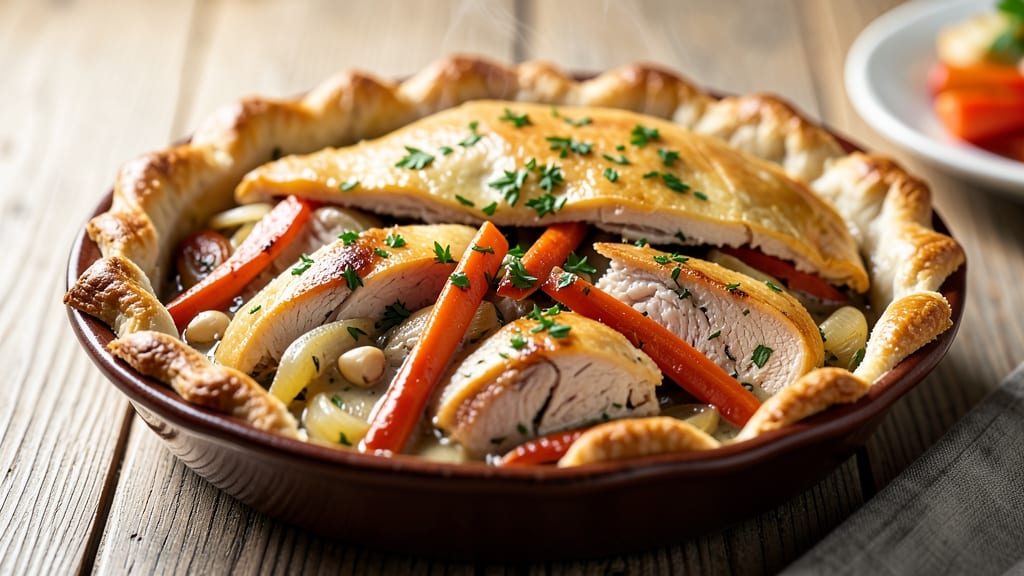
This single crust turkey pot pie recipe delivers all the comfort of a classic pot pie with half the effort—just one golden crust instead of two.
The secret lies in a rich turkey filling that simmers with tender vegetables and savory gravy, all sealed under a perfectly crisped top crust that locks in every flavor.
After years of perfecting the balance between flaky crust and tender filling, I've created a version that's foolproof yet still feels special enough for company.
The beauty of this recipe is its versatility—you can use leftover roasted turkey or cook fresh, and swap vegetables based on what's seasonal.
The gravy base starts with a simple roux that builds into a velvety sauce, while the crust gets its golden color from egg wash and a sprinkle of coarse salt. Baking at 375°F ensures the crust gets crisp while keeping the filling warm and bubbling.
What you'll end up with is a pot pie that looks like it came from a family-style dinner—golden crust edges, tender turkey, and vegetables swimming in rich gravy. The crust stays crisp even after cooling, making it perfect for serving straight from the oven or reheating later.
It's the kind of dish that transforms a simple weeknight into a memorable meal without requiring hours in the kitchen.
Serve with a side of green salad or crusty bread to soak up every last bit of gravy. The recipe scales easily for larger gatherings, and leftovers reheat beautifully. Here's how to make it—step by step—for a pot pie that feels like a hug in every bite.
Ingredients for single crust turkey pot pie
Golden crust, savory filling, and tender turkey—here’s what makes this pot pie special.
| Ingredient | Amount | Notes |
|---|---|---|
| Uncooked Turkey Breast 🦃 | 1 ½ lb | Boneless, skinless, cut into bite-sized pieces |
| All-Purpose Flour 🌾 | 2 cups | For pie crust and gravy roux |
| Unsalted Butter 🧈 | ¾ cup | Cold, cubed for crust and roux |
| Fresh Carrots 🥕 | 1 lb | Peeled, sliced into thin rounds |
| Yellow Onion 🧅 | 1 whole | Diced, medium size |
| Garlic Cloves 🧄 | 4 cloves | Minced, fresh preferred |
| Celery Stalk 🥬 | 2 whole | Diced, fresh or frozen |
| Chicken Broth 💧 | 2 cups | Low-sodium preferred |
| Heavy Cream 🥛 | ½ cup | Full-fat for richness |
| Large Eggs 🥚 | 1 whole | For egg wash |
| Coarse Sea Salt 🧂 | 1 ½ tsp | For crust sprinkle and seasoning |
| Ground Black Pepper 🌶️ | ½ tsp | Freshly ground preferred |
| Fresh Parsley 🌿 | ¼ cup | Chopped, for garnish |
| Fresh Thyme 🌿 | 1 tbsp | Leaves only, chopped |
The turkey is the heart of this dish. Use leftovers if you’ve got them—it keeps the filling juicy and flavorful. For fresh turkey, look for boneless, skinless breast at Costco or your local butcher; it’s leaner and cooks faster. If you’re using thighs, trim any excess fat. The vegetables? Seasonal works best—carrots, celery, and onions are classic, but swap in peas or green beans if you prefer. Fresh herbs like thyme and parsley elevate the flavor, but dried will work in a pinch (use half the amount).
No heavy cream? Full-fat coconut milk or Greek yogurt adds richness without overpowering. Short on chicken broth? Vegetable broth plus a splash of water keeps the gravy velvety. For the crust, King Arthur flour or Bob’s Red Mill all-purpose gives the best flakiness. If you’re making this ahead, prep the filling and crust separately—they keep well in the fridge for 2 days before assembly. The butter should be cold for the crust; cut it into small cubes and handle it gently to avoid melting.
This pot pie reheats beautifully—just cover with foil and warm at 350°F for 20 minutes. The crust stays crisp even after cooling, so it’s perfect for make-ahead meals. Store leftovers in an airtight container for 3-4 days or freeze for 3 months. For serving, a sprinkle of fresh parsley adds a pop of color and freshness. The gravy thickens as it cools, so a splash of warm water or broth thins it out if needed.
Why You'll Love This Recipe
- One-Pan Wonder: I swear by this—just brown the turkey, toss in the veggies, and let the crust do all the work. No chopping mountains of carrots or peeling endless onions; a quick dice and you’re golden.
- Creamy, Savory Magic: That golden crust seals in the juices from the turkey while the butter and onions caramelize—honestly, the first bite makes you forget it’s "just" pot pie. The carrots stay tender-crisp, not mushy, and the turkey stays shockingly moist.
- Lunchbox Hero: Between us, this is my go-to for meal prep. The crust holds up for days, and I can slice it into squares or leave it whole—either way, it’s the star of my kids’ lunchboxes. (Yes, even on a Tuesday night.)
- Budget-Friendly Feast: Turkey breast stretches farther than you’d think, and a single crust covers a whole pan—no wasted dough. I’ve fed six people for under $15, and no one complains about leftovers. (They always ask for seconds anyway.)
Step-by-step instructions for single crust turkey pot pie
Here's how to build a pot pie with a golden crust that locks in rich gravy and tender turkey filling.
Cook the Turkey and Vegetable Filling
In a large Dutch oven, melt 2 tablespoons of the unsalted butter over medium-high heat. Add the 1.5 lb uncooked turkey breast, cut into bite-sized pieces, and cook until no longer pink in the center (8-10 minutes). Remove the turkey and set aside.
In the same pot, add 1 tablespoon of the remaining unsalted butter and sauté the diced yellow onion, diced celery stalk, and peeled sliced carrots for 5-6 minutes until softened. Add the minced garlic cloves and chopped fresh thyme, cooking for 30 seconds until fragrant. Return the turkey to the pot and stir in the chicken broth. Simmer for 10 minutes until the broth reduces slightly.
Make the Creamy Gravy
Reduce heat to medium-low and stir in the heavy cream and ground black pepper. Let the mixture simmer for 3-4 minutes until slightly thickened. Remove from heat and stir in the chopped fresh parsley. Season with 1 teaspoon of the coarse sea salt and set aside.
This step creates the velvety texture that makes pot pie so comforting. If the gravy is too thin, simmer it uncovered for another 2-3 minutes to thicken. The filling should be moist but not soupy when combined with the crust.
Prepare the Pie Crust
In a large bowl, combine the 2 cups all-purpose flour and the remaining 1 teaspoon coarse sea salt. Cut in the remaining 0.5 cup unsalted butter using a pastry cutter or your fingers until the mixture resembles coarse crumbs with pea-sized butter pieces.
Add the large egg and mix just until the dough comes together. Form the dough into a disk, wrap in plastic, and chill in the refrigerator for at least 30 minutes. This resting time is crucial—it prevents the crust from shrinking during baking.
Assemble and Bake the Pot Pie
Preheat your oven to 375°F. On a floured surface, roll out the chilled dough to a 12-inch circle, about 1/8-inch thick. Transfer the filling to a 9-inch pie dish and spread it evenly. Place the rolled-out dough over the filling, trim any excess dough, and crimp the edges with a fork.
Brush the crust with the large egg beaten with 1 tablespoon water, then sprinkle with the remaining 0.5 teaspoon coarse sea salt. Bake for 40-45 minutes until the crust is golden brown and the filling is bubbling. The crust should be crisp, and the filling should be hot in the center.
Rest and Serve
Let the pot pie rest for 10-15 minutes before slicing. This resting period allows the filling to set slightly and prevents the juices from spilling out when you serve. The crust should be firm enough to slice cleanly, and the filling should be thick and flavorful.
Serve warm with a side of fresh green salad or steamed vegetables. The contrast of the crisp, golden crust with the creamy, savory filling makes every bite satisfying. Store leftovers in the refrigerator for up to 3 days or freeze for up to 2 months.
Pro Tips For Making Single Crust Turkey Pot Pie
- Sear the Turkey First: Cut that raw turkey breast into chunks, then hit it with a hot pan—no oil needed, just the butter you’re already using. The crust will taste richer, and the meat stays juicier when it finishes in the oven. (Yes, even if you’re impatient like me, resist the urge to skip this.)
- Dice Carrots Small: I learned this the hard way—big chunks turn to mush under the crust. Cut those carrots into ¼-inch pieces so they soften evenly without disappearing into the sauce. (Your future self will notice the difference.)
- Blind-Bake the Crust: Skip the soggy bottom by pre-baking the crust with pie weights or dried beans for 10 minutes before adding the filling. Cold filling = soggy crust. Hot filling = disaster. This guarantees a flaky, dry base every time.
- Season the Butter: Toss a pinch of salt and a dash of thyme or sage into the butter before melting it for the roux. The crust gets depth, and the filling won’t taste bland. (Sounds weird, but it works—trust me.)
Common mistakes when making great single crust turkey pot pie
Overcooking the Turkey
Turkey breast can dry out quickly if cooked too long or at too high heat. I’ve learned the hard way—once, I left mine in the pot for 12 minutes instead of 8-10, and the result was rubbery, not tender.
Keep a close eye on it, and use a meat thermometer to check for 165°F internal temperature. If you’re using leftovers, cut them into even smaller pieces to ensure they heat through evenly without drying out. 🦃
Skipping the Dough Rest
This is a rookie mistake that leads to a sad, shrunken crust. The dough needs that 30-minute chill time in the fridge to relax its gluten structure. I once forgot and ended up with a pot pie that looked like a sad, puffy pancake.
If you’re in a hurry, at least let it rest for 15 minutes—it makes a noticeable difference in texture. ⏰
Underestimating Gravy Thickness
The gravy should coat the back of a spoon but still be pourable—not like glue. I’ve had pot pies where the gravy was so thick it formed a crust in the pan, leaving the filling dry.
If yours is too thin, simmer it uncovered for 2-3 extra minutes to reduce. For extra insurance, mix 1 tablespoon cornstarch with 2 tablespoons cold water and stir it in at the end. 🥄
Not Preheating the Oven
Skipping preheating is a fast track to a soggy bottom crust. Always preheat your oven to 375°F for at least 15 minutes before baking. I once rushed this step and ended up with a crust that was more like a sad, limp blanket than a crispy shield.
Use an oven thermometer to confirm your oven’s actual temperature—many run hot or cold. 🔥
Overfilling the Dish
Piling too much filling into your pie dish can cause the crust to puff up unevenly or even burst. Stick to a 9-inch pie dish and fill it no more than ¾ full.
I once tried to fit all my filling into a 10-inch dish, and the crust looked like it had been attacked by a gremlin. If you’re making a larger batch, assemble two smaller pies instead. 🍽️
Ignoring the Resting Time
Cutting into the pot pie immediately after baking will send gravy and filling spilling everywhere. Let it rest for 10-15 minutes—this lets the filling set slightly and the crust firm up.
I’ve seen people serve it straight from the oven, and it’s always a gravy disaster. Use this time to set the table or garnish with fresh parsley. ✨
Nutrition facts
Frequently asked questions
Can I use ground turkey instead of breast for this recipe?
Yes, but you'll need to adjust the cooking time. Ground turkey cooks faster than breast pieces, so reduce the initial cooking time to 5-6 minutes until it reaches 165°F. The gravy will still work beautifully with ground turkey's finer texture.
How can I make this pot pie ahead of time?
Assemble the pot pie completely (including the crust) and refrigerate it uncovered for 24 hours to dry the crust slightly. Bake it straight from the fridge at 375°F for 50-55 minutes, adding 5-10 minutes to the original baking time. For freezing, bake the assembled pie (without egg wash), cool completely, wrap tightly, and freeze for up to 2 months. Thaw overnight in the fridge before baking.
What vegetables can I substitute for the carrots and celery?
You can swap in seasonal vegetables like green beans, peas, mushrooms, or butternut squash. For best texture, use vegetables that hold their shape when cooked. If using leafy greens like spinach, wilt them first and drain well to prevent a watery filling.
Why did my crust turn out soggy?
Soggy crusts usually happen from steam buildup or insufficient preheating. Always preheat your oven to 375°F for 15 minutes before baking. For extra insurance, poke a few small holes in the crust before baking to allow steam to escape. If using a deep dish, consider baking on the middle rack to prevent excessive steam from the bottom.
Can I make this recipe gluten-free?
Yes, but you'll need to use a gluten-free all-purpose flour blend for both the crust and gravy. For the crust, look for a 1:1 blend with xanthan gum. The gravy will still work with gluten-free flour, though the texture may be slightly different. Test with a small amount first to adjust the roux consistency.