
Desserts
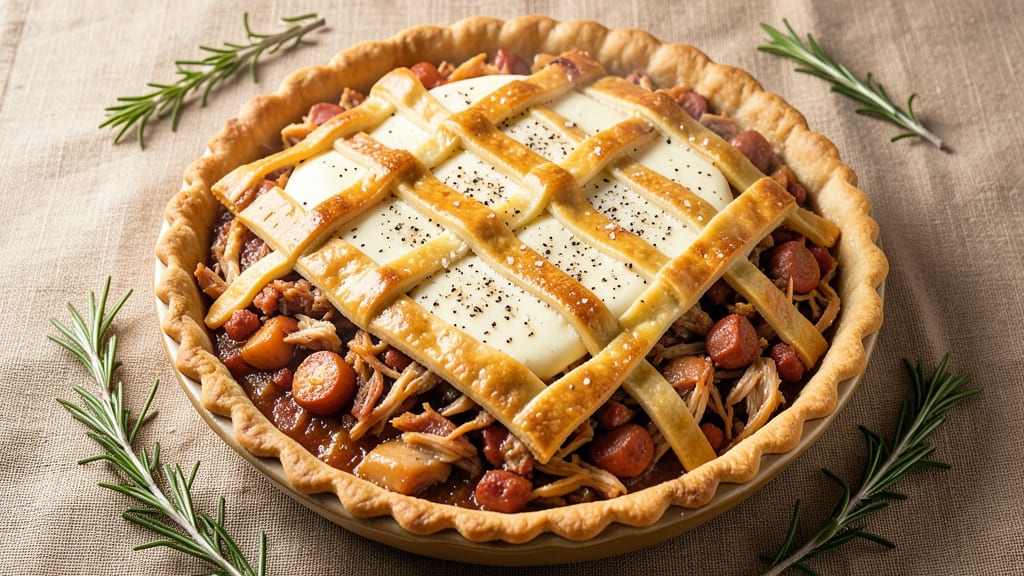
This scotch egg pie recipe transforms a classic British dessert into an elegant showstopper with a golden lattice crust and rich, creamy filling. The secret lies in perfectly cooked scotch eggs—juicy chicken centers wrapped in crispy sausage and breadcrumbs—nested beneath a buttery, flaky pastry that bakes to a crisp.
I developed this recipe after years of experimenting with ways to elevate scotch eggs beyond their traditional fried form, and the result is a dessert that’s both nostalgic and refined.
The lattice crust is the star here, creating delicate windows that reveal the creamy filling while maintaining that satisfying crunch. This technique requires patience—rolling, cutting, and weaving the pastry strips—but the visual impact and texture are worth every minute.
The filling itself is where the magic happens: tender chicken, savory sausage, and a velvety custard base that ties everything together in a harmonious bite.
What makes this recipe truly special is how it balances tradition with a modern twist. The scotch eggs provide a hearty, satisfying center, while the custard filling adds a luxurious creaminess that feels indulgent.
Baked until the crust is golden and the custard is just set, each slice delivers a perfect contrast of textures and flavors—crispy, creamy, and rich all at once.
Serve this pie warm with a dollop of whipped cream or a scoop of vanilla ice cream for the full experience. It’s the kind of dessert that feels like a hug—comforting yet sophisticated, perfect for gatherings or a special treat.
Let’s get started on creating your own showstopping scotch egg pie.
Ingredients for scotch egg pie
Sixteen ingredients transform simple scotch eggs into an elegant pie with golden crust and creamy filling.
| Ingredient | Amount | Notes |
|---|---|---|
| All-Purpose Flour 🌾 | 4 cups | For lattice crust and filling |
| Unsalted Butter 🧈 | 1 ½ cups | Cold, cubed for pastry |
| Large Eggs 🥚 | 3 whole | Room temperature for pastry |
| Granulated Sugar 🍚 | ¾ cup | For custard sweetness |
| Heavy Cream 🥛 | 1 ½ cups | Full-fat for richness |
| Whole Milk 🥛 | ½ cup | For custard base |
| Large Egg Yolks 🥚 | 4 whole | For custard thickening |
| Boneless Chicken Breast 🍗 | 1 ½ lb | Pounded to even thickness |
| Pork Sausage Meat 🥓 | 1 lb | Fresh or high-quality ground |
| Panko Breadcrumbs 🍞 | 1 cup | For crispy coating |
| Salt 🧂 | 1 ½ tsp | Kosher or sea salt |
| Ground Black Pepper 🌶️ | ½ tsp | Freshly ground preferred |
| Vanilla Extract 🌿 | 1 tsp | Pure vanilla for flavor |
| Cornstarch 🌾 | 2 tbsp | For custard stability |
The butter and flour for the lattice crust are non-negotiable—European-style butter like Plugrá or Land O'Lakes makes all the difference. King Arthur flour ensures a tender yet sturdy crust. For the sausage, fresh pork sausage from the butcher delivers superior flavor over pre-packaged. The chicken breast should be pounded to an even 1/4-inch thickness for consistent cooking. If you're short on time, pre-made pie crust works in a pinch, though homemade yields that coveted flaky texture. The custard's secret lies in the cornstarch—it prevents that dreaded curdling when baking.
No panko? Regular breadcrumbs toasted in the oven for 5 minutes work just as well. Short on sausage? Ground turkey or chicken at the same quantity keeps it hearty. The custard can be made ahead and chilled—bring it to room temperature before baking. For extra richness, add 1 oz dark chocolate to the custard mixture. The vanilla extract should be pure—imitation extracts will leave your pie tasting flat. If you're making this ahead, blind-bake the crust first to prevent sogginess when adding the filling later.
The pie crust can be prepped a day ahead and stored wrapped in the fridge—bring to room temperature before rolling. The custard filling keeps 3 days refrigerated before baking, though it's best used fresh. Once baked, the pie reheats beautifully—350°F for 15 minutes restores that golden crust. Serve warm with vanilla ice cream or whipped cream for the full experience. The lattice crust stays crisp for 24 hours at room temperature, making it perfect for make-ahead gatherings.
Why You'll Love This Recipe
- No-Fuss Pastry: I swear by this crust—just butter, flour, and cold water. No rolling pins, no stress, and it still turns out golden and flaky every time.
- Creamy Egg Magic: That heavy cream and sugar combo? It transforms plain eggs into something rich and velvety. The sugar caramelizes just enough to give it a subtle sweetness that balances the savory.
- Weeknight Hero: Between us, this pie is my go-to when I need something impressive but fast. Serve it at brunch, pack slices for lunch, or reheat leftovers—it’s always a hit.
- Budget Breakthrough: Eggs and butter stretch further than you’d think, and the sugar adds just enough luxury without breaking the bank. Honestly, it’s the kind of recipe that makes frugal cooking feel indulgent.
Step-by-step instructions for scotch egg pies
Here's how to create a perfect balance of crispy lattice crust and rich, savory Scotch egg filling.
Prepare the Scotch Egg Filling
Begin by combining the 1 lb pork sausage meat and 1.5 lb boneless chicken breast in a mixing bowl. Use your hands to break up the sausage meat and chicken into small, even pieces. Season generously with 1.5 tsp salt and 0.5 tsp ground black pepper, mixing thoroughly to ensure even distribution throughout the meat.
Transfer the seasoned meat mixture to a skillet over medium heat. Cook for 8-10 minutes, breaking it apart with a wooden spoon until fully cooked and any pink color has disappeared. The mixture should be browned and moist, not dry. Once cooked, let it cool completely before proceeding—this prevents the filling from becoming too greasy when assembled in the pies.
Create the Custard Base for the Filling
In a medium saucepan, whisk together the 4 whole large egg yolks, 0.75 cup granulated sugar, 2 tbsp cornstarch, and 1 tsp vanilla extract. Slowly pour in the 1.5 cups heavy cream and 0.5 cup whole milk, whisking constantly to combine. Place the saucepan over medium-low heat and cook, stirring frequently with a wooden spoon, until the mixture thickens to a pudding-like consistency—this should take about 5-7 minutes.
Remove the pan from heat and stir in the cooked sausage-chicken mixture. Let the filling cool to room temperature before using. This custard base adds a creamy texture that complements the savory meat perfectly. If the filling thickens too much while cooling, whisk in a splash of warm milk to restore the proper consistency.
Make the Pie Crust Dough
In a large mixing bowl, combine the 4 cups all-purpose flour and 1.5 tsp salt. Cut in the 1.5 cups cold, cubed unsalted butter using a pastry cutter or your fingers until the mixture resembles coarse crumbs with pea-sized butter pieces remaining. Add the 3 whole large eggs, one at a time, mixing just until the dough comes together. Avoid overmixing—this keeps the crust tender.
Shape the dough into a disk, wrap it in plastic wrap, and refrigerate for at least 1 hour. This chilling step is crucial for preventing the crust from shrinking during baking. While the dough rests, preheat your oven to 375°F and prepare a baking sheet by lining it with parchment paper.
Assemble and Bake the Scotch Egg Pies
Roll out the chilled dough to a ⅛-inch thickness on a lightly floured surface. Cut into six 6-inch circles using a round cutter or plate. Place one circle in the bottom of each of six 4-inch pie pans and trim any excess dough hanging over the edges. Fill each crust with an equal portion of the Scotch egg mixture, mounding it slightly in the center.
Roll out the remaining dough for the lattice topping. Cut strips about 1-inch wide and arrange them in a lattice pattern over each pie, alternating directions for a classic look. Brush the lattice with a beaten egg wash for a golden finish. Bake for 35-40 minutes until the crust is deep golden brown and the filling is bubbling at the edges.
Finish and Serve
Remove the pies from the oven and let them cool for 10 minutes before transferring to a wire rack. The lattice crust should be crispy and golden, while the filling should be creamy and fully set. If the custard appears too thick after baking, gently reheat the pies in a 350°F oven for 5-10 minutes to restore creaminess.
Serve warm for the best texture—each bite should offer a satisfying contrast between the crispy lattice crust and the rich, savory Scotch egg filling. These pies are perfect for brunch, dinner, or even as a hearty appetizer when sliced into wedges.
Pro Tips For Making Scotch Egg Pie
- Chill the Butter First: Cold butter makes flaky layers, but don’t go overboard—just cut it into ½-inch cubes and refrigerate for 10 minutes before mixing into the flour. I used to skip this, and my crusts always turned out dense and greasy. Trust me, the effort is worth the crispy top.
- Whisk Eggs Like a Pro: Beat the eggs for this pie until they’re thick enough to hold a ribbon when you lift the whisk—about 2-3 minutes. Over-mixing adds air, which can make the custard grainy. I learned this after one disastrous batch where the filling looked like scrambled eggs instead of silky perfection.
- Skip the Overmixed Cream: Fold the heavy cream into the egg mixture just until combined—lumps are fine, but don’t turn it into a smoothie. The texture matters more than looks here. I was skeptical until I tried it, and now I never go back to over-blending.
- Bake at 325°F (Not Higher): This pie needs gentle heat to set properly—anything above 350°F risks a rubbery custard or a burnt top before the center’s done. I burned the first one I made because I panicked and cranked the oven. Now I set a timer and walk away.
Flavor customization for these flavors
Sweet-Savory Balance
Adjust the custard sweetness to your taste by modifying the sugar—start with ½ cup for a subtler flavor or add ¼ cup more for a richer dessert-like profile. I like to use 1 tsp vanilla extract for warmth, but ½ tsp almond extract adds a sophisticated twist.
For a hint of spice, fold in ¼ tsp ground cinnamon or pinch of nutmeg into the custard before baking.
Spicy Scotch Egg Twist
Transform the savory filling into a fiery version by mixing 1 tbsp hot sauce (like Cholula or Tabasco) or 1 tsp cayenne pepper into the cooked sausage-chicken mixture. For a smoky kick, add ½ tsp smoked paprika or 1 tbsp chipotle powder into the custard.
Serve with a cooling side of sour cream or crème fraîche to balance the heat. 🌶️
Herb-Infused Variations
Brighten the custard with fresh herbs like 1 tbsp chopped fresh thyme or 1 tbsp chopped rosemary, gently simmered into the custard base. For a Mediterranean flair, stir in 1 tsp dried oregano and ½ tsp dried basil.
If you love garlic, infuse the custard with 2 cloves roasted garlic (blended) for depth. The herbs pair beautifully with the sausage and chicken flavors.
Cheesy Lattice Crust
Elevate the lattice topping by mixing ½ cup shredded sharp cheddar or Gruyère into the crust dough before rolling. The cheese melts slightly during baking, creating pockets of gooey richness. For a vegetarian option, swap the sausage for mushrooms sautéed with garlic and spinach, then mix into the custard.
The cheesy crust adds a decadent touch that guests will love. 🧀
Fruit Compote Topping
Add a fruity contrast by baking the pies, then topping each slice with a spoonful of warm apple compote (simmer 2 cups diced apples, 2 tbsp brown sugar, and 1 tsp cinnamon for 10 minutes).
For a tropical twist, use mango-chili jam (simmer 1 cup diced mango, 2 tbsp sugar, and ½ tsp chili powder). The sweet-tart topping cuts through the richness of the custard beautifully.
Gluten-Free Adaptation
Replace the all-purpose flour in the crust with a 1:1 gluten-free flour blend (like Bob’s Red Mill 1-to-1). For extra binding, add 1 tbsp xanthan gum to the dough. The custard remains unchanged, but ensure your panko breadcrumbs are also gluten-free.
This version keeps all the flavor while accommodating dietary needs—just expect the crust to be slightly more delicate. ✨
Nutrition facts
Frequently asked questions
Can I make Scotch egg pie ahead of time?
The crust dough can be prepped 1 day ahead and stored wrapped in the fridge. The custard filling keeps 3 days refrigerated before baking, though it's best used fresh. For make-ahead gatherings, blind-bake the crust first to prevent sogginess when adding the filling later. The finished pie reheats beautifully at 350°F for 15 minutes to restore that golden crust.
What's the secret to a crispy lattice crust?
The lattice stays crispy thanks to the cold butter in the dough and proper baking technique. Roll the dough to ⅛-inch thickness and chill it for at least 1 hour before using. Brush the lattice with egg wash for extra shine, and bake at 375°F until deep golden brown. Let the pie cool on a wire rack—never on a damp surface—to maintain crispness.
Can I substitute the sausage in this recipe?
Yes! For a vegetarian option, swap the pork sausage with mushrooms sautéed with garlic and spinach (about 1 lb total). For a different flavor profile, try ground turkey or chicken at the same quantity. The key is keeping the meat mixture moist and flavorful—don't overcook it before mixing into the custard. The texture should remain tender and juicy.
Why did my custard filling curdle?
Curdling usually happens from overheating or adding cold ingredients to hot custard. Always whisk constantly over medium-low heat and remove from heat as soon as it thickens. If the custard separates, whisk in 1 tbsp cold milk or cream to restore smoothness. For extra stability, ensure your cornstarch is fully dissolved in the egg mixture before adding liquids.
How do I serve Scotch egg pie?
Serve warm for the best texture—each slice should offer a perfect contrast of crispy lattice and creamy filling. Pair with vanilla ice cream, whipped cream, or a dollop of crème fraîche to balance the richness. For a complete meal, add a simple green salad with lemon vinaigrette. The pie is hearty enough for brunch or dinner, or serve individual slices as appetizers.