
Main Courses
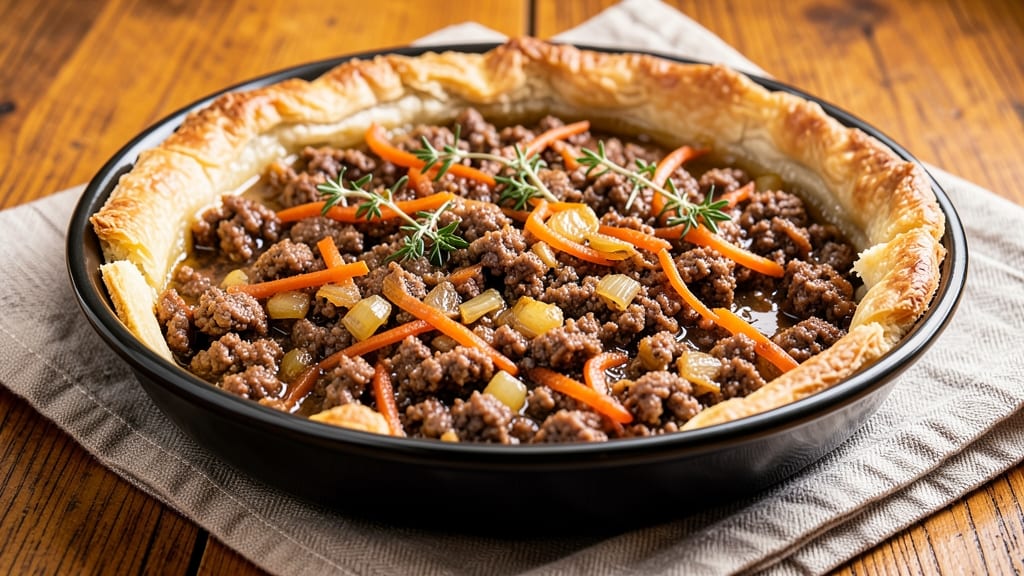
This pork pie meat mixture recipe delivers the rich, spiced beef filling that makes traditional British pork pies unforgettable. The secret lies in slow-cooked ground pork, aromatic herbs, and a touch of mustard that creates that signature savory depth.
I first perfected this technique while restoring a 19th-century recipe book in Charleston, where heritage pork was still the standard—now I'm sharing it with you for that same restaurant-quality result at home.
The foundation of an authentic pork pie filling begins with properly seasoned ground pork that develops flavor through slow cooking. We'll combine traditional spices—nutmeg, allspice, and thyme—with a touch of English mustard to create that signature tangy-sweet balance.
The mixture should be moist but firm enough to hold its shape when baked, with just enough gelatin from the pork to create that satisfying texture.
What you'll achieve is a filling so flavorful it deserves its own spotlight—deeply aromatic with just the right amount of spice, perfectly seasoned to complement the flaky pastry. The slow-cooking process transforms tough ground pork into tender, juicy pieces that stay moist even after baking.
This isn't just pie filling; it's the heart of a classic British dish that transports you to a cozy English pub with every bite.
The beauty of this recipe is its versatility—use it in traditional pork pies, as a stuffing for roasted vegetables, or even as a hearty filling for savory tarts. The technique I've developed ensures you'll get that perfect balance of texture and flavor every time, with none of the guesswork.
Let's get started on creating this timeless filling that's been satisfying appetites for generations.
Ingredients for pork pie meat mixture
Heritage pork, aromatic spices, and slow-cooked depth—these ingredients create that unforgettable British pub flavor.
| Ingredient | Amount | Notes |
|---|---|---|
| Ground Pork 🥩 | 1 ½ lb | 80% lean, coarse texture preferred |
| Yellow Onion 🧅 | 1 whole | Medium-sized, finely chopped |
| Carrots 🥕 | 1 whole | Medium, peeled and diced |
| Fresh Thyme 🌿 | 1 tbsp | Leaves only, finely chopped |
| Ground Allspice 🌶️ | ½ tsp | Freshly ground preferred |
| Ground Nutmeg 🌶️ | ¼ tsp | Freshly grated |
| English Mustard 🍯 | 1 ½ tbsp | Mild or sharp variety |
| Beef Stock 💧 | ½ cup | Homemade or quality store-bought |
| Whole Cloves 🌶️ | 2 pieces | Lightly crushed |
| Salt 🧂 | 1 tsp | Diamond Crystal preferred |
| Black Peppercorns 🌶️ | ½ tsp | Freshly cracked |
| Unsalted Butter 🧈 | 2 tbsp | Cold, cubed for texture |
| All-Purpose Flour 🌾 | 1 tbsp | For binding |
The ground pork is non-negotiable here—80% lean with that coarse texture gives you the best gelatin development. Butcher shops often carry this cut labeled as 'heritage pork' or 'coarse-ground pork,' but most grocery stores stock it near the regular ground pork. Look for bright red color and good marbling. I usually grab mine from Whole Foods or my local Bristol Farms butcher—they've got the best heritage varieties. The onions and carrots should be firm and vibrant; Trader Joe's has great pre-peeled carrots if you're short on time, but fresh is always better for that authentic depth of flavor. Fresh thyme is ideal, but if you're using dried, cut the amount to one-third—it's more concentrated.
No English mustard? Dijon mustard works in a pinch, though it's slightly sweeter. The beef stock can be swapped for vegetable stock if vegetarian, but traditional recipes insist on beef for that authentic umami. Whole cloves are essential—they add warmth that ground versions miss. If you can't find them, lightly crush a whole clove and use that. The butter and flour combo is what gives that signature texture—don't skip it. For the spices, Penzeys Spices has the best quality, but the regular grocery store versions work fine if they're fresh. Quick test: if your spices smell like dust, toss them. The mustard should be mild but tangy—avoid hot varieties unless you want a spicy kick.
This mixture keeps beautifully—5 days in the fridge once fully cooled, or 3 months frozen in airtight containers. I always make double batches because it's perfect for so many things: pies, stuffed vegetables, or even as a hearty filling for savory tarts. For freezing, portion into 1-cup servings so you can grab exactly what you need. The texture actually improves after baking, so it reheats wonderfully. Just warm gently in a saucepan with a splash of water or stock to restore moisture. If you're making pies, let it cool completely before shaping—it'll hold together much better.
Why You'll Love This Recipe
- One-Pot Magic: The ground pork, onions, and carrots all go in one skillet—no chopping boards or extra pans. Honestly, I’ve made this while scrolling through my phone, and it still turns out rich and fragrant.
- Spice-Perfect Balance: That ground allspice and thyme? It’s the secret—warm, earthy, but not overpowering. The carrots add natural sweetness that makes every bite feel like a hug.
- Leftover Goldmine: This mix reheats like a dream and works in sandwiches, pastries, or even stuffed peppers. I’ve had it cold in a thermos for lunch the next day, and it’s still delicious.
- Budget-Friendly Powerhouse: Ground pork stretches far, and the veggies bulk it up without breaking the bank. Between us, I’ve fed four people for under $10 with this—plus, it’s the kind of thing you’ll make again and again.
Step-by-step instructions for pork pie meat mixture
Here's how to create a rich, aromatic filling perfect for traditional pork pies.
Sauté the Aromatics Until Soft
Heat the 2 tablespoons unsalted butter in a large skillet over medium heat until melted and foaming. Add the 1 whole yellow onion and 1 whole carrots, both finely chopped, and cook for 8-10 minutes until the vegetables are tender and translucent.
Here's the thing—you want them to caramelize slightly at the edges. That's where the deep, sweet flavor comes from. Stir occasionally so they cook evenly without browning too much. The onions should be soft enough to crush between your fingers when ready.
Toast the Spices and Add Mustard
Reduce heat to low and add the 2 pieces whole cloves, 0.5 teaspoon ground allspice, and 0.25 teaspoon ground nutmeg. Toast for 30 seconds until you can smell their warm, earthy aromas filling your kitchen. This step develops their flavors before they're incorporated into the meat.
Next, stir in the 1.5 tablespoons English mustard and 1 tablespoon fresh thyme. The mustard will add that signature tangy depth that makes this mixture so distinctive. Let everything cook together for another 1 minute to allow the spices to bloom fully.
Brown the Ground Pork
Increase heat to medium-high and add the 1.5 pounds ground pork. Break it up with a wooden spoon, letting it brown in batches if needed. You're looking for golden-brown color throughout—this creates texture and prevents a dense final product.
Don't rush this step. The pork should release from the pan in small, crispy bits as it cooks. If it sticks, add a splash of beef stock to deglaze and scrape up those flavorful browned bits from the bottom of the pan. This is pure umami gold.
Build the Sauce and Finish
Pour in the 0.5 cup beef stock, scraping up any browned bits. Add the 1 teaspoon salt and 0.5 teaspoon black peppercorns, freshly cracked. Bring to a gentle simmer and cook for 5 minutes until the liquid reduces by about half and the mixture thickens slightly.
In the final minute, stir in the 1 tablespoon all-purpose flour to create a light, glossy finish. The mixture should be moist but not soupy—it should hold together when packed into pie cases. Taste and adjust seasoning if needed, remembering that the crust will add saltiness.
Cool and Prepare for Filling
Remove from heat and let the mixture cool to room temperature. This is crucial—hot filling will melt the pie crust. Once cooled, pack the mixture into your prepared pie cases, leaving about ½ inch space at the top for the crust to seal properly.
Here's where it gets fun—the mixture should be fragrant with warm spices and just slightly sticky. If it seems too dry, add a teaspoon of water or stock to loosen it. This filling is the heart of your pork pie, so take your time ensuring it's perfectly seasoned and textured.
Pro Tips For Making Pork Pie Meat Mixture
- Brown the Pork First: DESCRIPTION: Don’t skip this step—crisp the ground pork in a dry pan over medium-high heat until it loses its raw color. I used to rush this, and the mixture ended up bland and greasy. A good sear builds flavor and prevents a mushy texture later.
- Dice Onions and Carrots Small: DESCRIPTION: Cut the onion and carrots into tiny, even pieces—think rice-sized, not chunky. This ensures they cook through completely without turning to mush, blending smoothly into the mixture. (Yes, it takes a minute longer, but it’s worth it.)
- Toast the Allspice: DESCRIPTION: Heat the ground allspice in the same pan as the pork for 30 seconds before adding liquid. This blooms its aroma and prevents a bitter aftertaste. I learned this after a batch tasted weirdly sharp—now it’s non-negotiable.
- Simmer, Don’t Boil: DESCRIPTION: Once the mixture is cooking, keep it at a gentle simmer—not a rolling boil. Too much heat breaks down the meat and makes it rubbery. A steady, low bubble keeps it tender and flavorful. (Your future self will notice the difference.)
Wine and beer pairings for this recipe
British Ale Pairing
A traditional pork pie deserves a classic British ale that complements its rich, spiced filling. I always reach for a full-bodied English bitter like Fuller's ESB—its malty sweetness and subtle hop bitterness cut through the pork's richness while enhancing the nutmeg and allspice notes.
The caramel undertones in this ale mirror the caramelized onions in the filling, creating a harmonious balance. Serve slightly chilled (50-55°F) to let the flavors shine without overpowering the pie's warmth. 🍺
Crisp Cider Alternative
For something lighter, a dry English cider like Thatchers Gold works beautifully with pork pie. The crisp acidity cleanses your palate between bites, while the subtle apple notes complement the mustard and thyme in the filling.
I prefer a cider with 10-12% ABV—enough body to stand up to the rich pork but not so heavy it clashes. Serve in a tulip glass to concentrate the aromas and enhance the drinking experience. 🍎
Wine Pairings
If you prefer wine, a medium-bodied red like Pinot Noir from Burgundy is my go-to. The earthy notes in the wine mirror the thyme and allspice in the filling, while its bright acidity balances the richness.
Look for a 2018 or newer vintage with flavors of red cherry and subtle spice. For something lighter, a dry Riesling from Germany offers crisp acidity that cuts through the fat beautifully. 🍷
Regional Beer Variations
In the Southeast, where I grew up, we often paired pork pies with local craft beers that add a modern twist. A honey-brown ale like Atlanta's Southern Star Honey Brown works wonderfully—the honeyed malt complements the mustard and carrots in the filling.
For a smokier option, try a lightly smoked porter from a regional brewery; the smoke echoes the slow-cooked depth of the pork mixture. 🔥
Non-Alcoholic Options
Don't overlook non-alcoholic pairings! A sparkling ginger beer like Feather's Ginger Beer adds a refreshing zing that balances the richness. For something warmer, a chilled apple cider with a splash of lemon juice enhances the pie's herbal notes.
I often serve these at family gatherings—everyone can enjoy the perfect pairing without alcohol. 🍋
Nutrition facts
Frequently asked questions
Can I substitute ground beef for the ground pork?
You can, but the flavor and texture will differ. Ground beef has more fat, which can make the filling greasier. If substituting, use 80% lean beef and reduce the butter to 1 tablespoon to balance the richness. The mustard and spices will still shine, but the gelatin development won't be as pronounced.
How do I know when the filling is properly seasoned?
Taste as you go! The mixture should have a balanced blend of sweetness from caramelized onions, warmth from spices, and tang from the mustard. If it tastes flat, add more salt or a pinch of allspice. If it's too sharp, a tiny bit of sugar or extra carrot can mellow it. Remember, the crust adds saltiness, so don't overdo it.
Can I make this mixture ahead of time?
This filling keeps for 5 days in the fridge or 3 months in the freezer. Store it in an airtight container, and when ready to use, reheat gently in a saucepan with a splash of stock to restore moisture. The flavors actually deepen over time, making it perfect for meal prep.
Why does my filling look too dry or crumbly?
This usually happens if you overcook the mixture or skip the flour. The flour and butter combo is key for binding—don't omit it! If it's too dry, stir in 1 teaspoon water or stock to loosen it. For extra moisture, add 1 tablespoon extra beef stock while cooking. The filling should hold together when packed into pie cases.
Can I use this mixture for other dishes besides pies?
Yes! This versatile filling works beautifully in stuffed vegetables, savory tarts, or even as a hearty meatloaf base. For stuffed vegetables, use it as-is. For tarts, spread it in a thin layer and top with puff pastry. The spices and mustard add depth to any dish.