
Desserts
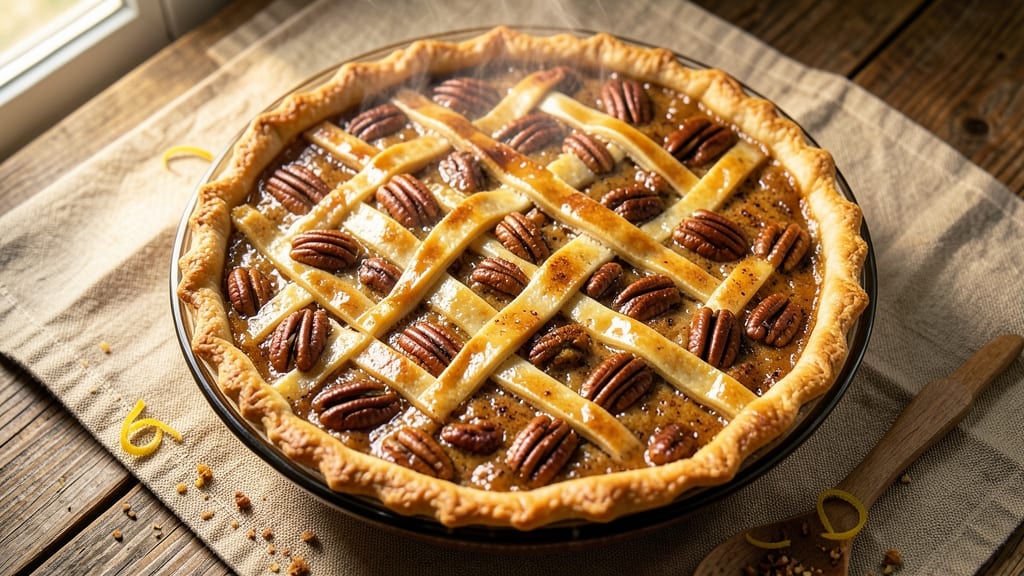
This roasted pecan pie recipe delivers the perfect balance of crispy edges and gooey, caramelized filling—every bite is a symphony of buttery crust and nutty sweetness. The secret lies in roasting the pecans before baking, which intensifies their natural flavor and creates that signature crunch.
I've perfected this technique over years of holiday baking, ensuring the pie stays moist while developing rich, caramelized pockets.
What sets this recipe apart is the two-stage cooking process: first roasting the pecans and sugar mixture to deepen their flavor, then baking the pie to achieve a golden crust and perfectly set filling. This method transforms ordinary pecan pie into something extraordinary—with a texture that's both tender and satisfying.
The buttery crust provides the ideal foundation, while the roasted pecans add depth that store-bought fillings simply can't match.
By the time it emerges from the oven, you'll have a pie with crispy, caramelized edges and a velvety center that's impossible to resist. The aroma alone will have everyone gathering in the kitchen, and the first slice will silence any doubters.
This is the kind of dessert that becomes an annual tradition—rich, indulgent, and worth every calorie. Ready to master the art of roasted pecan pie?
The beauty of this recipe is its versatility—use a homemade crust for that classic Southern touch or opt for a pre-made crust to save time without sacrificing flavor. Either way, the result is a showstopping pie that's perfect for holidays or any occasion calling for something special. Let's get baking!
Ingredients for roasted pecan pie
Nine essential ingredients for a pecan pie with deep, caramelized flavor and perfect texture balance.
| Ingredient | Amount | Notes |
|---|---|---|
| Pecans 🥜 | 2 ½ cups | Raw, shelled, unsalted |
| Granulated Sugar 🍚 | 2 cups | White or light brown |
| Light Corn Syrup 🍯 | 1 cup | Karo brand preferred |
| Unsalted Butter 🧈 | ½ cup | Cold, cubed for crust |
| All-Purpose Flour 🌾 | 1 ½ cups | Sifted for crust |
| Large Eggs 🥚 | 2 whole | Room temperature |
| Vanilla Extract 🌿 | 1 tbsp | Pure vanilla preferred |
| Salt 🧂 | ½ tsp | Fine sea salt |
| Ground Cinnamon 🌶️ | 1 tsp | Freshly ground |
| Baking Powder 🍞 | ¼ tsp | Aluminum-free |
| Heavy Cream 🥛 | ½ cup | For crust richness |
| Dark Brown Sugar 🍚 | ¼ cup | Packed for filling |
The pecans are non-negotiable—raw, unsalted delivers the best flavor. Walmart or Costco often have bulk bins where you can buy them cheaper by the pound. Toasting them first intensifies their natural oils, which is why this recipe calls for roasting before baking. For the sugar, Domino brand is my go-to for consistent results, but any granulated will work. The corn syrup is where the magic happens—Karo brand has the right viscosity for that signature gooey texture. If you can't find it, light corn syrup from any brand will suffice, but don't substitute honey or maple syrup—they'll alter the texture completely.
No corn syrup? Substitute equal parts honey and water, but reduce other liquids slightly to compensate. For a gluten-free crust, swap the all-purpose flour for a 1:1 gluten-free blend. The butter should be cold and cubed—this ensures the crust stays flaky. If you're short on vanilla, vanilla bean paste adds extra depth. The heavy cream in the crust can be swapped for full-fat coconut milk for a dairy-free version, though the texture will be slightly different. For the filling, if you're watching sugar, reduce the granulated sugar by 0.25 cup and add an extra tablespoon of corn syrup to maintain moisture.
Pecans keep for months in the freezer, so toast them ahead and store in an airtight container. The crust mix can be refrigerated for up to 3 days before baking. Once baked, the pie is best served at room temperature—2 hours out of the fridge lets the filling set properly. Store leftovers covered at room temperature for 2 days or refrigerate for up to 5 days. For gift-giving, wrap individual slices in parchment and tie with twine. The filling will firm up in the fridge but softens beautifully when warmed for 10-15 seconds in the microwave.
Why You'll Love This Recipe
- No Fuss Filling: I just toast the pecans in the same pan I’ll use for the crust—no extra bowls, no mess. Toss them with butter and sugar, let the oven do the work while I mix the syrup and flour filling. Honestly, the hardest part is waiting for it to cool.
- Caramel Magic: That perfect balance of buttery pecans and gooey corn syrup filling? It’s like someone took all the best parts of pecan pie and made them more. The roasting deepens the nutty flavor, and the flour-thickened syrup? Smooth, not cloying. (Yes, even on a Tuesday night.)
- Holiday or Weeknight: Serve it warm with vanilla ice cream for Thanksgiving company, or slice it cold for a lazy Sunday breakfast. Between us, I’ve also used it to top yogurt—because why not? It’s that good.
- Budget-Friendly Luxury: Pecans might seem fancy, but a pound goes a long way here. The syrup and butter stretch the filling further than most pies, and leftovers? They disappear faster than you can say “second slice.” My secret weapon for feeding crowds without breaking the bank.
Step-by-step instructions for roasted pecan pie
Master the art of caramelized pecans and a perfect buttery crust with these precise techniques.
Prepare the Pecan Filling for Roasting
Preheat your oven to 350°F. In a large bowl, combine the 2.5 cups pecans, 2 cups granulated sugar, 1 cup light corn syrup, 0.25 cup dark brown sugar, 1 tbsp vanilla extract, and 1 tsp ground cinnamon. Mix thoroughly until the sugars are evenly distributed and the pecans are fully coated.
Spread the mixture evenly onto a parchment-lined baking sheet, creating a single layer. The goal is to roast the pecans until they develop a deep caramelization and subtle crispness. Bake for 18-22 minutes, stirring every 5 minutes to ensure even browning. You're looking for pecans that are deep golden brown with a glossy sheen from the caramelized sugars. Remove from the oven and let cool completely before proceeding.
Make the Buttery Crust
In a food processor, combine the 1.5 cups all-purpose flour, 0.5 tsp salt, and 0.25 tsp baking powder. Pulse until just combined. Add the 0.5 cup cold cubed unsalted butter and pulse until the mixture resembles coarse crumbs with pea-sized butter pieces remaining.
Transfer the mixture to a 9-inch pie dish and press firmly and evenly into the bottom and up the sides, creating a uniform ¼-inch thick crust. The key here is to create a barrier that's sturdy enough to hold the filling but still tender enough to provide a flaky texture. Use the back of a measuring cup to press down firmly and evenly. Chill the crust in the refrigerator for 20 minutes while you prepare the filling.
Combine Filling Ingredients
Return the cooled roasted pecan mixture to your mixing bowl. Add the 2 whole large eggs, 0.5 cup heavy cream, and mix until fully incorporated. The mixture should be thick but pourable. Here's the thing—this filling needs to be smooth to prevent any lumps that might affect the pie's texture. Use a rubber spatula to scrape down the sides of the bowl and ensure everything is evenly combined.
Pour the filling into the chilled pie crust, spreading it evenly. The filling should come up to about ½ inch from the top edge of the crust. Gently tap the pie dish on the counter a few times to help remove any air bubbles that may have formed. This ensures a smooth surface when baked.
Bake to Golden Perfection
Place the pie on a baking sheet lined with parchment paper to catch any potential drips. Bake at 350°F for 45-50 minutes, or until the filling is set but still slightly jiggly in the center. You'll know it's ready when the edges are deep golden brown and the center has a gentle wobble like a custard. Avoid overbaking, as this can result in a dry pie.
Remove the pie from the oven and let it cool completely on a wire rack for at least 2 hours. This resting period is crucial—it allows the filling to fully set and the flavors to meld. The contrast between the warm, gooey filling and the crisp, buttery crust is what makes this pie truly exceptional. Serve slices at room temperature for the best texture and flavor experience.
Pro Tips For Making Roasted Pecan Pie
- TOAST PECANS LOW: Spread pecans on a rimmed baking sheet in a single layer and bake at 300°F (not 350°F) for 8–10 minutes—just until fragrant, not browned. Over-toasting turns them bitter, and under-toasting means they’ll stay raw and chewy in the pie.
- WHISK CORN SYRUP FIRST: Mix the corn syrup with the sugar before adding butter or flour—this prevents clumping and ensures a smoother filling. I used to add them separately and ended up with grainy pockets every time.
- AVOID OVERMIXING FILLING: Stir the filling just until the flour disappears—overmixing introduces air, which makes the pie dense instead of silky. Think "comb through," not "whip into submission."
- USE COLD BUTTER: Cut the butter into small cubes and chill the filling mixture for 15 minutes before pouring into the crust. Cold butter creates flaky layers; warm butter just melts into a sad, gummy mess. (Yes, even if you’re impatient like me.)
Regional styles of roasted pecan pie
Southern Classic
This is the pecan pie most Southern families make for Thanksgiving and Christmas—rich, gooey, and deeply caramelized. The key difference here is the roasting step before baking, which creates that signature crunch and intensified nutty flavor.
I remember my grandmother always insisting on raw pecans from the local market, toasted until they were golden and fragrant. The crust gets extra buttery, with ½ cup heavy cream added for that classic Southern richness. 🥜
Texas Twist
Texas pecan pie takes the classic and adds a smoky depth by incorporating ½ teaspoon smoked paprika into the filling. The pecans are roasted with ¼ cup honey instead of brown sugar, creating a lighter, more floral flavor profile.
Some Texas bakers even wrap the pie in foil during the last 15 minutes of baking to prevent over-browning in their dry climates. The result is a pie with both sweetness and a subtle smokiness that pairs perfectly with sweet tea. 🌶️
Midwest Homestyle
The Midwest version keeps it simple but hearty, often using walnut halves mixed with the pecans for added texture. The crust gets a touch of 1 teaspoon cinnamon and the filling includes ¼ cup bourbon (like Maker's Mark) for depth.
This style is all about comfort—less about flashy techniques and more about letting the flavors develop slowly. The pie is often served warm with a dollop of vanilla ice cream or whipped cream. 🍯
Modern Minimalist
For those who prefer simplicity, this version skips the crust entirely and serves the filling in small individual ramekins. The pecans are roasted with maple syrup instead of corn syrup, and the filling is baked in 10-minute intervals at 325°F to prevent overcooking.
Top with a sprinkle of flaky sea salt before serving. It's elegant, portion-controlled, and perfect for modern gatherings where presentation matters as much as taste. ✨
Gluten-Free Adaptation
Southern-style pecan pie can easily accommodate gluten-free diets by using a 1:1 gluten-free flour blend (like Bob's Red Mill) for the crust. The filling remains unchanged, but the crust benefits from an extra 1 tablespoon xanthan gum to improve binding.
Some bakers also add ¼ cup almond flour to the crust for extra richness. The texture will be slightly denser, but the flavor remains just as satisfying. 🌾
Nutrition facts
Frequently asked questions
Why roast the pecans before baking the pie?
Roasting intensifies the pecans' natural flavor and creates that signature caramelized crunch. The process develops deep, nutty notes that store-bought fillings can't match. Plus, it helps prevent sogginess in the final pie by drawing out excess moisture from the nuts before they're combined with the filling.
Can I make this pie without a food processor?
For the crust, cut the cold butter into the flour mixture using a pastry cutter or two forks until it resembles coarse crumbs. Press it into the pie dish by hand, using a glass or measuring cup to create an even, firm base. The texture will be slightly less flaky but still delicious.
What's the best way to tell when the pie is done?
The filling should be set but still slightly jiggly in the center (like custard). The edges should be deep golden brown. Insert a knife near the center—if it comes out clean or with just a few moist crumbs, it's ready. Overbaking makes the pie dry, so err on the side of underbaking by 1-2 minutes if needed.
How do I store leftovers to keep them fresh?
Let the pie cool completely, then cover tightly with plastic wrap or foil. Store at room temperature for up to 2 days or refrigerate for 5 days. For longer storage, freeze individual slices wrapped in parchment. Reheat slices at 350°F for 10-15 minutes or microwave for 10-15 seconds to restore texture.
Can I substitute corn syrup with something else?
For a 1:1 swap, use honey mixed with equal parts water (reduce other liquids by 2 tablespoons total). Maple syrup works too, but reduce it by 15% since it's thicker. Avoid molasses—it'll make the filling too dense. The syrup's role is to create that signature gooey texture, so substitutions may alter the final consistency.