
Main Courses
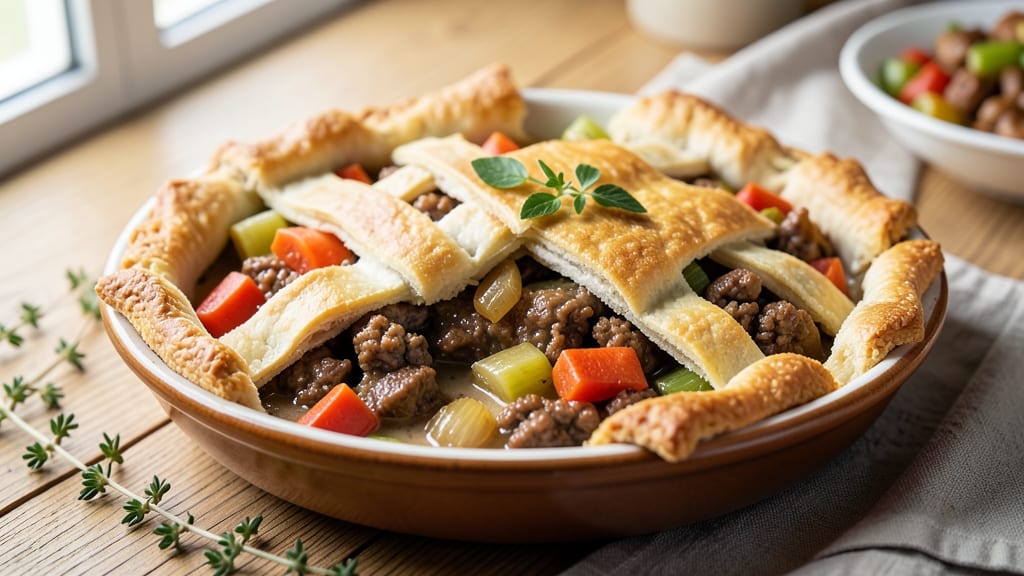
This turkey pot pie with biscuit crust recipe delivers all the comfort of a classic pot pie with the flaky, buttery perfection of a Southern biscuit topping.
After years of perfecting my own version—including that disastrous first attempt that inspired me to start cooking full-time—I've developed a method that combines rich, savory filling with a golden, tender crust that holds up to every forkful.
The secret lies in a precise balance of ingredients and techniques that ensure the biscuit stays flaky, not soggy.
The filling starts with tender turkey pieces simmered in a fragrant blend of vegetables and herbs, then thickened into a velvety gravy that coats every bite. What sets this recipe apart is the biscuit crust, which achieves its signature texture through a simple yet effective blind-baking technique.
Whether you're using homemade biscuit dough or store-bought for convenience, the result is a pot pie that looks and tastes like it came straight from a New England family dinner table.
By the time it emerges from the oven, you'll have a pot pie with a flaky, golden crust that peels back to reveal a bubbling gravy filled with perfectly seasoned turkey and vegetables.
The contrast between the crispy top and tender filling makes each bite irresistible, while the aromatic herbs and savory gravy create a dish that's both comforting and impressive enough for guests. This is the kind of recipe that transforms a simple weeknight dinner into a memorable meal.
Ready in just 60 minutes with minimal prep, this turkey pot pie is perfect for feeding a crowd or enjoying a cozy family dinner. The best part?
Leftovers reheat beautifully, making it an ideal make-ahead option. Let's get started on creating a pot pie that'll become your new go-to comfort dish.
Ingredients for recipe for turkey pot pie with biscuit crust
Six servings of comfort food with a flaky crust and savory filling—just the right ingredients for a perfect pot pie.
| Ingredient | Amount | Notes |
|---|---|---|
| Ground Turkey 🦃 | 1 ½ lb | 93% lean for best texture |
| All-Purpose Flour 🌾 | ½ cup | For gravy thickening |
| Carrots 🥕 | 2 medium | Peeled and sliced into rounds |
| Yellow Onion 🧅 | 1 whole | Diced into small pieces |
| Celery Stalks 🧅 | 2 whole | Diced into small pieces |
| Fresh Thyme 🌿 | 1 tbsp | Leaves only, chopped |
| Fresh Rosemary 🌿 | 1 tbsp | Chopped finely |
| Chicken Broth 💧 | 2 cups | Low-sodium preferred |
| Heavy Cream 🥛 | ½ cup | Full-fat for richness |
| Unsalted Butter 🧈 | ½ cup | Cold for biscuit dough |
| All-Purpose Flour 🌾 | 2 ½ cups | For biscuit dough |
| Baking Powder 🍞 | 1 tbsp | For biscuit lift |
| Salt 🧂 | 1 ½ tsp | Kosher or sea salt |
| Black Pepper 🌶️ | ½ tsp | Freshly ground |
| Milk 🥛 | ½ cup | Whole milk preferred |
The turkey should be 93% lean—anything leaner risks drying out. Trader Joe's and Costco carry excellent pre-ground turkey for convenience, but buying whole breast and grinding it yourself gives the best texture. For the vegetables, I always dice them uniformly—small pieces cook faster and blend smoothly into the gravy. Fresh herbs like thyme and rosemary make a world of difference here. If you're using dried, reduce to one-third the amount and toast them lightly in a dry pan first for deeper flavor. The carrots can be baby carrots if that's what's handy, but peeling them first ensures a cleaner texture in the filling.
No chicken broth? Vegetable broth works just as well—just add a pinch of chicken bouillon powder to mimic the depth. Heavy cream can be swapped for half-and-half or coconut cream if you're avoiding dairy, though the texture will be slightly lighter. For the biscuit crust, butter matters more than flour—use European-style butter like Plugra if you can find it, as it has a higher fat content for extra flakiness. The baking powder is non-negotiable here—Diamond Crystal is the gold standard, but Aluminum-free brands like Rumford work too. If your biscuit dough feels too dry, add 1 tablespoon milk at a time until it comes together.
The filling keeps beautifully in the fridge for up to 4 days—just reheat gently in a skillet with a splash of broth to restore moisture. For the biscuit dough, wrap it tightly in plastic wrap and refrigerate for up to 2 days before use. If you're making this ahead, bake the filling first, then assemble with the biscuit crust and bake immediately—this prevents a soggy bottom. The whole pot pie reheats well too: 350°F for 20-25 minutes** until the crust is golden and the filling is bubbling. Portion into individual servings for easy lunches—just reheat covered with a damp paper towel.
Why You'll Love This Recipe
- No Chopping Chaos: I swear by this version because you can use pre-diced veggies—just dump the frozen carrots, onions, and celery straight in. The ground turkey browns in one pan while you mix the biscuit dough, so no juggling three burners or scrubbing extra pots.
- Biscuit Magic: That flaky, buttery crust from the biscuit dough? It’s the star. The turkey filling stays creamy and savory, but the biscuit adds that crispy, golden contrast—like a hug from your grandma’s kitchen, but with half the effort.
- Leftovers That Beg: This makes way more than you’ll eat in one sitting, and honestly? The second day is even better. The biscuit crust softens just enough to soak up the juices, and the veggies don’t turn mushy—just tender perfection. I freeze portions too; reheating is a 10-minute microwave or oven win.
- Budget-Friendly Feast: Ground turkey stretches farther than whole cuts, and the veggies are pantry staples. A bag of flour and a stick of butter turn into that golden crust, and you’ll end up with enough for dinner and lunch. Plus, it’s the kind of dish that makes you look fancy without spending fancy money.
Step-by-step instructions for turkey pot pie with biscuit crust
Here's how to build a comforting pot pie with tender turkey filling and golden biscuit crust.
Cook the Turkey and Vegetable Filling
In a large skillet, heat 0.5 cup unsalted butter over medium-high heat until melted. Add the 1.5 lb ground turkey and cook, breaking it apart with a wooden spoon, until no longer pink and the meat is fully browned—about 5-6 minutes. This ensures all the turkey is properly cooked through.
Push the turkey to one side of the skillet and add 0.5 cup all-purpose flour to the empty space. Stir constantly for 1-2 minutes until the flour turns golden brown. This creates a flavorful roux that will thicken your gravy. Gradually whisk in 2 cups chicken broth to prevent lumps from forming.
Add the diced yellow onion, sliced carrots, and diced celery stalks to the skillet. Stir in the chopped fresh thyme and rosemary, then bring the mixture to a gentle simmer. Cook uncovered for 10-12 minutes until the vegetables are tender and the liquid has slightly thickened. The filling should be flavorful and cohesive, ready for the biscuit topping.
Prepare the Biscuit Dough
In a separate large bowl, combine the 2.5 cups all-purpose flour, 1.5 tsp salt, 0.5 tsp black pepper, and 1 tbsp baking powder. Whisk these dry ingredients together until evenly distributed. Cut in the 0.5 cup cold unsalted butter using a pastry cutter or your fingers until the mixture resembles coarse crumbs with pea-sized butter pieces.
Make a well in the center of the dry ingredients and pour in the 0.5 cup milk. Using a fork or your hands, gently mix just until the dough comes together. Be careful not to overwork it—this keeps the biscuits tender. Turn the dough onto a lightly floured surface and knead it just 2-3 times until it holds together. The dough should be slightly shaggy, not smooth.
Assemble and Bake the Pot Pie
Preheat your oven to 375°F. Transfer the cooked turkey and vegetable filling to a 9x13-inch baking dish. Spread it evenly to create a thick, even layer. Roll out the biscuit dough on a lightly floured surface to about 1/8-inch thickness. Cut it into strips about 2 inches wide and arrange them in a crosshatch pattern over the filling, slightly overlapping the edges.
Bake for 30-35 minutes until the biscuit crust is golden brown and the filling is bubbling at the edges. The crust should be crisp and flaky, while the filling underneath should be thick and creamy. If the crust browns too quickly, tent it loosely with aluminum foil to prevent over-browning.
Add Cream and Finish Baking
Remove the pot pie from the oven and stir in the 0.5 cup heavy cream directly into the filling. Return it to the oven and bake for an additional 10-15 minutes until the cream is fully incorporated and the filling is heated through. The crust should be deep golden brown and the filling should be thick and velvety.
Let the pot pie rest for 10 minutes before serving. This allows the filling to set slightly and makes it easier to slice. The biscuit crust should be crisp and flaky, while the filling should be rich, savory, and perfectly seasoned with herbs. Serve warm with a side of fresh green salad or steamed vegetables.
Pro Tips For Making Recipe For Turkey Pot Pie With Biscuit Crust
- Brown the Turkey Properly: Skip the quick sear—let that ground turkey hit 165°F before adding broth. I used to rush it, and the filling always tasted undercooked. Break it into small chunks first, then cook low and slow with a splash of water to keep it moist.
- Dice Veggies Uniformly: Carrots, onions, and celery should all be cut to the same size—about ¼-inch dice. Big chunks stay tough; tiny bits turn to mush. Use a sharp knife and don’t overcrowd the pan, or you’ll steam instead of sauté.
- Don’t Overmix the Dough: The biscuit crust is forgiving, but handle it like you would pie dough—just until it comes together. Overworking makes it tough. Press it gently into the pie dish and cut slits for steam to escape, or it’ll puff up like a sad soufflé.
- Layer Broth Last: Assemble the veggie-turkey filling first, then pour in the broth after adding the biscuit crust. This keeps the bottom crispy instead of soggy. If you’re short on time, use a splash of cold broth to glaze the crust before baking—it’ll brown faster.
Common mistakes when making this recipe
Skipping the Blind-Bake
One of the most common mistakes is skipping the blind-bake step entirely, which leads to a soggy crust. The biscuit dough needs to be pre-baked for 8-10 minutes at 375°F with pie weights or dried beans to prevent steam from making it gummy.
I learned this the hard way—my first attempt had a crust that dissolved into the filling like a sad pancake. 🥲
Overworking the Dough
Handling the biscuit dough too much develops gluten, which makes the crust tough instead of tender. Mix just until combined—your fingers should come out clean with minimal effort. I’ve seen home cooks knead this like pizza dough, and it’s a crime against flakiness. Keep it shaggy and rough!
Uneven Filling Thickness
An uneven filling layer causes some areas to cook faster than others, leading to a burnt crust in spots while the center stays undercooked. I always spread the filling in a thick, even layer—about 1.5 inches deep—using a spatula to smooth it out.
This ensures consistent doneness and a perfect golden crust.
Adding Cream Too Early
Stirring in the heavy cream before the final bake can make the filling watery and dilute the flavors. The cream should be added after the initial 30-35 minutes of baking, when the filling is already thickened.
This step seals in the richness and creates that velvety texture we all love. 💛
Using Warm Butter
Cold butter is non-negotiable for flaky biscuits. If you cut warm butter into the dough, it melts too quickly, creating dense pockets instead of layers. I keep my butter in the freezer for 10 minutes before cutting it into the flour—this ensures those signature flakes.
Trust me, your crust will thank you.
Skipping the Rest Time
Serving pot pie immediately after baking can cause the filling to spill out or the crust to fall apart. Letting it rest for 10-15 minutes allows the filling to set and the crust to firm up.
I’ve seen too many rushed attempts where the first slice sends gravy everywhere—don’t be that person!
Nutrition facts
Frequently asked questions
Can I use store-bought biscuit dough instead of making it from scratch?
Store-bought biscuit dough works perfectly—just roll it out to 1/8-inch thickness and follow the same assembly instructions. For best results, use a high-quality brand like Pillsbury or your local bakery's dough. The texture will be slightly less flaky but still delicious, and it saves 20 minutes of prep time.
How do I keep the biscuit crust from getting soggy?
The key is blind-baking! Pre-bake the biscuit strips at 375°F for 8-10 minutes with pie weights or dried beans before adding the filling. This creates a barrier that prevents steam from making the crust gummy. Another trick is to brush the biscuits with a little melted butter before baking for extra crispiness.
Can I make this pot pie ahead of time?
Yes! Assemble the pot pie (without the biscuit crust), cover tightly, and refrigerate for up to 2 days. When ready to bake, add the biscuit topping and bake as directed. For freezing, bake the filling only, then freeze it in portions. Add the biscuit crust fresh when reheating at 350°F for 20-25 minutes.
What can I substitute if I don't have heavy cream?
Use half-and-half or coconut cream for a lighter texture, though the flavor will be slightly different. For a dairy-free option, mix 1/4 cup melted butter with 1/4 cup milk to mimic the richness. The filling will still be creamy, though the mouthfeel won't be as velvety.
Why did my biscuit crust turn out dense instead of flaky?
Overworking the dough or using warm butter are the most common culprits. Cold butter is non-negotiable—keep it in the freezer for 10 minutes before cutting it into the flour. Also, handle the dough minimally; it should be shaggy, not smooth. If the crust still feels dense, try adding 1 extra tablespoon of cold butter next time.