
Main Courses
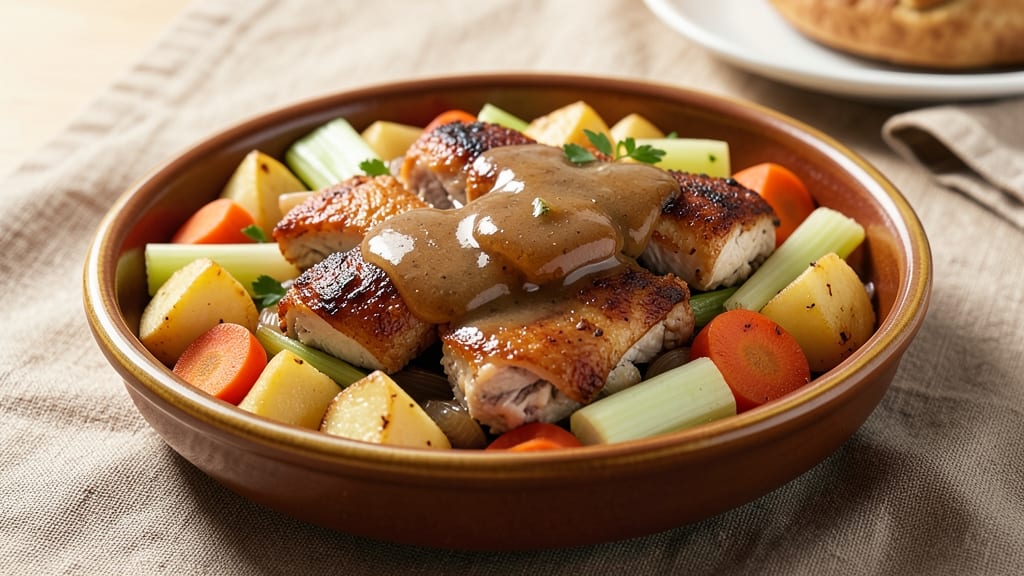
This pot pie filling recipe without crust delivers all the comforting flavors of classic pot pie—rich meat, tender vegetables, and savory gravy—without the fuss of baking a crust. 💛 I developed this after years of making traditional pot pies, realizing the filling alone is what everyone loves most.
The secret lies in slow-cooked chicken thighs, carrots, and potatoes that develop deep, caramelized flavors while staying fork-tender.
What makes this recipe special is its versatility—you can serve it as a standalone dish with crustless foil packets, top it with a separate biscuit crust, or even use it as a filling for homemade pie crusts.
The ingredients are simple but packed with flavor: chicken thighs for richness, carrots and celery for sweetness, and a roux-based gravy that thickens beautifully. It's the kind of filling that transforms ordinary weeknight dinners into something hearty and satisfying.
By the time you're done, you'll have a pot pie filling that's perfectly balanced—juicy chicken, tender vegetables, and a velvety gravy that coats every bite. The best part? You can make it ahead and reheat it easily, making it ideal for meal prep or last-minute gatherings.
Whether you're serving it with a crust or enjoying it crustless, this filling delivers all the comfort of pot pie without the extra effort.
For an added touch, garnish with fresh parsley or a sprinkle of cheese before serving. This recipe proves that the heart of pot pie lies in the filling—rich, flavorful, and completely customizable. Let's get cooking!
Ingredients for pot pie filling recipe without crust
Chicken thighs, carrots, and potatoes—simple ingredients that pack serious flavor without needing a crust.
| Ingredient | Amount | Notes |
|---|---|---|
| Chicken Thighs, Bone-In 🍗 | 1 ½ lb | Skin-on, trimmed of excess fat |
| Carrots 🥕 | 3 medium | Peeled, cut into 1-inch pieces |
| Celery Stalks 🧅 | 3 whole | Trimmed, cut into 1-inch pieces |
| Russet Potatoes 🥔 | 2 medium | Peeled, cut into 1-inch cubes |
| Yellow Onion 🧅 | 1 medium | Diced, about 1 cup |
| All-Purpose Flour 🌾 | 2 tbsp | For roux, Diamond Crystal preferred |
| Unsalted Butter 🧈 | 2 tbsp | Cold for roux, full-fat preferred |
| Chicken Broth 💧 | 1 ½ cups | Low-sodium, homemade or store-bought |
| Fresh Thyme 🌿 | 1 tbsp | Leaves only, or 1 tsp dried |
| Garlic Cloves 🧄 | 4 cloves | Minced, or 1 tsp garlic powder |
| Salt 🧂 | 1 ½ tsp | Kosher or sea salt, adjust to taste |
| Black Pepper 🌶️ | ½ tsp | Freshly ground preferred |
| Fresh Parsley 🌿 | ¼ cup | Chopped, for garnish |
The chicken thighs are non-negotiable here—they stay juicy while the bones infuse the broth with depth. Look for bone-in, skin-on thighs at Costco or Trader Joe's for the best price. Trim any thick fat patches, but leave the skin for crispiness. Carrots and celery should be fresh, with vibrant color—no rubbery stalks. For the potatoes, Russets hold up best to slow cooking, but Yukon Golds add creaminess. If you're prepping ahead, peel and chop everything the night before so you just need to cook in the morning.
No fresh thyme? Dried works at one-third the amount, but the flavor won't be the same. Short on butter for the roux? Olive oil works in a pinch, though it won't brown as beautifully. Chicken broth low-sodium? Add an extra pinch of salt to compensate. The garlic can be pre-minced from a jar (trust me, it's fine), but fresh always tastes better. For extra richness, stir in 1 tbsp of cream cheese at the end—it melts right into the gravy. And if you're making this for a crowd, double the batch—the filling reheats even better the next day.
This filling keeps for 4-5 days in the fridge, though it's best within 2 days for peak texture. Freeze for up to 3 months by portioning into foil packets or airtight containers. To reheat, bake at 375°F until bubbly (about 20 minutes), or warm in a skillet over medium heat. Garnish with parsley right before serving—it brightens up the whole dish. Leftovers? Perfect for stuffed baked potatoes or as a hearty side with crustless bread.
Why You'll Love This Recipe
- No-Fuss Prep: I swear by this one—just brown the chicken thighs, toss in chopped veggies (carrots, celery, onion) and diced potatoes, then let it simmer. No peeling, no fancy techniques, just dump-and-go. Honestly, the hardest part is waiting for the potatoes to get tender.
- Rich, Layered Depth: That bone-in chicken? It melts in your mouth while infusing the broth with flavor. Add a splash of cream or gravy at the end, and you’ve got a filling so satisfying it’ll make you forget you skipped lunch.
- Leftovers That Shine: This filling keeps better than most—reheat it in a skillet with a little butter, and it’s just as good the next day. Between us, I’ve turned cold leftovers into breakfast hash (yes, really) and no one ever complains.
- Budget Meal Magic: Bone-in chicken thighs stretch further than breasts, and potatoes, carrots, and onions are cheap staples. A single batch feeds four for dinner and makes lunch the next day—no guilt, no waste, just pure value.
Step-by-step instructions for savory meat and veggie foil-packet magic
Here's how to build a rich, hearty pot pie filling that shines without a crust.
🍳 Step 1: Sear the Chicken Until Golden
Pat the 1.5 lb chicken thighs dry with paper towels and season generously with 1.5 tsp salt and 0.5 tsp black pepper. Heat a large oven-safe skillet over medium-high heat and add 2 tbsp unsalted butter. Once the butter foams, add the chicken skin-side down and cook for 5-6 minutes until the skin is deep golden brown and crispy.
Flip the chicken and cook for another 4-5 minutes until the meat reaches 165°F internally. Remove the chicken from the skillet and set it aside on a plate, leaving all the rendered juices and butter in the pan. This step creates the foundation for your filling's rich flavor.
👨🍳 Step 2: Build the Roux and Sauté Vegetables
Reduce the heat to medium and add the 2 tbsp all-purpose flour to the skillet, stirring constantly for 1-2 minutes until it forms a smooth, light brown roux. This will help thicken your filling beautifully. Immediately add the 1 medium diced yellow onion and cook for 2 minutes until softened.
Add the 3 medium peeled and cubed russet potatoes, 3 medium peeled and chopped carrots, and 3 whole trimmed and chopped celery stalks. Stir everything together and cook for 5 minutes until the vegetables begin to soften slightly. This step develops the vegetables' natural sweetness and ensures they cook evenly with the chicken.
🍳 Step 3: Simmer the Filling with Aromatics
Pour in the 1.5 cups chicken broth and scrape up any browned bits from the bottom of the skillet with a wooden spoon. Add the 4 minced garlic cloves and 1 tbsp fresh thyme, then bring the mixture to a gentle simmer. Return the chicken to the skillet, skin-side up, and cover with a lid.
Simmer for 15-20 minutes until the potatoes are fork-tender and the chicken is fully cooked through. You'll know it's ready when the liquid has reduced slightly and the flavors have melded together beautifully. The chicken should easily pull away from the bone, and the vegetables should be tender but still hold their shape.
🥘 Step 4: Finish and Prepare for Serving
Remove the chicken from the filling and shred the meat using two forks, discarding the bones. Return the shredded chicken to the skillet and stir to combine. Taste and adjust seasoning if needed—you might want to add a pinch more salt or pepper to balance the flavors.
Garnish with 0.25 cup chopped fresh parsley just before serving. This filling is perfect for serving in foil packets over a bed of greens, with crusty bread, or even spooned over mashed potatoes. The rich, savory flavors will make you forget you're missing the crust!
Pro Tips For Making Pot Pie Filling Recipe Without Crust
- SEAR THE CHICKEN FIRST: Bone-in thighs need that crispy skin to build flavor—don’t skip it. Pat them very dry (yes, even if they’re fresh from the package), then sear them skin-side down in a hot pot for 8-10 minutes until golden. I used to rush this, and the filling always tasted flat afterward.
- CUT POTATOES UNIFORM: Russets break down unevenly, so slice them into ½-inch chunks—no smaller, or they’ll turn to mush. Soak them in cold water for 10 minutes first to remove excess starch, then drain well. This keeps them creamy but holds their shape.
- DON’T CROWD THE POT: After browning the chicken, dump everything in and let it sit undisturbed for 5 minutes. The veggies will release moisture, and the chicken will crisp again—this locks in flavor. I learned this the hard way when my first batch tasted like stew.
- SAVE THE BROTH: Strain the chicken broth after removing the thighs, but don’t discard the bones. Simmer them for 15 minutes in fresh water, then strain again—this makes a richer base than store-bought. (Yes, it’s extra work, but the filling tastes like it simmered for hours.)
Essential equipment for pot pie filling recipe without crust
Oven-Safe Skillet
An oven-safe skillet is your secret weapon for this recipe—I swear by my All-Clad Stainless Steel 12-inch because it handles high heat beautifully and transitions seamlessly from stovetop to oven.
If you're on a budget, a Lodge cast iron skillet works just as well and adds that extra crispiness to the chicken skin. Just avoid non-stick pans—they can't handle the heat required for proper browning and might release toxic fumes when overcooked. 🔥
Wooden Spoon
Never use metal utensils when stirring your roux or scraping up browned bits—it's a recipe for lumps and ruined texture. A long-handled wooden spoon (like the OXO Good Grips) is my go-to for stirring the filling without tearing the roux or damaging your pan.
The wood also helps distribute heat evenly, preventing hot spots that can burn your vegetables. I keep one in my kitchen drawer just for this purpose.
Measuring Spoons
Precision matters when measuring spices and flour for the roux—2 tbsp flour is crucial for thickening, and too little will leave you with a runny filling. I use stainless steel measuring spoons from West Bend because they're durable and easy to read.
For the thyme and garlic, a microplane (like the Bergstrom) makes mincing garlic quick and even, while a small knife works for thyme leaves. Don't skip measuring—trust me, it makes all the difference. ✨
Kitchen Timer
Timing is everything, especially when balancing the simmering step—15-20 minutes can feel like forever if you're not paying attention. My Instant Vortex timer sits on the counter during every cook session, and I set it the moment the filling starts simmering.
Pro tip: Place it where you can see it without turning your back on the stove. Overcooking turns tender veggies mushy, while undercooking leaves them crunchy. The timer keeps me from second-guessing. ⏱️
Foil and Parchment Paper
For serving the filling crustless, heavy-duty aluminum foil (like Reynolds) is perfect for making individual foil packets. If you're prepping ahead, line a baking sheet with parchment paper to store the filling—it prevents sticking and makes reheating a breeze. I also use foil to cover the skillet when simmering, trapping steam and keeping flavors concentrated. Just
Chef's Knife
A sharp 8-inch chef's knife (I love the Mac Knife Professional) is non-negotiable for chopping onions, celery, carrots, and potatoes efficiently. Dull knives make prep frustrating and uneven—you'll end up with some veggies overcooked and others underdone. Keep your knife sharp with a Wüsthof honing steel, and always cut on a stable cutting board (like John Boos Walnut). Safety first: curl your fingers inward when holding the food to protect your fingertips. 💪
Nutrition facts
Frequently asked questions
Can I make this filling vegetarian?
Swap the chicken thighs for 2 cups of firm tofu (pressed and cubed) or 1.5 lbs of mushrooms (like cremini or portobello) for meaty texture. Use vegetable broth instead of chicken broth, and add 1 tbsp soy sauce or 1 tsp smoked paprika for depth. The roux and vegetables will still create a rich, satisfying base.
How do I serve this filling without a crust?
Try these crustless options: Spoon into foil packets with a sprinkle of cheese, bake at 375°F for 10 minutes, or serve over mashed potatoes or crusty bread. For a fancy touch, arrange on a platter with steamed greens and drizzle with extra gravy. The filling tastes just as comforting without the crust!
Why does my filling turn out watery? Watery filling usually means the roux didn't thicken enough.
Can I make this ahead of time?
Yes! This filling reheats beautifully. Store in an airtight container in the fridge for 4-5 days or freeze for 3 months. Reheat in a skillet over medium heat or bake covered at 350°F until warmed through (20-25 minutes). The flavors actually deepen overnight, making it perfect for meal prep!
What's the best way to add a crust later?
For a quick crust, top with store-bought biscuits or puff pastry and bake at 375°F for 12-15 minutes. For homemade, spoon filling into a 9-inch pie dish, top with a pre-baked pie crust, and bake until golden. Pro tip: Brush the crust with egg wash for extra shine!