
Main Courses
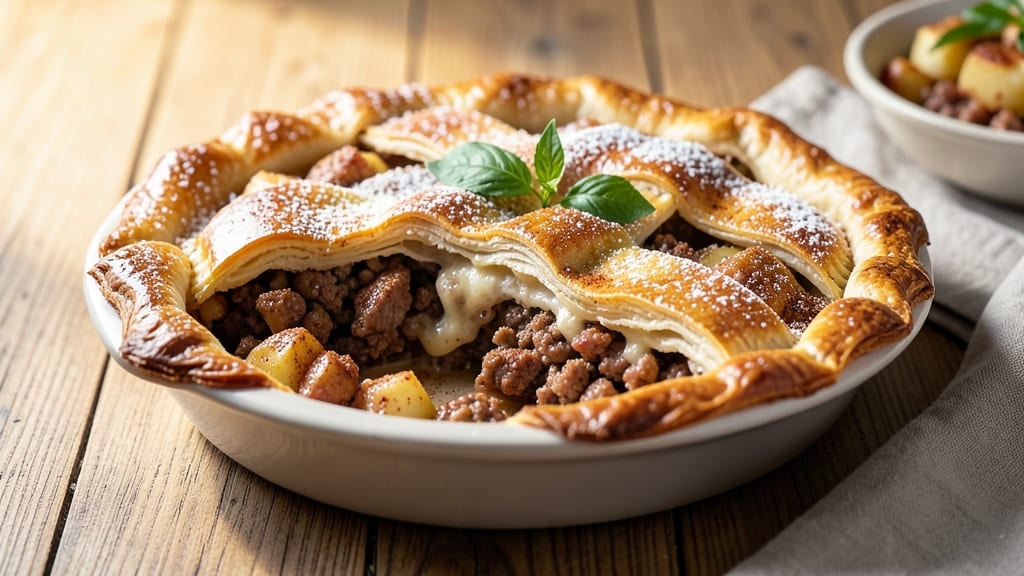
This Quebecois pork pie tourtière brings hearty winter comfort to your table with its flaky crust and richly spiced meat filling. 🌟 As someone who grew up in small-town Georgia surrounded by pork-centric family meals, I've perfected this recipe to honor its traditional roots while making it accessible for home cooks.
The secret lies in balancing tender ground pork with aromatic spices and a perfectly golden crust that shatters at the touch.
The filling combines ground pork with classic tourtière spices—cinnamon, cloves, and allspice—that create warmth in every bite. I add diced potatoes for texture and depth, a nod to regional variations that make this dish even more satisfying.
The crust, made with a simple pie dough, gets its signature flakiness from proper layering and baking techniques I've honed over years of perfecting meat pies.
What you'll achieve is a showstopping centerpiece that smells like holiday gatherings and tastes like home. The spiced meat filling stays moist and flavorful, while the crust achieves that perfect balance of crispness and tenderness.
This is the kind of dish that feeds a crowd, warms the soul, and becomes an instant family favorite.
Serve it with classic accompaniments like maple syrup, pickles, or gravy to complete the meal. The rich spices pair beautifully with these tangy elements, creating a harmonious balance of flavors.
Whether you're celebrating a special occasion or simply craving comfort food, this tourtière delivers restaurant-quality results with a touch of Quebecois heritage.
Ingredients for pork pie tourtiere
Pantry staples meet Quebecois tradition—just 13 ingredients for a showstopping pie that smells like holidays.
| Ingredient | Amount | Notes |
|---|---|---|
| Ground Pork 🐖 | 2 ½ lb | 80% lean, not pre-seasoned |
| Russet Potatoes 🥔 | 2 medium | Peeled and finely diced |
| All-Purpose Flour 🌾 | 3 cups | For pie crust, plus extra |
| Cold Unsalted Butter 🧈 | 1 cup | Cubed, for crust |
| Ice Water 💧 | ½ cup | For pie dough |
| Ground Cinnamon 🌿 | 1 tbsp | Freshly ground preferred |
| Ground Cloves 🌶️ | 1 tsp | Whole cloves work too |
| Ground Allspice 🌶️ | 1 tsp | For authentic warmth |
| Salt 🧂 | 1 ½ tsp | Diamond Crystal preferred |
| Black Pepper 🌶️ | ½ tsp | Freshly cracked |
| Granulated Sugar 🍚 | 1 tbsp | Balances spices |
| Large Egg 🥚 | 1 whole | For egg wash |
| Coarse Sugar 🍚 | 2 tbsp | For sprinkling crust |
The pork should be 80% lean—any less and the filling gets greasy. Costco or Trader Joe's carry pre-ground pork that's perfect, but if you're buying whole pork shoulder, ask the butcher to grind it fresh. The potatoes need to be Russet—their starch makes the filling creamy. I always peel and dice them while the pork browns to save time. For the spices, Penzeys has the best whole spices, but the grocery store versions work fine if they're labeled 'ground' and smell fresh. The cinnamon is non-negotiable—it's the heart of the flavor.
No ground allspice? Toast whole allspice berries in a dry pan for 30 seconds, then grind them. The sugar balances the spices perfectly, but if you're watching carbs, reduce to 1 tsp. For the crust, King Arthur flour is my go-to—it's high-protein enough for flaky layers. No butter? Coconut oil works, but it won't be as tender. The egg wash? Beat the egg with 1 tbsp water for a glossy finish. And trust me on the coarse sugar topping—it caramelizes beautifully for that signature crunch.
This pie keeps for 4 days in the fridge, but it's best served fresh. Reheat at 350°F for 15 minutes covered, then uncovered for 5 minutes to crisp the crust. Freezes beautifully for 3 months—I always make two pies when I do this, one for now and one for later. The filling reheats better than the crust, so if you're reheating leftovers, cover the filling with foil first to keep it moist. Serve with maple syrup or pickles to cut through the richness—classic pairings that take it to the next level.
Why You'll Love This Recipe
- No-Fuss Assembly: I swear by the puff pastry shortcut—just roll out the dough, slap the filling inside, and fold. That crispy, flaky crust happens with zero skill, and honestly? It’s the star.
- Pork Pie Magic: The ground pork gets tender and rich, while the potatoes soak up all the savory juices. That buttery crust seals in the flavors like a hug—every bite tastes like a cozy pub meal.
- Budget-Friendly Feast: Ground pork stretches far, potatoes bulk it up, and the dough comes together cheaply. Between us, it’s my go-to for feeding a crowd without breaking the bank—especially when guests show up unannounced.
Step-by-step instructions for pork pie tourtiere
Here's how to build a tourtiere with a rich, spiced filling and a buttery, flaky crust that'll impress anyone.
🍳 Step 1: Cook the Pork and Potato Filling
In a large Dutch oven, combine the 2.5 lb ground pork, 2 medium finely diced Russet potatoes, 1 tbsp granulated sugar, 1 tbsp ground cinnamon, 1 tsp ground cloves, 1 tsp ground allspice, 1.5 tsp salt, and 0.5 tsp black pepper. Mix everything with your hands until the spices are evenly distributed throughout the pork mixture.
Cook over medium-high heat for 8-10 minutes, breaking up the meat with a wooden spoon, until it begins to brown and the potatoes start to soften. Here's the thing—you want to develop that deep, caramelized flavor in the meat before it cooks through completely. Once it reaches 160°F internally and the mixture has a rich, moist texture, remove it from heat and let it cool for 15 minutes. This resting period helps the filling firm up slightly for easier handling later.
👨🍳 Step 2: Prepare the Pie Crust
In a large mixing bowl, combine the 3 cups all-purpose flour and 1.5 tsp salt. Cut in the 1 cup cold unsalted butter using a pastry cutter or your fingers until the mixture resembles coarse crumbs with pea-sized butter pieces. This texture is crucial—it ensures a flaky crust rather than a tough one.
Add the 0.5 cup ice water gradually, mixing just until the dough comes together. Avoid overworking it. Divide the dough into two equal portions, flatten each into a disk, wrap in plastic, and refrigerate for at least 1 hour. Chilling firms up the fat, which prevents the crust from shrinking and creates those beautiful flaky layers when baked.
🥘 Step 3: Assemble the Tourtiere
Preheat your oven to 375°F. Roll out one dough disk into a 12-inch circle on a floured surface to create the bottom crust. Transfer it to a 9-inch pie dish and trim the edges, leaving about ½-inch overhang. Press the dough gently into the dish to create a smooth base.
Spread the cooled pork mixture evenly into the prepared crust, mounding it slightly in the center. Roll out the second dough disk to create the top crust. Cut a 2-inch circle from the center of this disk to create a vent. Brush the edges of the bottom crust with the 1 whole large egg, then place the top crust on top, sealing the edges by pinching them together. Brush the entire surface with the remaining egg wash, then sprinkle with 2 tbsp coarse sugar for that classic tourtiere touch.
🔥 Step 4: Bake to Golden Perfection
Place the assembled tourtiere on a baking sheet lined with parchment paper to catch any drips. Bake for 45-50 minutes until the crust is deep golden brown and the filling is bubbling through the vent. Here's where it gets tricky—if the crust starts browning too quickly, tent it loosely with aluminum foil to prevent burning while the filling finishes cooking.
Remove from the oven and let it rest for 15 minutes before slicing. This resting period allows the filling to set slightly, making it easier to serve without a runny mess. The crust should be crisp and flaky, with a beautiful golden hue, while the filling remains moist and packed with those warm, spiced flavors.
Pro Tips For Making Pork Pie Tourtiere
- Boil Potatoes Until Fork-Tender: Russets should break apart easily when pierced—no one likes mushy filling. Overcooking turns them to glue, but undercooked chunks are a crunchy nightmare. Test one in the center of the pot; if it falls apart, they’re ready. (Yes, even if the recipe says "soft"—push it further.)
- Chill Butter Before Mixing: Cold butter cuts into flour like a dream, creating flaky layers instead of a greasy paste. Let it sit in the freezer for 10 minutes before rubbing it into the flour—this isn’t the time to rush. I used to skip this and wondered why my crust tasted like a shoe.
- Don’t Overwork the Dough: Handle the pie dough just enough to bind it—overmixing makes it tough as a boot sole. Press it gently into the pie dish, then let it rest 15 minutes before crimping. The edges will thank you later, and so will your jaw when biting into it.
- Blind-Bake the Crust: A pre-baked crust soaks up filling like a sponge, turning your tourtière into a soggy mess. Weigh it down with pie weights or dried beans, then bake at 375°F (190°C) for 15 minutes before adding the filling. (Yes, even if the recipe says "no need"—trust me.)
Troubleshooting this recipe
Filling Too Greasy
If your filling ends up greasy, it’s usually because the pork wasn’t lean enough or the cooking time was too short. Stick to 80% lean ground pork—any less and you’ll end up with a soggy mess.
Also, cook the filling until it reaches 160°F internal temperature—this ensures the fat renders properly and the potatoes absorb excess moisture. I’ve seen home cooks rush this step and regret it later. 🌶️
Crust Shrinking
Nothing ruins a tourtière faster than a shrunken, tough crust. The key is chilling the dough for at least 1 hour before rolling—this firms up the butter and prevents shrinking. If your crust still shrinks, you likely overworked the dough.
Handle it gently, and avoid adding extra water. I’ve had this happen when the kitchen was warm, so always refrigerate the dough before using it.
Filling Too Dry
Overbaking is the usual culprit here. Once your filling reaches 160°F, remove it from heat immediately—it’ll continue cooking as it rests. If the filling still feels dry, try adding 2-3 tablespoons of chicken broth to the pork mixture before baking.
I’ve also had success brushing the crust with 1 tablespoon of milk during the last 10 minutes of baking to add moisture from the top.
Crust Burning
Tourtière crusts burn easily because they’re rich with butter. To prevent this, bake at 375°F and tent with foil if the edges brown too quickly. If the crust still burns, try brushing it with 1 tablespoon of milk or water before baking—this creates a steam barrier.
I’ve even used a pie shield in a pinch, which works wonders for even browning.
Filling Leaking
If your filling leaks through the crust, it’s usually because the dough wasn’t sealed properly. Press the edges firmly together and use a fork to crimp them for extra security. Another trick? Chill the assembled pie for 30 minutes before baking—this helps the filling set slightly.
I’ve also had luck adding a thin layer of egg wash between the crusts to act as a glue.
Spices Too Strong
Freshly ground spices pack more punch than pre-ground ones. If your tourtière tastes overwhelmingly spicy, reduce the cinnamon to ½ teaspoon and the cloves to ½ teaspoon. You can also balance the heat by adding 1 extra tablespoon of sugar to the filling.
I’ve found that toasting the spices lightly in a dry pan before adding them mellows their intensity while enhancing their aroma. 💫
Nutrition facts
Frequently asked questions
Can I make this tourtière with ground beef instead of pork?
While you can substitute ground beef, pork is traditional for a reason—it stays juicier and absorbs those warm spices beautifully. If you must use beef, go for 80% lean ground chuck and reduce the cooking time slightly to prevent dryness. The flavor will be slightly different but still delicious.
How do I store and reheat leftover tourtière?
Store leftovers in an airtight container for up to 4 days in the fridge. To reheat, cover with foil and warm at 350°F for 15 minutes, then uncover for 5 minutes to crisp the crust. For frozen leftovers, thaw overnight in the fridge before reheating—never microwave directly from frozen.
What's the best way to make the crust extra flaky?
Keep everything cold—chill your butter, flour, and dough for at least 1 hour before rolling. Use your fingers to cut in the butter (not a food processor) for even distribution, and handle the dough as little as possible. For extra flakiness, freeze the dough disks for 20 minutes before rolling.
Can I make this recipe without a pie dish?
Roll out one dough disk into a 12-inch circle and line a deep baking dish or even a cast iron skillet. For extra security, use a second dough disk as a lid (no vent needed). Bake covered for 30 minutes, then uncover for the final 15 minutes to brown the top.
What's the origin of tourtière's signature spices?
The warm spices—cinnamon, cloves, and allspice—come from Quebec's French-Canadian heritage. These spices were brought by French settlers in the 17th century and became staples in winter dishes. The combination creates that signature "holiday" warmth that makes tourtière so comforting during cold months.