
Desserts
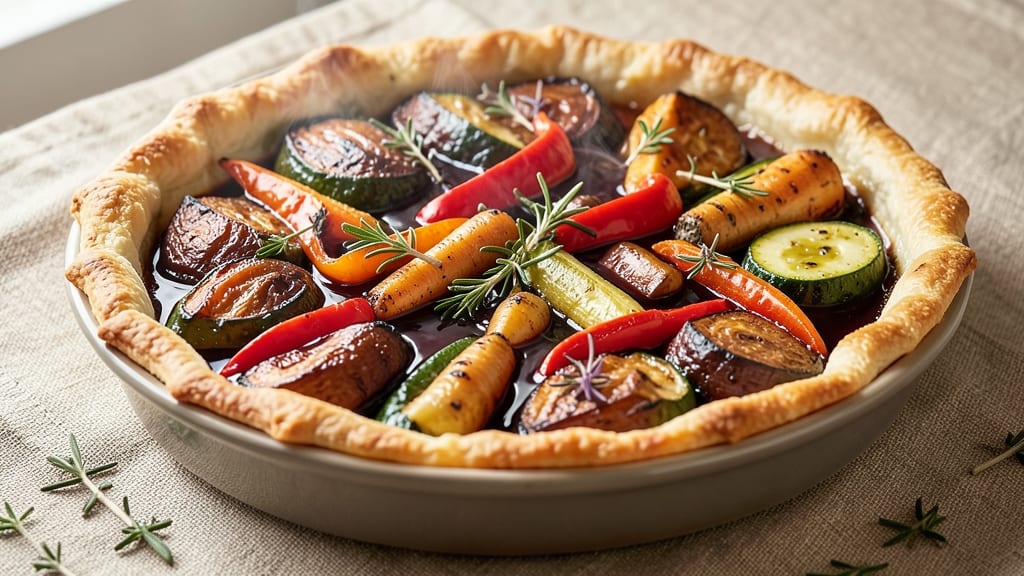
This roast vegetable pie recipe transforms humble seasonal vegetables into a showstopping savory pie with a golden, buttery crust—perfect for vegetarian dinners or plant-based gatherings. The secret lies in roasting the vegetables first, intensifying their natural sweetness and caramelized depth before baking them into a rich, herby filling. I developed this recipe after realizing how versatile roasted vegetables could be when paired with a crisp, flaky crust and sharp cheddar.
The beauty of this pie is its adaptability—swap in zucchini, bell peppers, or root vegetables depending on what’s fresh at the market. A simple store-bought or homemade pie crust forms the base, while a blend of herbs, garlic, and a splash of balsamic vinegar elevates the filling to restaurant-quality.
The result? A pie with a perfectly crisp crust, tender vegetables, and a cheesy, aromatic filling that melts in your mouth.
What makes this recipe stand out is how it balances simplicity with sophistication. No fancy techniques are required—just roast, assemble, and bake. The filling stays moist and flavorful, while the crust achieves that ideal golden-brown finish.
It’s the kind of dish that feels special enough for company but easy enough for a weeknight dinner.
Serve it warm with a side salad or crusty bread to soak up every last bite. The versatility of this recipe means you can customize it year-round, making it a go-to for any occasion. Let’s get started on creating your own savory masterpiece.
Ingredients for roast vegetable pie
These seasonal vegetables and aromatic herbs create a restaurant-worthy savory pie with crisp crust and caramelized filling.
| Ingredient | Amount | Notes |
|---|---|---|
| Seasonal Vegetables (e.g., Sweet Potatoes, Carrots, Zucchini, Bell Peppers) 🥕 | 4 cups | Chopped into even pieces |
| Extra-Virgin Olive Oil 🫒 | ¼ cup | For roasting vegetables |
| Balsamic Vinegar 🍷 | 1 tbsp | For deglazing roasting pan |
| Garlic Cloves 🧄 | 4 cloves | Minced for filling |
| Fresh Thyme Leaves 🌿 | ½ cup | Chopped, stems removed |
| Fresh Rosemary 🌿 | 1 tbsp | Chopped, finely |
| Vegetable Stock 💧 | ½ cup | Low-sodium preferred |
| Sharp Cheddar Cheese 🧀 | 1 ½ cups | Shredded, aged variety |
| Pie Crust (Store-Bought or Homemade) 🥧 | 1 package | Double-crust preferred |
| Egg Wash 🥚 | 1 whole | Beaten with 1 tbsp water |
| Diamond Crystal Kosher Salt 🧂 | 1 ½ tsp | For seasoning vegetables |
| Freshly Ground Black Pepper 🌶️ | ½ tsp | For filling seasoning |
| All-Purpose Flour 🌾 | 1 tbsp | For dusting crust |
The seasonal vegetables are the heart of this pie, so prioritize quality and even sizing. Local farmers markets often have the freshest produce, particularly sweet potatoes and zucchini, which roast beautifully. For the best flavor, choose vegetables with vibrant color and firm texture—avoid any with soft spots or wilting. The herbs, particularly fresh thyme and rosemary, should be aromatic and green without browning. If using store-bought, check the sell-by date and store them in a sealed container to maintain freshness. The pie crust can be store-bought for convenience or homemade for a more rustic texture—just ensure it’s chilled before rolling.
No balsamic vinegar? Red wine vinegar or apple cider vinegar work as substitutes, though the flavor profile will differ slightly. Fresh herbs unavailable? Dried thyme and rosemary at one-third the amount will suffice, though the aroma won’t be as pronounced. For the cheese, sharp cheddar is essential—mild cheddar lacks the necessary tang. If you’re avoiding dairy, vegan sharp cheddar or nutritional yeast can mimic the flavor, though texture may vary. The vegetable stock should be low-sodium to avoid overpowering the filling. If you’re roasting the vegetables ahead, store them in an airtight container with a splash of olive oil to preserve their moisture and flavor.
Roasted vegetables can be refrigerated for up to 3 days before assembling the pie, though they’re best used immediately for peak flavor. The pie crust should be wrapped in plastic wrap and stored in the fridge for no longer than 2 days to maintain its flakiness. Once assembled, the pie can be refrigerated for 24 hours before baking, allowing the filling to meld flavors. Leftover pie reheats well in a 350°F oven for 10-15 minutes to restore crispness. For longer storage, freeze the unbaked pie for up to 2 months—thaw overnight in the fridge before baking.
Why You'll Love This Recipe
- One-Pan Magic: I swear by this recipe when I’m too tired to wash another dish. Toss everything—sweet potatoes, carrots, zucchini—on a single sheet pan, roast until caramelized, then slide it into a pie crust. No chopping boards left in the sink, no stress.
- Sweet-Savory Balance: That balsamic glaze? It’s the secret weapon. The sweetness from the roasted veggies and the tangy bite of the vinegar play off the garlic and thyme like a well-rehearsed jazz combo. Honestly, I’ve had people ask if I used store-bought sauce.
- Weeknight to Dinner Party: Make it for yourself on a Tuesday with store-bought crust, or impress guests by using puff pastry and garnishing with fresh thyme. Same base, totally different vibes. My daughter’s friends think it’s “fancy,” but I’m just roasting what’s in the fridge.
- Leftovers That Don’t Suck: Unlike most pies, this one actually tastes better the next day. The crust stays crisp, the veggies soften just right, and you can reheat slices straight from the oven. I’ve packed this for lunches, served it cold with a salad, or even turned it into a breakfast hash. Zero waste, all flavor.
Step-by-step instructions for roast vegetable pies
Transform seasonal vegetables into golden, flaky pies with this precise method.
Roast Vegetables Until Caramelized
Preheat your oven to 425°F. Toss the 4 cups chopped seasonal vegetables with 0.25 cup extra-virgin olive oil and 1.5 tsp Diamond Crystal kosher salt on a large baking sheet. Spread in a single layer, ensuring even exposure to heat. Roast for 25-30 minutes until the edges are deeply browned and the vegetables begin to soften.
Here's the thing—you want those vegetables caramelized but still holding their shape. Stir once halfway through cooking to promote even browning. When they're ready, they should smell intensely sweet and earthy. Remove from the oven and immediately deglaze the pan with 1 tbsp balsamic vinegar, scraping up all those flavorful browned bits. This creates the base for your filling.
Prepare the Herb and Cheese Filling
In a large mixing bowl, combine the roasted vegetables with 4 cloves minced garlic, 0.5 cup chopped fresh thyme leaves, 1 tbsp finely chopped fresh rosemary, 0.5 cup vegetable stock, and 0.5 tsp freshly ground black pepper. Mix gently to distribute the flavors evenly. The vegetables should be hot enough to melt the cheese as we add it next.
Gradually fold in 1.5 cups shredded sharp cheddar cheese until fully incorporated. The cheese should begin to soften from the residual heat of the vegetables. If the mixture seems too dry, add 1-2 tablespoons of water to help bind everything together. This filling should be moist but not soupy—it needs to hold its shape when baked.
Assemble and Blind-Bake the Crusts
Roll out the pie crust according to package instructions (or your homemade recipe) to fit a 9-inch pie dish. Press it gently into the bottom and up the sides, creating a ½-inch border. Chill the crust in the freezer for 15 minutes while you prepare the filling. This prevents shrinking during baking.
Spread the vegetable filling evenly into the chilled crust. If using a double-crust pie, roll out the second crust and place it on top. Trim and seal the edges, then cut 4-5 small slits in the center to allow steam to escape. Brush the top crust with the egg wash (beaten egg mixed with 1 tbsp water) and sprinkle lightly with 1 tbsp all-purpose flour to create a golden finish.
Bake Until Golden and Bubbling
Transfer the assembled pie to a preheated oven set to 375°F. Bake for 35-40 minutes until the crust is deeply golden brown and the filling is bubbling through the slits in the top crust. The filling should be heated through but not runny—it should hold its shape when gently shaken.
Here's where it gets critical: the pie is done when the crust is crisp and the filling has set slightly at the edges. If the top crust browns too quickly, tent it loosely with aluminum foil to prevent over-browning while the filling finishes cooking. Remove from the oven and let rest for 10 minutes before slicing—this allows the filling to set properly and prevents leaks.
Pro Tips For Making Roast Vegetable Pie
- ROAST FIRST, THEN CHOP: The vegetables won’t caramelize properly if you slice them raw—toss whole sweet potatoes, carrots, and bell peppers in olive oil, salt, and thyme, then roast at 400°F (200°C) for 20 minutes before cutting them into even pieces. This jumpstarts the flavor and ensures they’ll cook through without turning mushy.
- SALT THE VEGETABLES TWICE: Season them generously before roasting, then again after they’ve softened but before assembling the pie. The first salt draws out moisture, the second locks in flavor—especially important for bland veggies like zucchini or carrots. (Yes, even if you’re impatient like me.)
- DON’T SKIP THE BALSAMIC GLaze: Deglaze the roasting pan with 2 tablespoons of balsamic vinegar after removing the vegetables—scrape up those browned bits, reduce by half, then stir into the filling. That’s where the depth of flavor hides. (I used to skip this, and the pie always tasted flat.)
- USE A COLD PASTRY CRUST: Press the pie dough into the dish cold—no need to pre-bake it. A chilled crust stays firm while the filling bakes, preventing a soggy bottom. If you’re in a rush, freeze the dough for 15 minutes before shaping. (Your future self will thank you.)
Dietary considerations for this dish
Gluten-Free Crust
Swap the traditional pie crust for a gluten-free alternative like Pillsbury Gluten-Free Pie Crust or a homemade blend of almond flour, tapioca starch, and cold butter.
Chill the dough for 30 minutes before rolling to prevent crumbling. Brush with olive oil instead of egg wash for a crisp finish. 🥧
Dairy-Free Cheese
Replace sharp cheddar with 1.5 cups vegan sharp cheddar (like Violife) or nutritional yeast for a cheesy flavor without dairy. Add 1 tbsp lemon juice to the filling to mimic acidity.
For extra creaminess, stir in 2 tbsp cashew cream before baking. The texture will be slightly different but still delicious.
Nut-Free Option
If nut allergies are a concern, skip almond flour in gluten-free crusts and use 1 cup gluten-free flour blend (like King Arthur Measure for Measure) mixed with ½ cup coconut oil. For the filling, ensure all ingredients—especially vegetable stock—are certified nut-free. Always check labels, as cross-contamination can occur.
Low-Carb Adaptation
Reduce the crust to a single layer or use a cauliflower crust (blend 1 head cauliflower, 1 egg, and ½ cup almond flour). For the filling, omit the vegetable stock and replace with ¼ cup water to cut carbs.
Use 1 cup shredded mozzarella instead of cheddar for a lighter option. This version keeps flavors bold while lowering carbs.
Vegan Variations
Make the crust entirely plant-based with 1.5 cups gluten-free oat flour and ½ cup melted coconut oil. For the filling, use vegan cheese (like Miyoko’s) and 1 tbsp flaxseed meal mixed with water as an egg substitute for binding.
Add 1 tbsp miso paste to deepen umami flavors. The result is hearty, flavorful, and completely plant-powered! 🌱
Nutrition facts
Frequently asked questions
Can I use frozen vegetables for this roast vegetable pie?
Fresh vegetables work best for maximum flavor and texture, but you can use frozen if needed. Thaw and pat them completely dry before roasting to prevent a soggy crust. For best results, use a mix of frozen and fresh vegetables—fresh for texture and frozen for convenience.
How do I prevent a soggy bottom crust?
Prevent soggy crusts by pre-baking the bottom crust for 8-10 minutes at 375°F before adding filling. Another trick is to sprinkle a thin layer of crushed cornflakes or gluten-free breadcrumbs between the crust and filling to absorb moisture. Always chill the crust before filling to maintain structure.
What vegetables work best for this recipe?
The best vegetables are those that hold their shape when roasted: sweet potatoes, carrots, zucchini, bell peppers, or butternut squash. Avoid overly watery veggies like tomatoes or mushrooms. Seasonal produce always tastes best—think summer zucchini or winter squash for peak flavor.
Can I make this pie ahead of time?
Yes! Assemble the pie and refrigerate it for up to 24 hours before baking. For longer storage, freeze the unbaked pie (wrapped tightly) for up to 2 months. Thaw overnight in the fridge before baking. Reheat leftover slices in a 350°F oven for 10-15 minutes to restore crispness.
Why did my pie filling become watery?
Watery filling usually means too much liquid in the vegetables or stock. Next time, roast veggies until fully tender (not mushy) and reduce stock to ¼ cup. For extra binding, stir in 1 tbsp cornstarch mixed with water before baking. Always drain excess liquid from roasted veggies before assembling.