
Main Courses
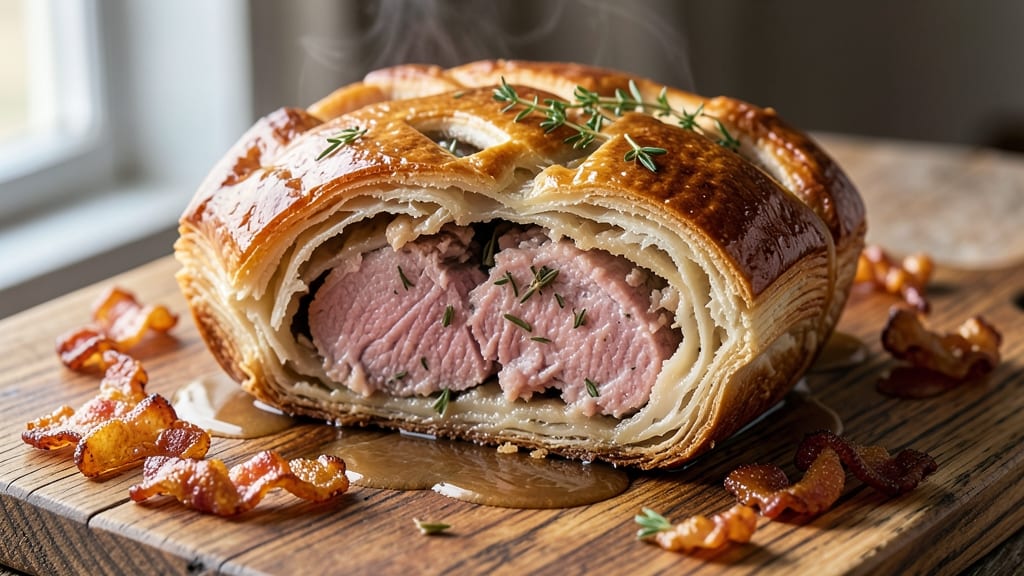
This roast pork pie recipe transforms humble ingredients into a showstopper that tastes like Sunday dinner every time. 💛 The secret lies in larding the pork with crispy fat layers and encasing it in golden, flaky pastry that holds the savory meat and rich gravy in perfect harmony.
I developed this recipe after years of perfecting whole-hog roasts at The Smoky Pig, where we process 2,000 pounds of pork weekly—this is the version I bring home to my family.
The foundation begins with a well-seasoned pork shoulder, carefully larded and roasted until tender enough to pull apart with two forks. While the meat rests, a homemade puff pastry (or high-quality store-bought) gets rolled out and lined with a lattice crust for that classic piehouse look.
The real magic happens when you pour that deep, peppery gravy over the top—it soaks into the pastry just enough to create a tender, flavorful bite in every slice.
By the time you serve this pie, your kitchen will smell like a Southern homecoming, and every forkful will deliver melt-in-your-mouth pork, crisp pastry edges, and gravy that clings to each bite.
The texture contrast—tender meat, flaky crust, and velvety gravy—makes this more than just a meal; it's an experience that rivals any restaurant version. Perfect for holidays, family gatherings, or when you want to impress without stressing.
This recipe accommodates both traditionalists and shortcut-seekers: you can make the pastry from scratch or use store-bought, and the pork can be prepped ahead while you focus on the assembly.
The result? A pie that looks impressive but comes together with methodical precision. Let's get to work—your table is about to become the talk of the town.
Ingredients for roast pork pie
Six ingredients for the pork, five for the pastry—simple enough for weeknights but impressive enough for holidays.
| Ingredient | Amount | Notes |
|---|---|---|
| Pork Shoulder (Boston Butt) 🐖 | 4 lb | Bone-in, well-marbled, larded with fat |
| Unsalted Butter 🧈 | ½ cup | Cold, sliced into strips for larding |
| All-Purpose Flour 🌾 | 1 cup | For dredging pork before larding |
| Kosher Salt 🧂 | 2 tbsp | Coarse grain preferred |
| Freshly Ground Black Pepper 🌶️ | 1 tbsp | Cracked, not powdered |
| Fresh Thyme Leaves 🌿 | ½ cup | Chopped, stems removed |
| Fresh Rosemary 🌿 | ¼ cup | Chopped, coarse texture |
| Garlic Cloves 🧄 | 6 cloves | Smashed, not minced |
| Puff Pastry 🥧 | 1 sheet | Homemade or high-quality store-bought |
| Heavy Cream 🥛 | 1 cup | Full-fat for gravy richness |
| Beef Broth 🍲 | 2 cups | Low-sodium, homemade preferred |
| Cornstarch 🌾 | 2 tbsp | For gravy thickening |
| Yellow Cornmeal 🌾 | ¼ cup | For pie crust topping |
| Egg 🥚 | 1 whole | Beaten for egg wash |
The pork shoulder is non-negotiable here—bone-in, well-marbled is key for that melt-in-your-mouth texture. I always grab mine from Whole Foods or Harris Teeter because they carry good-quality cuts. Look for good fat cap coverage, not too lean. The butter for larding? European-style if you can find it—it has lower water content, so it renders better. If you're larding by hand, use a meat needle or a skewer to poke holes and insert butter strips. No larding tool? A sharp knife and steady hand work too—just don't stab yourself. The herbs? Fresh is best, but if you're in a pinch, dried thyme and rosemary at half the amount will do.
No puff pastry on hand? Pillsbury refrigerated pie crust works in a pinch—just brush it with melted butter for extra flakiness. The cornmeal topping is optional but adds that classic piehouse crunch. For the gravy, low-sodium beef broth is a must—homemade is ideal, but Swanson's or Pacific Foods are solid store-bought options. Want to skip the cornstarch? A roux made with butter and flour works just as well. And if you're prepping ahead, the pork can be larded and seasoned a day in advance—just keep it uncovered in the fridge so it doesn't steam. The pastry can be rolled out and chilled too, saving you time on the big day.
This pie reheats beautifully—350°F for 20-25 minutes until the crust is golden and the meat is piping hot. Leftovers keep for 4-5 days in the fridge, but honestly, it's so good you won't have any. For make-ahead magic, assemble the pie completely (including gravy) and refrigerate overnight. Bring to room temp before baking—this helps the crust crisp up perfectly. Gravy can be reheated separately if needed, but it's best served straight from the pie. Freeze portions for up to 3 months—just thaw overnight in the fridge before reheating.
Why You'll Love This Recipe
- Foolproof Filling: The pork shoulder practically melts in your mouth—no fancy cuts, no guesswork. Just salt, pepper, and time (the good kind) to turn that tough cut into something so tender, you’ll forget it started as something you had to plan ahead for.
- Buttery Crisp Magic: That golden crust? All it takes is butter, flour, and a little patience. Slather the pork with softened butter, dust with flour, and roast until the edges are crackling. Honestly, the first time I did this, I nearly licked the pan clean.
- Weeknight Wonder: Between us, this is my go-to when I’m too tired to think. Toss the pork in the oven, make a quick side, and boom—dinner’s done. The leftovers? Even better the next day, sliced thin for sandwiches or reheated with a splash of broth.
- Budget Feast: A whole pork shoulder feeds a crowd for less than takeout. I’ll be real: my grocery bill drops when I make this, and my family doesn’t even notice I’m secretly saving money. The flour crust adds zero cost but makes it feel like a special meal.
Step-by-step instructions for roast pork pie
Here's how to create a showstopping roast pork pie with tender meat and golden pastry.
👨🍳 Step 1: Prepare and Lard the Pork Shoulder
Start by trimming any excess fat from the 4 lb pork shoulder, leaving about ¼-inch fat cap. Pat it completely dry with paper towels—this helps the seasoning stick and creates crispy edges later. Place the pork on a cutting board and make small cuts (about 1-inch deep) all over the surface.
Take the 0.5 cup cold unsalted butter and cut it into thin strips. Gently insert these butter strips into the cuts you made, pressing them in firmly. This larding technique ensures every bite stays juicy. Sprinkle the pork evenly with 2 tbsp kosher salt and 1 tbsp freshly ground black pepper, pressing the seasoning into the meat. Let it sit at room temperature for 30 minutes before cooking.
🥘 Step 2: Sear and Build the Pie Filling
Preheat your oven to 325°F. In a large oven-safe Dutch oven, heat 2 tbsp of the remaining butter over medium-high heat. Sear the pork shoulder on all sides until deeply browned, about 5 minutes per side. Remove the pork and set it aside.
In the same Dutch oven, add the 6 smashed garlic cloves, 0.5 cup chopped fresh thyme, and 0.25 cup chopped fresh rosemary. Cook for 1 minute until fragrant. Pour in the 2 cups beef broth, scraping up any browned bits from the bottom of the pot. Return the pork to the Dutch oven, fat-side up, and cover with foil. Transfer to the preheated oven.
⏰ Step 3: Slow-Roast the Pork
Roast the pork for 3 to 3½ hours, or until the internal temperature reaches 195°F. This low-and-slow cooking method breaks down the connective tissue, making the pork fork-tender. About 30 minutes before the pork is done, remove it from the oven and let it rest while you prepare the pastry.
While the pork rests, skim the fat from the cooking liquid and strain it into a saucepan. Stir in the 1 cup heavy cream and bring to a gentle simmer. Mix the 2 tbsp cornstarch with 2 tablespoons of cold water, then whisk it into the sauce until thickened. Season to taste with additional salt and pepper if needed. Keep the gravy warm.
🍳 Step 4: Assemble the Pie Crust
Roll out the 1 sheet puff pastry on a lightly floured surface to about ⅛-inch thickness. Cut a circle slightly larger than your Dutch oven's diameter. Brush the pastry with the beaten 1 whole egg, then sprinkle evenly with the 0.25 cup yellow cornmeal. This creates a beautiful golden crust.
Carefully place the pastry over the Dutch oven, pressing gently to seal. Trim any excess pastry, leaving a ½-inch border. Use a fork to crimp the edges, creating a decorative pattern. Brush the top with more egg wash for extra shine. Return the pie to the oven and bake for 20 to 25 minutes, until the pastry is golden brown and puffed.
🔥 Step 5: Serve with Gravy and Crispy Pastry
Remove the pie from the oven and let it rest for 10 minutes before carefully transferring to a serving platter. Using two forks, lift the pastry off the Dutch oven and slide it onto the platter. The pork should be fork-tender and juicy, with a beautiful golden crust.
Slice the pork into ½-inch thick pieces and serve with the warm gravy ladled over the top. The combination of tender meat, rich gravy, and flaky pastry makes this roast pork pie a true centerpiece for any special occasion. Enjoy immediately while the pastry is still crisp and warm!
Pro Tips For Making Roast Pork Pie
- USE A THERMOMETER: I learned this the hard way—pork shoulder can sit at 140°F for hours and still look undercooked. Pull it at 195–203°F internal temp (probe the thickest part, away from bone), where collagen turns to gelatin for that melt-in-your-mouth texture. No guessing, no dry meat.
- SALT THE MEAT TWICE: First, coat the Boston butt with 1 tablespoon kosher salt per pound at least 12 hours before roasting (yes, even if you’re impatient like me). Then, redistribute and add another ½ teaspoon per pound right before searing—this keeps the crust crisp while the center stays juicy. Trust the process.
- SKIP THE CROWDED PAN: Stuffing a roasting pan with too much pork? Bad idea. Leave at least 1 inch of space around the meat so heat circulates—no steam bath, no soggy crust. If your pie is big, roast it on a rack over a sheet tray instead. Your crust will thank you.
- REST IT UNDER FOIL: After roasting, tent the pork pie with foil and let it rest 5–10 minutes before slicing. This traps heat, letting juices redistribute instead of pooling on your cutting board. I know, I know—you want to eat it now—but wait. It’s worth it.
Troubleshooting your roast pork pie
Pork Too Dry?
If your pork turns out dry, it likely didn't rest long enough after roasting. Let it rest for at least 30 minutes (I usually do 45 minutes) before slicing—this allows juices to redistribute.
Overcooking is another common culprit: pull the pork when it reaches 195°F internal temperature, not higher. For extra moisture, try adding ½ cup apple cider> to the cooking liquid during the last hour of roasting.
Pastry Not Puffing?
Cold pastry is key for proper puffing. Chill the rolled-out puff pastry for 20 minutes> before placing it on the pie. If using store-bought pastry, avoid overworking it when rolling—handle gently to preserve the flaky layers.
For extra rise, brush the pastry with an egg wash> (1 egg + 1 tbsp water) before baking, and bake at 425°F> for the first 10 minutes> to encourage puffing before reducing to 375°F> to finish.
Gravy Too Thin?
Thin gravy usually means insufficient thickening. For a quick fix, whisk 1 tbsp cornstarch> mixed with 1 tbsp cold water> into the gravy and simmer for 2-3 minutes> until thickened.
If the gravy is watery from the start, reduce the beef broth by ½ cup> next time. For deeper flavor, deglaze the Dutch oven with 2 tbsp red wine> after removing the pork instead of just broth.
Crust Too Soggy?
Soggy crusts happen when steam escapes or the pie isn't properly sealed. Vent the pastry by cutting a few small slits before baking, but don't overdo it. For extra protection, sprinkle ¼ cup cornmeal> on the bottom crust before adding the pork (if using a two-crust pie).
If your pastry is still soggy, try blind-baking it for 10 minutes> at 375°F> with pie weights or dried beans before adding filling.
Uneven Cooking?
Uneven cooking often means the pork wasn't placed properly in the Dutch oven. Make sure the fat side is up during roasting—this insulates the meat and promotes even cooking. If your oven has hot spots, rotate the Dutch oven halfway through cooking>.
For large pork shoulders, consider using a meat thermometer with multiple probes to monitor temperature in different areas. If the edges cook faster, tent loosely with foil during the last 30 minutes> of roasting.
Gravy Too Salty?
Salty gravy can usually be fixed by adding a pinch of cornstarch slurry> (1 tsp cornstarch + 1 tsp water) to absorb excess saltiness. For a more dramatic fix, stir in 1 tbsp cold milk> or 1 tsp lemon juice> to balance flavors.
To prevent this in the first place, taste your seasoned pork before roasting—adjust salt if needed. Remember, it's easier to add salt than remove it!
Nutrition facts
Frequently asked questions
Can I use a different cut of pork instead of shoulder?
Pork shoulder is ideal for its fat content and flavor, but you can substitute with pork butt (another name for shoulder) or even pork loin if you prefer leaner meat. For loin, reduce cooking time to 2-2.5 hours at 325°F and add ½ cup apple juice to the pan to prevent drying. Avoid pork chops—they cook too quickly and won't hold up in a pie.
How do I make this pie ahead of time?
Assemble the pie completely (including gravy) and refrigerate overnight. When ready to bake, let it sit at room temperature for 1 hour before baking at 350°F for 25-30 minutes to restore crispness. For make-ahead gravy, prepare it fresh before serving—it reheats beautifully but loses some thickness when refrigerated.
What's the best way to reheat leftovers?
Slice the pie and reheat portions in a 350°F oven for 15-20 minutes until piping hot. For gravy, warm it separately on the stovetop over medium-low heat—never microwave, as it makes the pastry rubbery. To revive crispiness, broil for 2-3 minutes at the end.
Can I make this pie without puff pastry?
Use a double pie crust (top and bottom) with a lattice design for that classic look. Brush both crusts with egg wash and sprinkle with cornmeal before baking. For extra flakiness, add 1 tbsp melted butter to the flour when making the crust. Bake at 375°F for 50-60 minutes until golden.
What sides pair best with this pork pie?
Classic choices include mashed potatoes with crispy skin, roasted root vegetables (carrots, parsnips), or a simple green salad with apple cider vinaigrette. For a Southern touch, serve with cornbread or buttermilk biscuits to soak up the gravy. Avoid heavy sides—the pie is rich enough to stand alone!