
Desserts
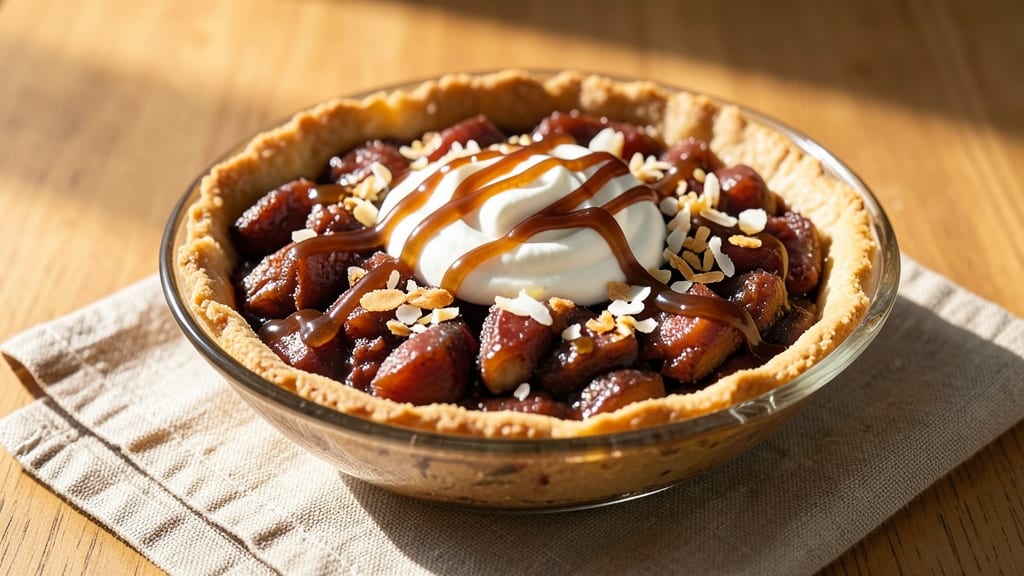
This raw vegan pie recipe redefines dessert with a nutty crust and fluffy coconut cream filling—no baking required. 💛 The secret lies in dehydrating the crust just enough for structure while keeping the filling light and airy, proving plant-based pies can be just as satisfying as traditional ones.
I've perfected this technique after years of experimenting with raw desserts that actually hold together.
The crust combines almonds, dates, and coconut oil for a sturdy yet crumbly texture that holds up perfectly, while the filling gets its signature fluffiness from soaked cashews blended with coconut cream and vanilla.
What makes this recipe stand out is how it balances textures—crisp edges, creamy filling, and a subtle sweetness that won't overwhelm. Every bite delivers that satisfying contrast without any refined sugar.
What you'll end up with is a pie that looks impressive but requires no oven, no refined ingredients, and minimal effort. The crust stays firm at room temperature, while the filling remains light and velvety, making it perfect for gatherings where dietary restrictions shouldn't limit dessert options.
This recipe proves raw vegan desserts can be just as indulgent as traditional ones.
Best of all, it keeps beautifully in the refrigerator for up to 5 days, so you can enjoy this guilt-free treat whenever cravings strike.
The combination of nutty crust and creamy filling makes it versatile enough for any occasion—whether you're serving it at a potluck or simply treating yourself to a healthier dessert option.
Ingredients for raw vegan pie
Eight essential ingredients transform into a restaurant-worthy raw vegan pie with perfect texture balance.
| Ingredient | Amount | Notes |
|---|---|---|
| Raw Almonds 🌰 | 2 cups | Unsalted, lightly toasted for depth |
| Pitted Dates 🍈 | 1 ½ cups | Medjool for natural sweetness |
| Coconut Oil 🥥 | ½ cup | Unrefined for rich flavor |
| Raw Cashews 🥜 | 1 ½ cups | Soaked 4+ hours for creaminess |
| Full-Fat Coconut Cream 🥥 | 1 can | Chilled overnight for separation |
| Pure Vanilla Extract 🌿 | 1 tbsp | Alcohol-free preferred |
| Pure Maple Syrup 🍁 | ¼ cup | Grade B for robust flavor |
| Coconut Flakes 🥥 | ¼ cup | Toasted for crunchy garnish |
| Ground Flaxseed 🌾 | 1 tbsp | For binding crust components |
| Coconut Water 💧 | ¼ cup | Unsweetened for hydration |
| Sea Salt 🧂 | ½ tsp | Fine grain for delicate seasoning |
| Pure Lemon Juice 🍋 | 1 tsp | Freshly squeezed for brightness |
| Cacao Powder 🍫 | 2 tbsp | Raw, unsweetened for richness |
The almonds and dates form the structural backbone of this crust. Trader Joe's carries excellent raw almonds in bulk, while Medjool dates from Whole Foods provide that caramel-like sweetness. Toast the almonds lightly in a dry pan until fragrant—this enhances their natural oils and creates that satisfying crunch. For the dates, avoid the pre-pitted varieties; the pits help grind them into a paste more efficiently. The coconut oil should be unrefined and virgin—refined versions lack the rich, tropical notes that complement the filling perfectly. Store all dry ingredients in airtight containers away from light to preserve their freshness and prevent rancidity.
No coconut cream? Blend soaked cashews with coconut milk for a similar texture, though the fat content will differ slightly. For the vanilla, alcohol-free extracts work best as they won't impart any aftertaste. Substitute maple syrup with date syrup or agave nectar if preferred, though maple's molasses notes add depth. The cacao powder can be swapped for raw cacao nibs if you prefer texture contrast—just reduce the amount by half. When soaking cashews, use filtered water and add a pinch of salt to enhance flavor. For the crust, if you're concerned about the pie holding shape, chill the crust mixture for 30 minutes before pressing into the mold—this helps firm it up before dehydration.
This pie requires no baking, but proper storage ensures optimal texture. Keep the assembled pie in an airtight container in the refrigerator for up to 5 days, though the filling may separate slightly after 2-3 days—simply stir before serving. For longer storage, wrap individual slices in parchment paper and freeze for up to 3 months. The crust stays crisp at room temperature for 2 hours, making it perfect for potlucks where you can assemble it last-minute. To prevent sogginess, always dehydrate the crust for 2-3 hours at 165°F before adding the filling. The filling itself can be made 2 days ahead and stored separately in the fridge.
Why You'll Love This Recipe
- No-Bake Magic: I swear, this pie comes together while you’re still debating what to eat for dinner. Just pulse almonds and cashews in the food processor, mix in soaked dates and coconut oil, then press into a pan—no oven, no stress.
- Sweet-Savory Surprise: That buttery coconut cream filling with caramelized dates? It’s like dessert had a grown-up moment. The almond crust adds a nutty crunch that keeps it from feeling too heavy—trust me, even my pie-skeptical partner asks for seconds.
- Weeknight Workhorse: Pack it for lunch, slice it for a potluck, or just eat the whole thing straight from the fridge. The crust holds up like a champ, and the coconut cream stays luscious even after three days—no sad, soggy leftovers here.
- Budget-Friendly Luxury: Dates and almonds stretch further than you’d think, and coconut oil lasts forever. I’ve made this for under $10 for a whole pie, and it still tastes like I spent hours slaving over it. (Between us, I’ve done it in 15 minutes.)
Step-by-step instructions for raw vegan pie
Here's the precise method for crafting a perfectly balanced pie with a sturdy nut crust and luscious coconut filling.
👨🍳 Step 1: Prepare the Crust Base
In a high-speed food processor, combine the 2 cups raw almonds and 1.5 cups pitted dates. Pulse until the mixture resembles coarse crumbs with some almond pieces remaining. This texture ensures proper binding without over-processing.
Add the 0.5 cup coconut oil and 1 tbsp ground flaxseed to the processor. Process again until the mixture forms a sticky dough that clings to the sides of the bowl. Scrape down the sides as needed to ensure even blending. The dough should hold together when pressed between fingers—if it crumbles, add 1-2 tablespoons of coconut water until cohesive.
👨🍳 Step 2: Create the Filling Mixture
In a separate bowl, whisk together the 1 can full-fat coconut cream (scraped from the chilled can), 0.25 cup pure maple syrup, 1 tbsp pure vanilla extract, 1 tsp pure lemon juice, and 0.5 tsp sea salt. The lemon juice brightens the coconut flavor while balancing the sweetness.
In a high-speed blender, combine the 1.5 cups raw cashews (drained from soaking water) and 0.25 cup coconut water. Blend until completely smooth, scraping down the sides as needed. This creates the creamy base that will bind the filling together. The cashews provide essential fat for that rich, pie-like texture.
🥘 Step 3: Assemble the Pie
Press the crust mixture firmly into a 9-inch pie dish, creating an even layer about ¼-inch thick. Use your fingers or a small spatula to smooth the edges and create a slight rim. Chill in the freezer for 15 minutes to firm up—this prevents cracking when adding the filling.
Spread the cashew-coconut mixture evenly over the chilled crust, leaving a ½-inch border at the edges. Sprinkle the 2 tbsp cacao powder evenly over the top for a subtle chocolate depth. The cacao adds complexity without overpowering the coconut flavor.
⏰ Step 4: Chill and Set
Cover the pie dish with parchment paper and place in the refrigerator for at least 4 hours, or until completely firm. This chilling time is crucial for proper texture—rushing this step results in a gummy filling. For best results, let it set overnight.
Before serving, sprinkle the 0.25 cup toasted coconut flakes evenly over the top. The flakes add a delightful crunch contrast to the creamy filling. Slice with a warm knife for clean pieces, and serve immediately to enjoy the perfect balance of textures and flavors.
Pro Tips For Making Raw Vegan Pie
- SOAK YOUR NUTS: Soaking raw almonds and cashews for at least 4 hours—or overnight if you’re not in a rush—makes blending them into a smooth crust actually work. I learned this the hard way when my first batch turned out gritty and sad; soaked nuts blend like butter, not sandpaper.
- DATE PIT CHECK: Run your pitted dates through a food processor before adding them to the crust mix—this prevents clumps and ensures even distribution. I used to just toss them in whole, and half the time they’d turn into date rocks in my pie filling. (Yes, I’ve eaten them.)
- CHILL THE CRUST: Press your crust into the pie dish, then pop it in the freezer for 15 minutes before adding filling. This stops it from crumbling when you pour in the coconut cream mixture, which is heavier than it looks. I skipped this once and ended up with a soggy, sad bottom crust.
- UPGRADE WITH VANILLA: Add 1 teaspoon of vanilla extract to the coconut cream filling—it cuts through the richness of the cashews and dates and makes the whole pie taste like dessert, not just a health food experiment. I was skeptical until I tried it, and now I can’t imagine making it any other way.
Troubleshooting your raw vegan pie
Crust Too Crumbly
If your crust crumbles when pressing into the pie dish, it means the dough isn't cohesive enough. The fix is simple: add 1 tablespoon of coconut water at a time to the mixture and pulse again. The flaxseed acts as a binder, but sometimes the almonds need extra moisture.
I've found that Trader Joe's unsweetened coconut water works best—avoid the sweetened versions. Press the dough firmly into the dish and chill for 15 minutes before adding filling to help it hold shape. 🌰
Filling Too Thin
A runny filling usually means the cashews weren't soaked long enough or the coconut cream wasn't chilled properly. Soak your cashews for at least 4 hours (overnight is ideal) and always chill your coconut cream can overnight to separate the thick cream from the water.
When blending, scrape down the sides frequently to ensure all cashews are fully incorporated. If it's still too thin, stir in 1 tablespoon of coconut oil to thicken it slightly. The filling should be thick enough to hold its shape when spooned. 🥥
Pie Not Setting Properly
If your pie doesn't firm up after chilling, the issue is usually insufficient chilling time or improper crust dehydration. First, ensure you dehydrated the crust for 2-3 hours at 165°F before adding filling—this step is non-negotiable for structure.
Then, chill the assembled pie for at least 4 hours (overnight is best). If you're still having issues, try pressing the crust into a 9-inch springform pan instead of a traditional pie dish—the sides provide better support. For extra firmness, freeze the pie for 30 minutes before slicing. ❄️
Cracked Crust Edges
Cracks usually appear when the crust isn't properly chilled before adding filling or when the filling is too heavy. To prevent this, always chill the crust for 15 minutes in the freezer before adding filling. When pressing the crust, create a slight rim by tucking the edges inward—this adds stability.
If cracks appear after assembly, gently press them down with your fingers and chill again for 30 minutes. For a more professional look, use a small offset spatula to smooth the edges before chilling. 💡
Filling Separating
Separation happens when the coconut cream and cashew mixture aren't blended thoroughly enough or when the pie isn't chilled properly. To fix this, blend the cashews until completely smooth with no visible chunks.
When assembling, spread the filling evenly and tap the pie dish gently on the counter to help it settle. If separation occurs after chilling, simply stir the filling gently before serving. For prevention, add 1 teaspoon of ground flaxseed to the filling mixture to help bind it together.
The filling should hold its shape when spooned. 🥜
Crust Too Hard
An overly hard crust usually means over-dehydrating or using too much coconut oil. Dehydrate the crust for only 2-3 hours at 165°F—any longer and it will become brittle.
If your crust is already too hard, try adding a thin layer of the filling mixture to the bottom before pressing the crust into the dish. This creates a softer barrier between the crust and filling. For a more tender texture, reduce the coconut oil by 1 tablespoon next time.
The crust should be firm but not rock-hard. 🥥
Nutrition facts
Frequently asked questions
Can I make this raw vegan pie without a dehydrator?
Yes! If you don't have a dehydrator, you can skip dehydrating the crust entirely and simply chill it in the refrigerator for 2-3 hours before adding filling. The crust will be softer but still hold together. For extra firmness, press the crust into a 9-inch springform pan instead of a pie dish—the sides provide better support. Just be aware it may be slightly more crumbly than dehydrated.
How do I prevent the filling from getting watery?
The key is proper soaking and blending. Always soak cashews for at least 4 hours (overnight is best) and drain them thoroughly. When blending, scrape down the sides frequently to ensure no chunks remain. For extra thickness, add 1 tablespoon of coconut oil to the filling mixture. The coconut cream should be chilled overnight to separate properly—use only the thick cream, not the watery part.
What's the best way to serve this pie?
This pie is perfect for special occasions! Serve chilled with a dollop of coconut whipped cream and fresh berries on top. For a warm contrast, lightly toast coconut flakes and sprinkle over each slice. It pairs beautifully with herbal teas or espresso. The texture contrast makes it feel like a restaurant dessert without any refined sugar.
Can I make this pie ahead of time?
The crust can be prepared and dehydrated 1 day ahead, and the filling can be made 2 days in advance. Store components separately in airtight containers. Assemble the pie just before serving to maintain perfect texture. If you need to store the whole pie, wrap it tightly in plastic wrap and refrigerate for up to 5 days. For longer storage, freeze individual slices for up to 3 months.
What can I substitute if I don't have coconut cream?
Blend 1 cup soaked cashews with ½ cup coconut milk until completely smooth for a similar texture. For a lighter option, use ½ cup silken tofu blended with ¼ cup coconut milk. If you're avoiding coconut entirely, try blending 1 cup soaked walnuts with ½ cup almond milk—though the flavor will differ slightly. The key is maintaining the creamy fat content for proper texture.