
Desserts
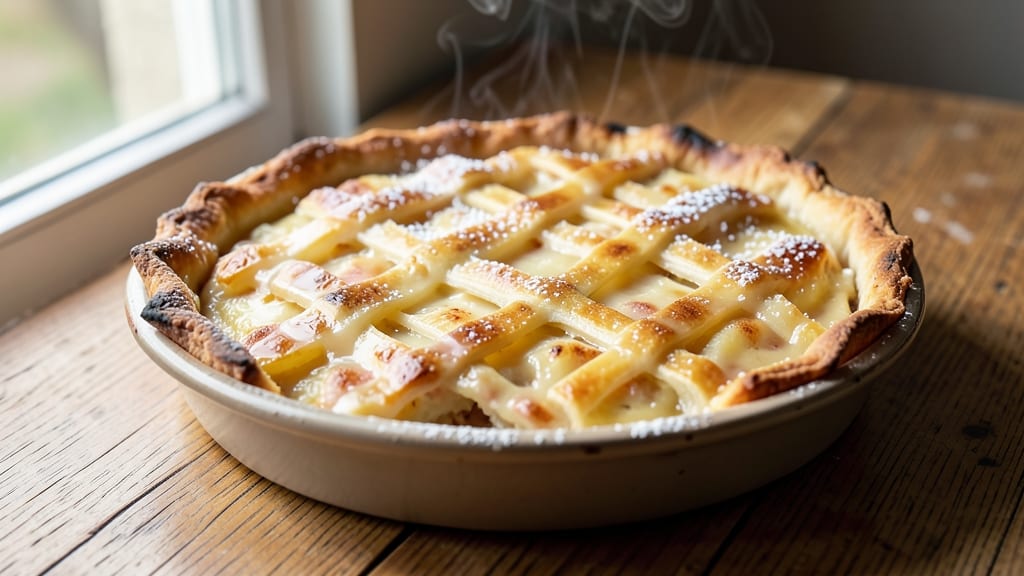
This potato custard pie recipe delivers the perfect balance of creamy, velvety filling and a golden, flaky crust that’s impossible to resist. The secret lies in blending mashed potatoes with a rich custard mixture, creating a texture that’s both smooth and satisfying—like a cross between pie and pudding.
I’ve perfected this recipe over years of baking, ensuring every slice is tender yet sturdy enough to hold its shape.
The crust is simple yet essential—either a classic pie dough or a buttery shortbread alternative—baked to a golden finish before the filling goes in.
The custard base, made with eggs, cream, and a touch of vanilla, binds the potatoes into a luscious, slightly sweet filling that’s neither too heavy nor too light.
Baking at the right temperature ensures a smooth top without cracking, while a final sprinkle of caramelized sugar adds a touch of elegance.
What makes this pie truly special is its versatility. Serve it warm with a dollop of whipped cream for a comforting dessert, or chill it for a refreshing twist. The filling stays creamy even after cooling, making it perfect for potlucks or holiday gatherings.
With just a few simple ingredients and careful technique, you’ll achieve a restaurant-quality dessert that’s sure to impress.
Ready to bake? The process is straightforward, but each step—from mixing the filling to baking the crust—plays a crucial role in the final result. Let’s get started on creating a pie that’s as beautiful as it is delicious.
Ingredients for potato custard pie
Simple ingredients blend into a velvety pie with golden crust perfection.
| Ingredient | Amount | Notes |
|---|---|---|
| Russet Potatoes 🥔 | 3 lb | Peeled and boiled to mash |
| Large Eggs 🥚 | 4 whole | Room temperature for blending |
| Heavy Cream 🥛 | 1 ½ cups | Full-fat for richness |
| Granulated Sugar 🍚 | ¾ cup | Adjust to taste |
| Unsalted Butter 🧈 | ½ cup | Cold for crust |
| All-Purpose Flour 🌾 | 1 ½ cups | Plus 2 tbsp for dusting |
| Vanilla Extract 🍯 | 1 tbsp | Pure vanilla preferred |
| Salt 🧂 | ½ tsp | Kosher or sea salt |
| Ground Cinnamon 🌿 | ½ tsp | Optional for warmth |
| Turbinado Sugar 🍚 | ¼ cup | For caramelized topping |
| Ice Water 💧 | ½ cup | For pie dough |
The Russet potatoes are non-negotiable—their high starch content creates that signature creamy texture. Buy fresh potatoes (the heavier, the better) and avoid pre-cut bags from the salad section. For the crust, European-style butter like Plugrá or Land O’Lakes makes all the difference in flakiness. The vanilla extract should be pure—Nestlé or McCormick are reliable brands. If you're short on time, instant mashed potatoes (like Idahoan) work in a pinch, but fresh is always superior. The cinnamon adds warmth without overpowering, but skip it if you prefer a neutral flavor profile.
No heavy cream? Half-and-half with an extra tablespoon of butter works in a bind, though the texture won’t be quite as rich. For the sugar, brown sugar at a 1:1 ratio gives a deeper caramel note. The turbinado sugar topping? Substitute coarse white sugar if unavailable—just sprinkle it on thicker. If your butter is salted, reduce the added salt by half. For the pie dough, chilling is crucial—wrap it tightly in plastic and refrigerate for at least 2 hours. This prevents shrinking and ensures those perfect flaky layers. The custard mixture should coat the back of a spoon but still be pourable—add a splash more cream if it’s too thick.
The filling keeps for 3-4 days in the fridge, but the crust is best made fresh. Wrap the dough tightly and store it for up to 2 days before rolling. Once baked, the pie reheats beautifully—350°F for 15 minutes restores its creamy texture. For make-ahead convenience, assemble the pie (unbaked) and refrigerate for up to 24 hours before baking. The caramelized sugar topping should be added right before baking—it burns quickly, so keep an eye on it. Store leftovers covered at room temperature for up to 2 days.
Why You'll Love This Recipe
- No Fuss Setup: I swear by this recipe because it’s about as hands-off as dessert gets. Boil the Russets, mash them with butter and cream, then stir in eggs and sugar—no fancy techniques, just a smooth, velvety filling that’s ready in under an hour. (Yes, even on a Tuesday night.)
- Creamy-Sweet Magic: That perfect balance of buttery potatoes and rich custard? It’s like a hug in pie form. The sugar caramelizes just enough to give it a subtle sweetness, while the eggs make it impossibly tender—no one will guess it’s basically mashed potatoes with a fancy twist.
- Weeknight Hero: Need a dessert that’s crowd-pleasing but won’t ruin your dinner plans? This pie reheats beautifully for breakfast or a midnight snack, and the ingredients are cheap enough to make twice if you’re feeding a houseful. (My kids beg for seconds, and they’re tough critics.)
- Budget-Friendly Luxury: Russets and eggs are pantry staples, and you’ll use less of the expensive stuff (like heavy cream) than in most custards. The result? A dessert that feels indulgent but costs less than takeout. Honestly, it’s the kind of recipe that makes me feel like a baking genius without breaking the bank.
Step-by-step instructions for potato custard pie
Here's how to achieve that signature velvety texture and perfect golden crust every time.
Prepare the Potato Filling
Peel the 3 lb Russet Potatoes and cut them into even chunks. Place them in a large pot and cover with cold water by 2 inches. Add 1 teaspoon of salt to the water. Bring to a boil over high heat, then reduce to medium-high and cook for 15-20 minutes until fork-tender. Drain thoroughly in a colander.
Return the potatoes to the pot and mash them until completely smooth using a potato masher or electric mixer. While still warm, gradually whisk in the 1.5 cups Heavy Cream, 0.75 cup Granulated Sugar, 4 whole Large Eggs, 1 tbsp Vanilla Extract, 0.5 tsp Salt, and 0.5 tsp Ground Cinnamon. The mixture should be thick but pourable. Cover and refrigerate for at least 2 hours to allow flavors to meld.
Make the Crust
In a large bowl, combine the 1.5 cups All-Purpose Flour and 0.5 cup Unsalted Butter, cut into small pieces. Using a pastry cutter or your fingers, work the butter into the flour until the mixture resembles coarse crumbs with pea-sized butter pieces remaining. Sprinkle in the 0.5 cup Ice Water, 1 tablespoon at a time, mixing gently with a fork until the dough just comes together.
Turn the dough out onto a lightly floured surface and knead lightly 4-5 times until smooth. Divide the dough in half and roll each piece into a 12-inch circle on parchment paper. Transfer one circle to a 9-inch pie dish, gently pressing it into the bottom and up the sides. Trim any excess dough hanging over the edge. Chill the crust in the freezer for 15 minutes while you prepare the topping.
Assemble and Bake the Pie
Preheat your oven to 375°F. Sprinkle the chilled crust evenly with 0.25 cup Turbinado Sugar. Pour the refrigerated potato filling into the crust, spreading it evenly. The filling should come about halfway up the sides of the crust. Brush the crust edges with cold water to help them seal.
Bake for 45-50 minutes until the crust is golden brown and the filling is set but still slightly jiggly in the center. If the crust begins to brown too quickly, tent loosely with aluminum foil. The pie is done when the center reaches 170°F on an instant-read thermometer. Remove from the oven and let cool completely on a wire rack before slicing.
Pro Tips For Making Potato Custard Pie
- Boil Potatoes Until Fork-Tender: I learned this the hard way—undercooked potatoes turn your custard into a gritty, unappetizing sludge. Test them by piercing with a fork; if it slides in like butter, they’re ready. Overboiling? No, you can’t salvage them later.
- Whisk Eggs Until Ribbon-Thin: Cold eggs and heavy cream don’t mix well, and lumps in your custard are a dealbreaker. Whisk the eggs and sugar first until the mixture holds a ribbon when the whisk is lifted—this ensures a silky texture. (Yes, even if you’re impatient like me.)
- Prevent Cracked Crust with Butter Trick: Skip the watery crust fix—melt 1 extra tablespoon of butter into the heavy cream before mixing. It creates a richer, more stable base that resists cracking when baking. (Your future self will thank you.)
- Bake Low and Slow for Even Cook: Crank the oven to 325°F and bake for 50-60 minutes—any hotter, and the top burns before the center sets. Tent with foil halfway if the edges brown too fast, but leave the last 10 minutes uncovered for a golden crust.
Regional styles of this recipe
New England Classic
In the Northeast, this pie is a beloved holiday staple, often served at Thanksgiving gatherings. The filling here leans slightly sweeter with ½ cup brown sugar instead of granulated, creating a deeper caramel flavor. Locals swear by adding 1 teaspoon lemon zest to the custard for brightness, balancing the richness.
I’ve found that baking this version at 350°F for 55 minutes yields a thicker, more custard-like center that’s perfect for scooping onto plates. 🍁
Southern Comfort Style
Down South, this pie gets a spiced twist with 1 teaspoon ground nutmeg and ½ teaspoon cayenne pepper in the filling, giving it a warm, slightly kicky profile.
The crust often includes ¼ cup cornmeal for extra crunch, and some cooks top it with a lattice pattern made from leftover dough strips.
For a true Southern touch, serve with a dollop of whipped cream infused with bourbon—just mix 1 tablespoon bourbon into the whipped cream before whipping. 🌶️
Midwest Homestyle
The Midwest version keeps things simple but hearty, often using instant mashed potatoes (like Idahoan) for convenience without sacrificing texture.
The custard gets a boost of 1 teaspoon ground ginger for warmth, and the crust is sometimes made with ½ cup crushed graham crackers mixed into the dough for extra depth.
This pie is a crowd-pleaser at potlucks, where it’s often sliced and served warm with a scoop of vanilla ice cream. The key here is a 40-minute bake at 375°F to ensure a jiggly, not runny, filling. 🥛
Pacific Northwest Twist
Out West, this pie incorporates local flavors like 1 tablespoon blackberry jam swirled into the filling before baking, adding a fruity contrast to the creamy base. The crust often includes 2 tablespoons hazelnut flour for a nutty undertone, and the topping might feature crushed freeze-dried raspberries for a tangy crunch.
For a modern touch, some bakers finish the pie with a drizzle of dark chocolate ganache after cooling. Bake this version at 360°F for 50 minutes to highlight the berry flavors without overpowering them. 🍇
Modern Fusion Adaptation
For a contemporary take, try adding ½ cup ricotta cheese to the filling for extra creaminess, along with a pinch of cardamom for an exotic twist.
The crust can be made with almond flour and coconut oil for a gluten-free option, and the topping might include toasted coconut flakes and sesame seeds for texture. This fusion version pairs beautifully with a scoop of matcha ice cream or a drizzle of honeycomb syrup.
Bake at 375°F for 45 minutes to achieve the perfect balance of flavors. ✨
Nutrition facts
Frequently asked questions
Can I make this potato custard pie ahead of time?
This pie actually tastes even better the next day. Assemble the pie (unbaked) and refrigerate it for up to 24 hours before baking. For a make-ahead dessert, bake it completely, then store it at room temperature for 2 days or refrigerate for up to 4 days. Reheat slices in a 350°F oven for 10-15 minutes to restore that creamy texture.
Why did my potato custard pie filling turn watery?
Overcooking the potatoes or using too much liquid in the custard are common culprits. Make sure your potatoes are fork-tender but not mushy, and drain them thoroughly. The custard mixture should coat the back of a spoon but still be pourable—if it's too thin, simmer it gently for 5 minutes to thicken. Also, ensure your oven isn't too hot during baking.
Can I use sweet potatoes instead of Russet potatoes?
Yes, but the texture will be slightly different. Sweet potatoes add natural sweetness and a deeper color, but they're denser and less starchy. For best results, reduce the sugar in the filling by ¼ cup and add ½ teaspoon cinnamon. Roast the sweet potatoes first for 30 minutes at 400°F to concentrate their flavor before mashing.
What's the best way to reheat potato custard pie?
Slice the pie and reheat individual portions in a 350°F oven for 10-15 minutes until warmed through. For microwave reheating, cover with a damp paper towel and heat in 20-second intervals on medium power, stirring between each interval. The microwave can make the filling rubbery if overdone, so oven reheating gives the best results.
Can I make this pie without a traditional crust?
Certainly! For a no-crust version, use a deep baking dish or ramekins. Spread the potato custard mixture directly into the dish and bake at 350°F for 30-35 minutes until set. Top with caramelized sugar before baking for that signature touch. Alternatively, use crushed graham crackers or digestive biscuits pressed into the bottom for texture.