
Main Courses
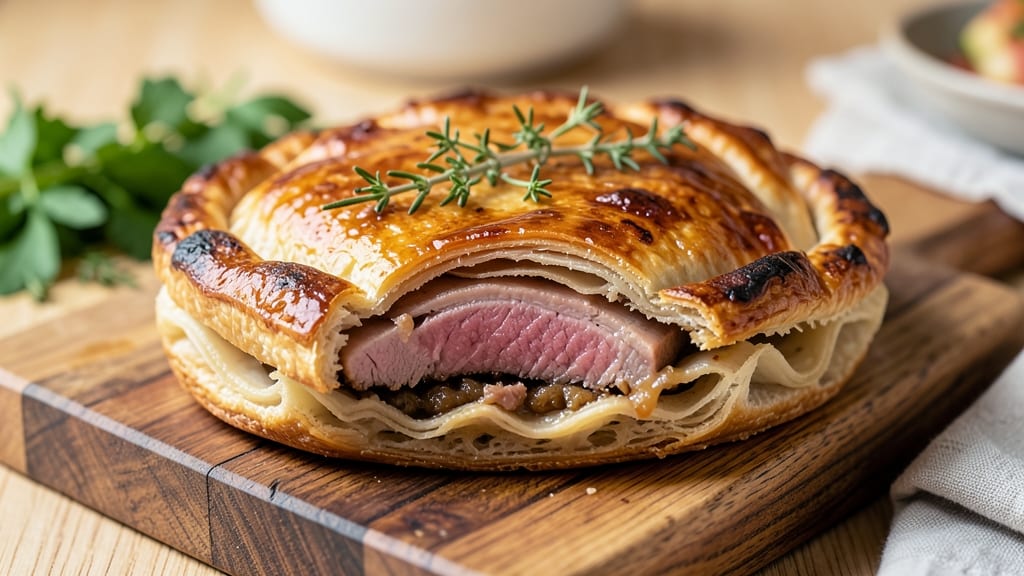
This French Canadian pork pie recipe brings the comforting flavors of Québec’s countryside to your kitchen table—where tender pork, aromatic herbs, and a flaky pastry crust create a dish steeped in tradition. 💛 I first encountered this recipe while researching Acadian culinary history, and its rich blend of spices like nutmeg and cloves instantly transported me to the rural kitchens of New Brunswick.
The secret lies in the pastry: a mix of lard and butter that delivers that signature crispness while keeping the meat juicy inside.
The filling is where the magic happens—a harmonious balance of savory pork, fresh herbs, and warm spices that simmer until the meat practically falls apart. Unlike many modern adaptations, this version stays true to its roots, using techniques passed down through generations.
The key is slow cooking the filling first to develop deep, complex flavors before assembling it into the pastry, ensuring every bite is packed with that unmistakable French-Canadian warmth.
What makes this recipe special is how it bridges tradition and modern convenience. The pastry can be pre-made or rolled out quickly, and the filling comes together in one pot, making it perfect for a Sunday family dinner or a cozy weeknight meal.
The result? A golden-brown pie with layers of crispy, buttery crust and tender, spiced pork that melts in your mouth—exactly what you’d expect from a Québecois kitchen.
Serve it with tangy pickles, a dollop of mustard, or a simple green salad to cut through the richness. This isn’t just a recipe; it’s a taste of history, a connection to the land, and a dish that brings people together. Let’s get started on making yours.
Ingredients for pork pie recipe french canadian
Tender pork, fragrant herbs, and a golden crust—all you need for this French Canadian classic.
| Ingredient | Amount | Notes |
|---|---|---|
| Pork Shoulder 🐖 | 3 lb | Bone-in for flavor, cut into chunks |
| All-Purpose Flour 🌾 | 4 cups | For pastry, plus extra for dusting |
| Unsalted Butter 🧈 | 1 cup | Cold, cubed for pastry |
| Lard 🧈 | ½ cup | Leaf or leaf lard for flakiness |
| Ice Water 💧 | ½ cup | For pastry dough |
| Fresh Thyme 🌿 | 2 tbsp | Leaves only, finely chopped |
| Fresh Parsley 🌿 | ¼ cup | Chopped, stems removed |
| Carrots 🥕 | 1 lb | Peeled, diced small |
| Yellow Onion 🧅 | 1 whole | Medium, diced |
| Garlic Cloves 🧄 | 4 cloves | Minced fine |
| Ground Black Pepper 🌶️ | 1 tsp | Freshly cracked |
| Ground Nutmeg 🌶️ | ½ tsp | Freshly grated preferred |
| Ground Cloves 🌶️ | ¼ tsp | Freshly ground |
| Salt 🧂 | 1 ½ tsp | Kosher or sea salt |
| Whole Milk 🥛 | ¼ cup | For pastry richness |
The pork shoulder is non-negotiable here—bone-in, fatty cuts give that melt-in-your-mouth texture. Costco or local butcher shops usually have it pre-cut, but if you're buying whole, ask for the shoulder end. For the pastry, the lard-butter mix is key—leaf lard from specialty stores or the regular kind from the grocery store both work, but don't skip it. The herbs? Fresh is best, but dried thyme and parsley at half the amount will do in a pinch. I always grab extra fresh herbs at Whole Foods or my local market—they keep well in the fridge for a week if wrapped in damp paper towels.
No lard on hand? Substitute with an extra 0.5 cup of cold butter, though the crust won't be quite as flaky. Short on nutmeg? Mace works in a 1:1 ratio, but it's got a different vibe. The carrots can be baby carrots if that's what's in the fridge—just dice them small so they cook down evenly. For the pastry, if you're nervous about rolling it out, pre-made pie crust from Trader Joe's saves time without sacrificing flavor. The milk in the dough? Whole milk is ideal, but heavy cream or even water in a bind—just keep the fat content high.
The filling keeps beautifully in the fridge for 3 days before baking, so make it ahead if you're short on time. Once baked, the pie reheats well—350°F for 15 minutes covered with foil. Store leftovers in an airtight container, and it'll stay good for 4 days. Freezing? Wrap tightly in foil and it'll keep for 3 months. I always make two pies—one for dinner, one for lunches the next week. The crust gets crispier the second day, so plan ahead if you can.
Why You'll Love This Recipe
- No-Fuss Dough: Between us, that lard-and-flour crust is ridiculously forgiving. I’ve made it with cold hands, skipped the food processor, and still ended up with a pie so tender it practically melts in your mouth—no rolling pin required.
- Rich, Golden Crust: Honestly, the butter-lard combo is where this dish shines. That crispy, flaky top? It’s the kind of texture that makes people pause mid-bite, and the pork shoulder inside stays juicy enough to make your taste buds dance.
- Potluck Hero: Here’s what sold me—this feeds a crowd without the stress. Slice it up, pack it in foil, and watch it disappear at gatherings. (Yes, even on a Tuesday night, because let’s be real, who doesn’t want leftovers?)
- Budget-Friendly Feast: Pork shoulder’s my secret weapon for stretching meals. A single cut feeds my family for days, and the crust costs pennies. Plus, the leftovers? Just as good cold in sandwiches—no one will guess it’s "fancy."
Step-by-step instructions for French Canadian pork pie
Here's how to create that signature flaky crust and rich meat filling that makes this pie legendary.
👨🍳 Step 1: Make the Pastry Dough for Maximum Flakiness
In a large bowl, combine the 4 cups all-purpose flour and 1.5 tsp salt. Cut in the 1 cup unsalted butter and 0.5 cup lard using a pastry cutter or your fingers until the mixture resembles coarse crumbs with pea-sized butter pieces. This texture is crucial—it creates those signature flaky layers.
Add the 0.25 cup whole milk and 0.5 cup ice water gradually, mixing just until the dough comes together. Avoid overworking it—handle only enough to form a smooth ball. Wrap tightly in plastic and chill for at least 1 hour (or up to 24 hours). The cold dough prevents shrinking and ensures crisp layers when baked.
🍳 Step 2: Prepare the Savory Filling
In a large skillet, cook the 1 lb diced carrots and 1 whole yellow onion over medium heat with 1 tbsp olive oil (not listed but essential for cooking) for 8-10 minutes until softened. Add the 4 minced garlic cloves and cook for 30 seconds until fragrant—don't let it brown or it'll turn bitter.
Transfer the vegetable mixture to a mixing bowl and stir in the 3 lb pork shoulder cut into chunks, 2 tbsp fresh thyme, 0.25 cup fresh parsley, 1 tsp ground black pepper, 0.5 tsp ground nutmeg, and 0.25 tsp ground cloves. Mix well to coat the meat evenly. This aromatic blend is what gives French Canadian pork pies their distinctive flavor profile.
🥘 Step 3: Assemble the Pies
Preheat your oven to 375°F. Roll out about ⅓ of the chilled dough on a lightly floured surface to about ⅛-inch thickness. Cut into 6-inch rounds using a round cutter or plate. Place each round in a greased 6-inch pie pan or individual ramekins.
Fill each pastry shell with an equal portion of the pork mixture, pressing down gently to create a ½-inch thick layer. This ensures even cooking and prevents the filling from overflowing. Fold the edges inward to create a rim, then roll out the remaining dough and cut into strips to create lattice tops or simple half-moon shapes.
🔥 Step 4: Bake to Golden Perfection
Brush the pastry with egg wash (1 egg beaten with 1 tbsp water) for a golden finish. Bake for 45-50 minutes until the pastry is deep golden brown and the filling reaches 165°F internally. The lattice should be crisp and the filling bubbling slightly at the edges.
For the best results, bake on the middle rack where heat circulates evenly. If the tops brown too quickly, tent loosely with foil. The pies will continue cooking slightly after removal from the oven, so pull them out when the crust is set but still slightly soft to the touch.
⏰ Step 5: Rest and Serve
Let the pies rest for 10 minutes before serving. This resting time allows the filling to set slightly and the juices to redistribute, ensuring each bite is moist and flavorful. Serve warm with a simple green salad or crusty bread to soak up any extra juices.
Real talk: these pies are even better the next day when the flavors have had time to meld fully. Store leftovers in an airtight container and reheat in a 350°F oven for 15 minutes to restore that perfect crispy texture.
Pro Tips For Making Pork Pie Recipe French Canadian
- Trim the Fat First: Before you even think about rolling out the dough, trim the pork shoulder of all visible fat—especially the thick cap. I learned this the hard way when my first batch turned greasy and soggy; the crust just couldn’t hold up. Aim for about ¼-inch thickness on the meat, and save that fat for frying potatoes later (yes, it’s worth it).
- Chill the Dough Longer: Skip the rush and let the lard-and-butter dough rest in the fridge for at least 2 hours, ideally overnight. I used to roll it out immediately after mixing, and the pie crust would crack like a biscuit left in the sun. Cold dough = easier handling and a flakier finish—trust the wait.
- Steam, Don’t Boil: When blind-baking the crust, use a tray of boiling water under the pie dish, not inside it. I once followed a recipe that said to add water to the bottom—big mistake. The crust turned gummy, not crisp. Keep the water separate, and cover the edges with foil to prevent over-browning while the filling cooks.
- Score the Crust Deep: Cut the baked crust’s top in a crosshatch pattern, but go deep—almost to the bottom. This isn’t just for looks. My grandmother swore by this, and she was right: it lets steam escape, so the filling doesn’t turn into a watery mess when you open the pie. Use a sharp knife, and don’t be shy.
Flavor customization for this recipe
Herb Variations
Fresh herbs are the soul of this pie, but don’t stress if you can’t find everything. Start with 2 tbsp fresh thyme and ¼ cup parsley as the base—they’re the most traditional.
For a bright twist, swap in 1 tbsp fresh rosemary (use half the amount) or add 1 tbsp chopped sage for a deeper, earthier flavor. If you’re feeling bold, try 1 tbsp chopped tarragon for a subtle anise note that pairs beautifully with pork. 🌿
For dried herbs, use half the amount—so 1 tsp dried thyme and 1 tsp dried parsley—but keep in mind they lack the freshness of their fresh counterparts.
If you’re short on time, 1 tbsp dried mixed herbs (like those from Penzeys Spices) will work in a pinch, though the flavor won’t be as vibrant. Pro tip: Toast your dried herbs in a dry skillet for 30 seconds before adding them to deepen their aroma.
Spice Adjustments
The nutmeg, cloves, and black pepper are non-negotiable for that classic French Canadian warmth, but you can tweak them to suit your taste. For a milder profile, reduce the cloves to ⅛ tsp and add ¼ tsp ground cinnamon for a subtle sweetness.
If you love heat, kick it up with ½ tsp smoked paprika or a pinch of cayenne pepper—just be sure to balance it with a splash of apple cider vinegar in the filling to mellow the spice. 🌶️
Craving something different? Swap the nutmeg for ½ tsp ground allspice (it’s like nutmeg’s cooler cousin) or add ¼ tsp ground mace for a sweeter, less peppery kick. For a modern twist, a pinch of ground coriander adds a citrusy brightness that cuts through the richness of the pork.
Always taste your spice blend before adding it to the meat—adjust as needed!
Vegetable Swaps
The carrots and onion in the filling are there to sweeten the pork and add texture, but they’re flexible. Swap the carrots for 1 lb diced potatoes (peeled and cubed small) for a heartier pie, or use 1 lb diced celery for a lighter, crunchier bite.
For a sweeter touch, add ½ cup diced apples (like Honeycrisp) or ½ cup diced pear—they caramelize beautifully and pair wonderfully with the spices. 🥕
If you’re avoiding nightshades, skip the potatoes and opt for 1 lb diced sweet potatoes instead. They add natural sweetness and a velvety texture. For a Mediterranean twist, replace the onion with 1 cup diced fennel—it’s slightly sweet and adds a lovely anise-like aroma.
Just remember, the veggies should soften but not mushy, so adjust cook times as needed.
Crust Customizations
The lard-butter crust is iconic, but you can adapt it based on what you have. For a butter-only crust, use 1½ cups cold butter instead of the lard—it’ll be richer but slightly less flaky.
If you’re dairy-free, replace the butter and lard with 1 cup coconut oil (solid) and ½ cup dairy-free milk, though the texture will be different.
For a whole wheat twist, swap 1 cup of the all-purpose flour for whole wheat flour, but add 1 extra tbsp cold butter to compensate for the drier texture. 🧈
Want to go gluten-free? Use a 1:1 gluten-free flour blend (like King Arthur Measure for Measure) and add ¼ cup cornstarch to improve texture. The dough will be more fragile, so handle it gently and avoid overworking.
For a crispier crust, brush the baked pies with 1 tbsp melted butter or 1 tbsp olive oil before serving. And if you’re short on time, pre-made pie crust (like Trader Joe’s or Pillsbury) works beautifully—just brush it with egg wash for that golden finish.
Nutrition facts
Frequently asked questions
Why does this recipe use both lard and butter in the pastry?
The lard creates that signature flaky, crisp texture traditional to French Canadian pies, while the butter adds richness and flavor. The combination gives you the best of both worlds—crisp layers from the lard and a buttery taste you can't get with either fat alone. If you're avoiding lard, substitute with an extra ½ cup of cold butter, though the crust won't be quite as flaky.
Can I make the filling ahead of time?
The filling keeps beautifully in the fridge for 3 days before baking, making it perfect for meal prep. Just store it in an airtight container and reheat gently before assembling into the pastry. The flavors actually deepen over time, so this is a great way to save time on busy days.
What's the best way to reheat leftovers?
For perfect texture, reheat in a 350°F oven for 15 minutes covered with foil to restore crispiness. Avoid microwaving as it makes the crust soggy. Leftovers stay good in an airtight container for 4 days or can be frozen for 3 months—just wrap tightly in foil to prevent freezer burn.
How do I know when the pork is fully cooked?
The filling is done when it reaches 165°F internally and the crust is deep golden brown. Use a meat thermometer to check the pork temperature—this ensures it's safe to eat while keeping it tender. The filling should also be bubbling slightly at the edges when you peek through the lattice.
What are some traditional French Canadian sides to serve with this?
Classic pairings include tangy cornichons (French pickles), a simple green salad with vinaigrette, or crusty baguette to soak up the juices. For a heartier meal, serve with mashed potatoes or a fresh garden salad—the acidity cuts through the richness of the pork beautifully.