
Desserts
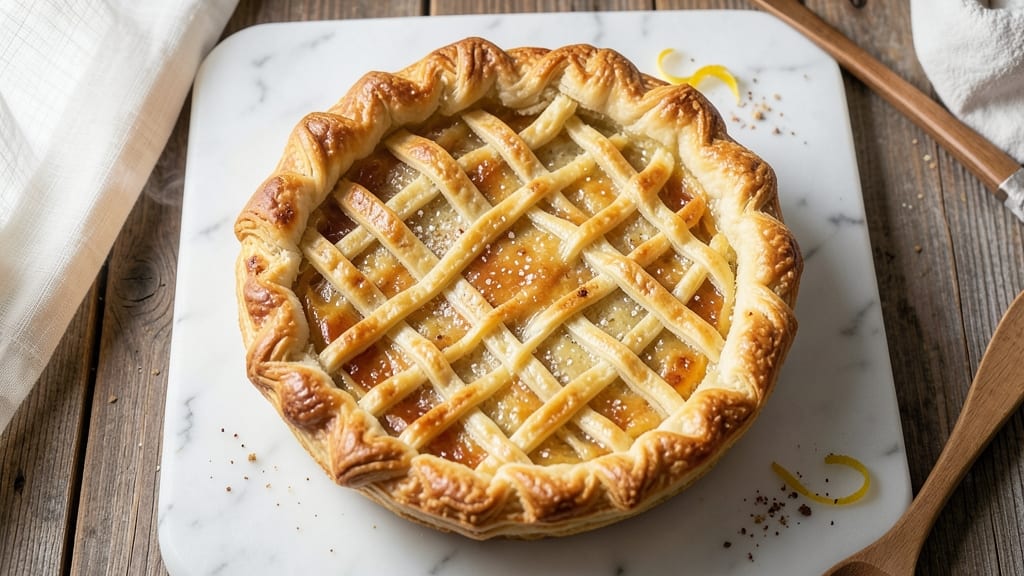
A 9-inch double crust pie crust that stays golden and sturdy for hours isn’t just possible—it’s the foundation of every showstopping pie. The secret lies in a precise balance of cold butter and proper rolling technique, ensuring flaky layers that hold up under filling and baking.
This recipe delivers a crisp, buttery crust with a tender crumb, whether you're making classic apple pie or a modern twist like salted caramel.
What sets this recipe apart is the attention to detail: chilling the dough at every step prevents shrinking, while the perfect 1:2:3 ratio of flour to butter to ice water creates that signature flakiness.
The dough is divided into two identical discs, rolled to an even thickness, and fitted seamlessly into a pie dish—no tricky crimping required. Blind baking is optional but recommended for custard or fruit pies that need extra support.
By the time you brush the top crust with egg wash and slide it into the oven, you’ll have a crust that’s golden brown and structurally perfect, holding its shape even after hours of baking.
The key to success? Patience—letting the dough rest and working quickly when rolling. This is the crust that makes all the difference in your pie game.
Use it for traditional fruit pies, savory pot pies, or even as a base for cheesecake. The technique scales easily, so you can make one or a dozen without stress. Let’s get started on mastering this essential baking skill.
Ingredients for 9 inch double crust pie crust
Golden layers start with these 10 essential ingredients—flour, butter, ice water, and patience.
| Ingredient | Amount | Notes |
|---|---|---|
| All-Purpose Flour 🌾 | 3 cups | Sifted for light texture |
| Unsalted Butter 🧈 | 1 ½ cups | Cold, cubed into 1/2-inch pieces |
| Ice Water 💧 | ½ cup | Chilled in freezer overnight |
| Diamond Crystal Kosher Salt 🧂 | ½ tsp | Fine grain preferred |
| Large Eggs 🥚 | 1 whole | For egg wash |
| Granulated Sugar 🍚 | 1 tbsp | For egg wash |
| White Cornstarch 🌾 | 1 tbsp | Optional for extra crispiness |
| 9-Inch Pie Dish 🍰 | 1 whole | Metal preferred for even baking |
| Pie Weights or Dried Beans 🥣 | 1 cup | For blind baking |
| Aluminum Foil 📄 | 1 sheet | For blind baking |
The butter is non-negotiable—European-style or Plugrá gives the best flakiness, but any cold, unsalted butter works. Grab it from Whole Foods or your local grocery store’s butter aisle, but never let it soften—cold cubes are key. The flour? King Arthur or Gold Medal are my go-tos for consistent results. If your kitchen’s warm, chill the mixing bowl first. And that ice water? Freeze it overnight—room temp won’t cut it. Pro tip: use a kitchen scale for precision, but cups work if you’re measuring carefully.
No butter? Crisco or vegetable shortening works in a pinch (though flakiness suffers), and Diamond Crystal salt is a must—Morton’s has anti-caking agents that ruin the texture. For the egg wash, add a pinch of salt to the sugar for balance. Blind baking without weights? Crushed nuts or rice work too, but pie weights are worth the investment. The cornstarch? Only add if you’re making a custard pie—otherwise, skip it. And if your dough cracks? Don’t panic—just patch it with extra flour.
This dough keeps for 3 days wrapped tightly in plastic in the fridge, or 6 months frozen between parchment sheets. For blind baking, preheat the oven to 375°F and bake the crust for 15-20 minutes before adding filling. Brush the top crust with egg wash right before baking—it sets fast. Leftovers? Roll into a log, freeze, and slice as needed. Trust me, this crust reheats like a dream—perfect for pot pies or galettes.
Why You'll Love This Recipe
- No-Fuss Technique: I swear by the cold butter method here—just cut that unsalted butter into flour until it resembles coarse crumbs, then add ice water one tablespoon at a time. No food processor needed, no overworking the dough. It’s the kind of recipe where the hardest part is measuring the kosher salt correctly (and even then, you’ll forgive yourself if you eyeball it).
- Crispy Edge Magic: That egg wash? Chef’s kiss. A single egg brushed on the top crust before baking gives you a golden, shatteringly crisp finish while keeping the inside tender. Honestly, I’ve tried store-bought crusts, but this one’s the only one that actually sings—flaky layers that melt in your mouth, not that sad, greasy mess.
- Fills Any Gap: Need a pie for Thanksgiving? A last-minute dessert for a dinner party? This crust works for everything—apple, pecan, even savory chicken pot pie. I keep two doughs in the fridge at all times: one for spontaneous cravings, one for when my kids beg for "pie night" (yes, even on a Tuesday).
- Pantry Staple Payoff: Flour, butter, salt, eggs—these are ingredients you already own. No specialty items, no last-minute grocery runs. And because the dough keeps for days in the fridge (or freezes perfectly), I’m always covered. Between us, I’ve pulled this recipe out for holidays, potlucks, and even a 3 a.m. sugar craving. It’s my secret weapon for looking like a baking pro without the fuss.
Step-by-step instructions for golden double crust pie layers
Here's how to create flaky, golden crusts that hold their shape perfectly—no shrinking or soggy bottoms here.
Mix Dry Ingredients and Cut in Cold Butter
In a large bowl, whisk together the 3 cups All-Purpose Flour and 0.5 tsp Diamond Crystal Kosher Salt until evenly combined. This ensures consistent flavor and texture throughout. Add the 1.5 cups Unsalted Butter, still cold and cubed into ½-inch pieces—this is critical for achieving flaky layers.
Using a pastry cutter or two forks, work the butter into the flour until the mixture resembles coarse crumbs with some pea-sized butter pieces remaining. Overworking will develop gluten, so stop as soon as you see mostly crumb-sized pieces. The butter should still be firm to the touch—if it starts to soften, chill the bowl for 10 minutes before proceeding.
Add Ice Water and Form the Dough
Gradually add the 0.5 cup Ice Water, 1 tablespoon at a time, mixing gently with a fork or your fingers until the dough just comes together. You want it to hold when pressed lightly but not be sticky. If it feels too dry, add 1 teaspoon more ice water; if too wet, sprinkle in 1 tablespoon more flour. The dough should be cool to the touch and form a loose ball when pressed.
Divide the dough into two equal portions—each will become one crust. Wrap each portion tightly in plastic wrap and refrigerate for at least 1 hour (up to 24 hours). This resting period relaxes the gluten and makes rolling out much easier. The longer it rests, the better the texture will be.
Roll Out and Fit the Crusts
On a lightly floured surface, roll one portion of dough into a 12-inch circle, about ⅛-inch thick. If the dough resists or cracks, let it rest for 10 more minutes before continuing. Gently transfer the rolled dough to the 9-inch pie dish, centering it so the edges hang evenly over the sides. Press the dough into the bottom and up the sides, trimming any excess that hangs over the edge with a sharp knife.
Repeat with the second portion of dough to create the top crust. If you're making a double-crust pie, fold the top crust under itself at the edges to create a decorative rim. Press the two crusts together along the rim to seal them tightly. This ensures no filling leaks out during baking and creates that beautiful, finished look.
Blind Bake the Bottom Crust (Optional for Pre-Baking)
If you're pre-baking the bottom crust (as you would for a quiche or to prevent a soggy bottom), line it with the 1 cup pie weights or dried beans and cover it with the 1 sheet Aluminum Foil, pressing the foil gently against the weights. Bake at 375°F for 15 minutes. Remove the weights and foil, then sprinkle the bottom crust with the 1 tablespoon White Cornstarch (if using) for extra crispiness. Return it to the oven for 5-7 minutes until lightly golden. This step is optional but highly recommended for pies with wet fillings.
For a filled pie, simply place the filling in the unbaked bottom crust, then roll out the top crust, place it over the filling, and seal the edges. Brush both crusts with a mixture of the 1 whole Large Egg beaten with 1 tablespoon Granulated Sugar and 1 tablespoon Water for a beautiful golden finish. Cut a few slits in the top crust to allow steam to escape during baking.
Bake to Golden Perfection
Bake the pie at 375°F for 45-55 minutes, or until the crust is deep golden brown and the filling is bubbly. If the edges brown too quickly, cover them loosely with a sheet of aluminum foil. The crust should be crisp and flaky, not pale or doughy. For even browning, rotate the pie halfway through baking.
Let the pie cool for at least 2 hours before slicing—this allows the filling to set and the crust to firm up. The result? A perfect, golden double crust that holds its shape and stays crisp for hours. Trust me, this method delivers the kind of crust that makes everyone ask for seconds.
Pro Tips For Making 9 Inch Double Crust Pie Crust
- Chill the Butter First: Cut that unsalted butter into ½-inch cubes and freeze it for 15 minutes before mixing—it’ll stay cold longer and prevent the dough from turning greasy. I learned this the hard way when my first batch ended up more like a butter cookie than a pie crust.
- Work Fast with Ice Water: Keep your ice water in a separate bowl far from the flour, and use a spray bottle to dampen the dough just enough—overmixing turns it tough. After burning three batches with sticky, unworkable dough, I finally realized precision matters more than speed.
- Press the Dough Evenly: Use a rolling pin to press the dough into the pie dish, then flip it and repeat—this guarantees an even thickness. My first attempt had a thick bottom and a paper-thin top, which led to a sad, uneven bake.
- Egg Wash for Shine: Brush the top crust with a beaten egg (1 yolk + 1 tablespoon water) before baking—it adds a golden finish and seals the edges. I skipped this once and ended up with a dull, dry top crust that looked like it was still raw inside.
Best sauces and condiments for 9 inch double crust pie crust
Classic Fruit Fillings
For a 9-inch double crust pie, I always reach for apple or berry fillings—they complement the buttery crust perfectly.
A classic apple pie filling uses 6 cups peeled, sliced apples (like Granny Smith or Honeycrisp), ¾ cup granulated sugar, 2 tbsp lemon juice, and 1 tbsp cornstarch to thicken. Simmer for 10 minutes until bubbly.
For berries, try a mix of 4 cups blackberries, raspberries, and blueberries with ½ cup sugar and 1 tbsp tapioca starch—just toss and simmer for 5 minutes to preserve their texture. 🍏
Creamy Custard Pairings
Custard pies like pumpkin or pecan need a pre-baked crust to avoid sogginess. For pumpkin custard, whisk together 1.5 cups pumpkin puree, 1 cup heavy cream, 3 eggs, ¾ cup sugar, and 1 tsp cinnamon.
Pour into the pre-baked crust and bake at 350°F for 45-50 minutes. For pecan, replace the pumpkin with 1 cup chopped pecans and ½ cup corn syrup, then follow the same custard method. The crust’s crispness contrasts beautifully with the silky filling. 🥧
Savory Options
Don’t limit this crust to sweets! A savory pot pie or quiche works wonders. For pot pie, fill with chicken, carrots, peas, and mushrooms in a creamy sauce, then top with the second crust. For quiche, use a rich egg custard with cheddar, spinach, or bacon.
The crust’s buttery flavor enhances savory dishes just as well as sweet ones. Pre-bake the bottom crust for extra support—trust me, it’s a game-changer for texture. 🥘
Glazes and Toppings
Elevate your pie with a simple glaze or crunchy topping. For a glossy finish, mix ½ cup powdered sugar with 1 tbsp lemon juice and brush over the baked top crust. For extra crunch, sprinkle ½ cup chopped nuts (pecans or walnuts) or crushed graham crackers before baking.
A sprinkle of flaky sea salt on top adds a sophisticated touch—perfect for caramel or fruit pies. 🌟
Dairy-Free Adaptations
For a vegan double crust, swap the butter for 1.5 cups vegan shortening or cold coconut oil. Use ice water and flaxseed meal (mixed with water) instead of eggs for the egg wash.
The crust will still be flaky and sturdy—just as impressive as the original. Pair it with coconut milk custard or berry compote for a plant-based dessert that still delivers. 🌱
Seasonal Variations
Adjust fillings by season: Summer calls for peach or mango, while fall is perfect for apple or sweet potato. In winter, chestnut or cranberry fillings shine. For spring, try rhubarb with a hint of ginger.
Each season brings its own flavors, but the crust remains the star—versatile enough to handle any filling while keeping its golden, flaky magic. ⏳
Nutrition facts
Frequently asked questions
Can I make this recipe with a stand mixer instead of by hand?
Use the dough hook attachment on low speed to mix the dry ingredients and butter until crumbly. Add ice water gradually while mixing until the dough just comes together. Just be careful not to overmix—stop as soon as the dough forms a loose ball. The stand mixer saves time but requires close attention to avoid developing too much gluten.
Why does my double crust pie sometimes shrink during baking?
Shrinking usually happens when the dough isn't chilled enough or gets too warm during handling. Always keep your dough refrigerated between steps, and avoid rolling it too thin. For extra insurance, place the pie dish on a baking sheet before baking—this prevents the bottom from puffing up and then collapsing. A properly chilled crust maintains its shape beautifully.
How do I prevent the top crust from puffing up in the oven?
To keep the top crust flat, weigh it down with a pie weight or fill it with dried beans before baking. If you're making an open-top pie, cut a few small slits in the top crust to allow steam to escape. For lattice designs, brush the edges with egg wash before assembling—this helps them crisp up nicely while maintaining their shape.
Can I use this crust for a deep-dish pie instead of a 9-inch?
Yes, but you'll need to adjust the proportions. For a deep-dish pie (about 10-11 inches), increase the dough to 3.5 cups flour and 1.75 cups butter, keeping the same ratio. Roll one piece for the bottom and one for the top, but you may need to trim excess dough to fit the deeper dish. The same chilling and handling techniques apply for best results.
What's the best way to store leftover pie crust?
Wrap the dough tightly in plastic wrap and refrigerate for up to 3 days, or freeze for 6 months between parchment sheets. For best texture, let it thaw completely in the fridge before rolling. You can also roll out the dough, wrap it around a rolling pin, and freeze it that way—just slice off what you need when ready to use.