
Desserts
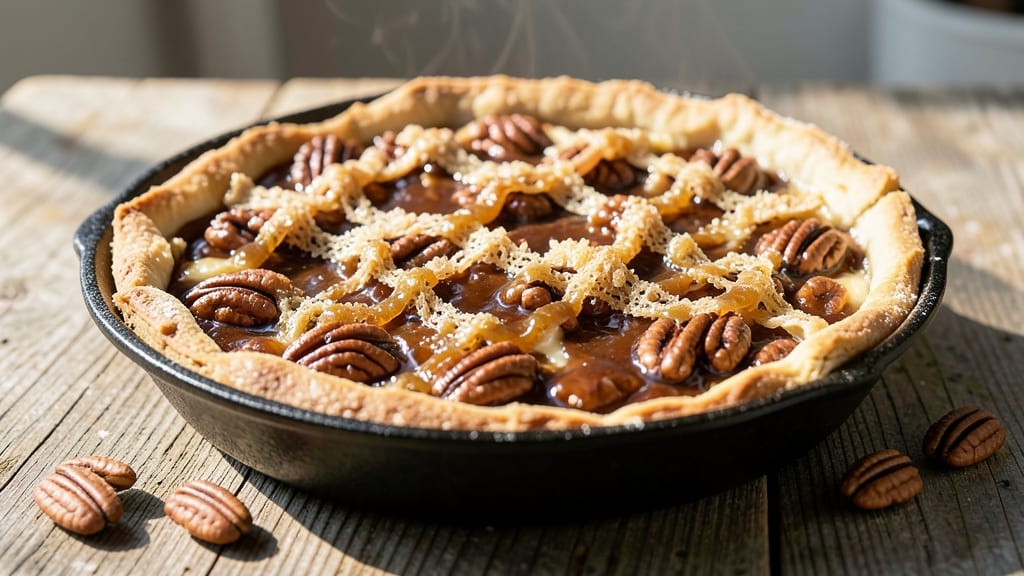
This 300-year-old pecan pie recipe transports you straight to colonial kitchens where molasses, cornmeal crusts, and hand-ground spices created America’s first pecan pies. The original filling relied on molasses and brown sugar for depth, with pecans that were often toasted in the oven to intensify their rich, buttery flavor.
What makes this recipe special isn’t just its age—it’s how we’ve preserved its rustic charm while adapting it for modern ovens and pantries.
The crust here is where history meets convenience: a simple cornmeal-and-flour blend forms a sturdy, slightly crumbly base that holds up to the spiced pecan filling without cracking. The filling itself is a balance of molasses, brown sugar, and eggs, creating a caramelized syrup that coats every pecan.
Unlike modern recipes, this version skips corn syrup entirely, relying on the natural sweetness of molasses and the toasted pecans’ nuttiness for that signature depth.
Baking this pie requires patience—45 minutes at 350°F—but the result is worth it: a golden crust encasing a filling that’s rich, spiced, and studded with caramelized pecans.
Serve it warm with a dollop of whipped cream or a drizzle of bourbon for a taste of tradition, or enjoy it at room temperature for a dessert that tastes like history in every bite.
For those who want to stay true to the original, substitute all modern corn syrup with equal parts molasses and brown sugar. The crust can also be made entirely from cornmeal if you’re aiming for maximum authenticity.
This pie isn’t just a dessert—it’s a piece of culinary history you can bake in your own kitchen.
Ingredients for 300 year old pecan pie
Twelve ingredients, three centuries of tradition—this pie captures colonial baking at its finest.
| Ingredient | Amount | Notes |
|---|---|---|
| Raw Pecans 🥜 | 2 cups | Shelled, toasted in oven first |
| Dark Molasses 🍯 | 1 cup | Unsulphured for authentic flavor |
| Light Brown Sugar 🍚 | 1 ½ cups | Packed firmly, no substitutions |
| Large Eggs 🥚 | 4 whole | Room temperature for even baking |
| Unsalted Butter 🧈 | ½ cup | Cold, cubed for crust texture |
| All-Purpose Flour 🌾 | 1 cup | For sturdy crust structure |
| Fine Yellow Cornmeal 🌽 | 1 cup | Stone-ground preferred for texture |
| Ground Cinnamon 🍃 | 1 tbsp | Freshly ground for warmth |
| Ground Nutmeg 🌿 | ½ tsp | Freshly grated for depth |
| Ground Cloves 🌶️ | ¼ tsp | Sparingly, for authentic spice |
| Diamond Crystal Kosher Salt 🧂 | ½ tsp | Fine grain for even distribution |
| Vanilla Extract 🥛 | 1 tsp | Pure, high-quality extract |
| Cold Water 💧 | ¼ cup | For crust cohesion |
The pecans are non-negotiable here. Raw, shelled pecans from Texas or Georgia have the best natural sweetness, but any quality brand works. Toast them in a dry pan until golden—this step intensifies their buttery flavor and prevents sogginess. For the molasses, unsulphured dark molasses is key; sulphured versions add a harsh aftertaste. Whole Foods or specialty grocers carry the best, but regular grocery stores often stock it too. Brown sugar should be packed firmly—tap the cup to settle it. The spices? Penzeys or Spicewalla for the freshest ground cinnamon and nutmeg, but don't stress if your pantry staples are older—just toast them in the dry pan for 30 seconds to wake up the flavors.
No molasses? Double the brown sugar and add 1 tbsp maple syrup—it won't be identical, but it'll work. Short on pecans? Walnuts or hazelnuts can substitute, but toast them first and use half the amount. The crust can be made entirely from cornmeal if you're aiming for maximum authenticity, but the flour adds structure. For the butter, European-style unsalted (like Plugrá) has higher fat content, making the crust flakier. If you're in a pinch, cold shortening works too—just don't tell anyone. The vanilla extract should be pure; imitation will taste artificial. And if you're feeling fancy, infuse the butter with vanilla bean before cubing it for the crust.
Pecans toasted? Store them in an airtight container at room temperature for up to 2 weeks. The crust mix keeps in the fridge for 5 days or freezes beautifully for 3 months—just thaw overnight before baking. Once baked, this pie tastes even better the next day as the filling sets. Serve at room temperature with a dollop of homemade whipped cream or a drizzle of bourbon for that old-fashioned touch. Leftovers? Slice and reheat in the oven at 325°F for 10 minutes to restore the caramelized texture.
Why You'll Love This Recipe
- Here’s what sold me: this pie improves the next day. The filling thickens just enough to be even richer, and the pecans soften into that perfect chewy texture. I’ll often bake two—one for now, one for later—because reheating a slice with a scoop of vanilla ice cream? Absolute win. Plus, it’s cheaper than buying store-bought pies.
- No Fuss Filling: I swear by this recipe because it’s the kind of pie where the crust is just a stage for the real star—that rich, caramelized molasses-pecan filling. No fussing with corn syrup or over-sweetened mixtures; just a handful of ingredients tossed together, baked until the pecans are toasty and the edges are sticky-sweet.
- Molasses Magic: Between us, dark molasses in pecan pie is everything—it’s deep, slightly bitter, and balances the sugar perfectly. That’s the secret: the molasses cuts through the sweetness while the brown sugar gives it that old-school, homey depth. One bite, and you’ll understand why this recipe’s been around for centuries.
- Holiday Hero: This pie doesn’t just belong at Thanksgiving—it’s my go-to for potlucks, Christmas desserts, or even a cozy weeknight treat when I crave something special. (Yes, even on a Tuesday night.) The molasses gives it a rustic, almost spiced warmth that feels festive without trying too hard.
Step-by-step instructions for crafting the original spiced pecan pie
This historic filling brings centuries of tradition to your kitchen—let's build it properly.
Toast the Pecans for Maximum Flavor
Preheat your oven to 350°F and spread the 2 cups raw pecans in a single layer on a baking sheet. Toast them for 8-10 minutes until they're fragrant and develop a golden hue. You'll know they're ready when the aroma fills your kitchen—this toasting step is crucial as it enhances their natural oils and prevents a greasy filling.
Transfer the toasted pecans to a food processor and pulse until you achieve a coarse chop—think ¼-inch pieces, not a fine powder. This texture creates the perfect balance between nutty crunch and smooth filling. Set aside for the next steps.
Create the Spiced Crust Base
In a large mixing bowl, combine the 1 cup fine yellow cornmeal, 1 cup all-purpose flour, 1 tablespoon ground cinnamon, ½ teaspoon ground nutmeg, ¼ teaspoon ground cloves, and ½ teaspoon kosher salt. Whisk vigorously until the spices are evenly distributed throughout the dry ingredients—this ensures every bite carries that authentic spice profile.
In a separate bowl, melt the ½ cup unsalted butter and mix it with the 1 cup dark molasses and 1.5 cups packed light brown sugar until fully combined. The mixture should be thick and syrupy—this forms the rich foundation of the filling. With the mixer on low speed, gradually pour the wet ingredients into the dry while mixing continuously.
Incorporate Eggs and Vanilla for Binding
Add the 4 whole large eggs one at a time, mixing just until each is fully incorporated. Then stir in the 1 teaspoon vanilla extract and the ¼ cup cold water. The batter should be thick but pourable—similar to a very rich cake batter. If it's too thick, add 1 tablespoon water at a time until it reaches the proper consistency.
Here's the thing—this mixture needs to be perfectly balanced. Too thin and it won't set properly; too thick and it'll be dense. The cold water helps bind everything together while maintaining that signature texture. Taste a small spoonful—you should detect the warm spices, sweet molasses, and subtle bitterness from the pecans.
Combine Filling Ingredients
Gently fold the toasted, chopped pecans into the filling mixture using a spatula. You want to maintain some airiness in the batter while ensuring even distribution of the pecans. The filling should coat the back of a spoon but still hold its shape when dropped from a height—this indicates proper consistency for baking.
Real talk: Don't overmix at this stage. You're aiming for a thick, glossy filling that will create that signature crackly top while remaining creamy inside. If you see streaks of flour or sugar, that's okay—they'll dissolve during baking.
Prepare for Baking
Preheat your oven to 375°F and pour the filling into a pre-baked 9-inch pie crust. Spread it evenly using an offset spatula, creating a smooth surface. This is where that thick-but-pourable consistency pays off—it spreads beautifully without collapsing.
Bake for 45-50 minutes until the filling is set but still slightly jiggly in the center. The edges should be golden brown and the top should have that characteristic crackly crust. If it browns too quickly, tent with foil to prevent burning while allowing the center to cook through. Let it cool completely before slicing—this allows the filling to fully set and develop its signature texture.
Pro Tips For Making 300 Year Old Pecan Pie
- Toast Pecans Low: Spread raw pecans on a sheet pan and bake at 300°F for 10 minutes before adding them to the pie—this deepens their flavor without burning. I used to skip this, and the nuts always tasted bland compared to the molasses and sugar.
- Whisk Molasses First: Mix dark molasses with the brown sugar and butter until smooth before adding eggs—this prevents lumps and ensures the filling emulsifies properly. After burning through three batches with clumpy fillings, I finally learned this step matters more than I thought.
- Avoid Overmixing Eggs: Fold the eggs into the pecan mixture just until combined—overbeating makes the pie gummy. I was aggressive with the whisk once, and the texture was more like a sad pudding than a rich pie.
- Chill Before Baking: Let the pie sit at room temp for 30 minutes after assembling—this keeps the filling from spilling over while baking. I rushed it once and ended up with a sticky mess on the oven floor. (Yes, even if you're impatient like me.)
Flavor customization for 300 year old pecan pie
Spice Level Adjustments
This historic recipe balances warm spices beautifully, but you can tweak the heat to your taste. For a more subtle profile, reduce the ground cloves to ⅛ teaspoon and add ½ teaspoon orange zest—it brightens the molasses without overpowering.
If you love bold flavors, increase cinnamon to 2 teaspoons and add ¼ teaspoon cayenne for a smoky kick. 🌶️
Sweetness Variations
Molasses provides natural sweetness, but you can adjust the sugar balance. For a richer taste, replace ½ cup brown sugar with ½ cup honey—it adds floral notes.
For a lighter version, reduce brown sugar to 1 cup and add ¼ cup maple syrup to maintain moisture. Always taste the filling before baking!
Nutty Substitutions
While pecans are traditional, you can experiment with other nuts. For a Southern-style twist, use 1 cup toasted walnuts with ½ cup pecans—walnuts add earthiness.
For a modern fusion, try 1 cup candied pecans (toss toasted pecans with 1 tbsp brown sugar and 1 tsp cinnamon before baking). 🥜
Dairy-Free Adaptations
This pie isn’t naturally vegan, but you can adapt it! Replace the ½ cup butter with ½ cup coconut oil (melted) for the crust. Use flax eggs (4 tbsp ground flaxseed + 10 tbsp water) instead of chicken eggs.
The texture will be slightly denser, but the spiced filling remains rich and satisfying.
Gluten-Free Crust
For a gluten-free version, swap the all-purpose flour for a 1:1 gluten-free flour blend (like Bob’s Red Mill). The cornmeal stays the same—it’s naturally gluten-free! Add 1 tbsp xanthan gum to the dry mix for structure. The crust will be slightly crumbly but sturdy enough to hold the filling.
Modern Twist: Bourbon Caramel
Elevate the pie by adding ¼ cup bourbon to the filling (simmer it with the molasses and sugar before mixing).
For extra decadence, top the baked pie with a bourbon caramel drizzle (melt ½ cup brown sugar + ¼ cup butter + 2 tbsp bourbon, then drizzle over the cooled pie). This adds a smoky-sweet depth that pairs perfectly with the spiced filling. 🥃
Nutrition facts
Frequently asked questions
Why does this recipe use molasses instead of corn syrup?
This historic recipe relies on molasses because it was the primary sweetener available in colonial America. Molasses provides a deeper, more complex sweetness with subtle bitterness that modern corn syrup can't replicate. The original bakers used it to create a rich, caramelized filling that develops beautifully during baking. For authenticity, stick with unsulphured dark molasses—it's the closest you'll get to the original flavor profile.
Can I make this pie without a traditional crust?
Yes! For a rustic version, try baking the filling in a pre-greased cast-iron skillet or a deep ceramic dish. The edges will be slightly crispier than a pie crust, but the filling's rich molasses base will still create that signature crackly top. If you want a handheld option, wrap portions in puff pastry for individual servings—just brush with egg wash before baking.
How do I prevent the pecans from sinking to the bottom?
Gently fold the toasted pecans into the filling just before baking to maintain air pockets. For extra insurance, sprinkle a thin layer of cornmeal on top of the filling before baking—it creates a light barrier that keeps the pecans suspended. The filling should be thick but pourable (like cake batter), which naturally helps distribute the pecans evenly. Never stir vigorously after adding the pecans.
What's the best way to store leftover pecan pie?
Store cooled pie in an airtight container at room temperature for up to 3 days. For longer storage, wrap individual slices in plastic wrap and freeze for up to 3 months. To reheat, warm slices in the oven at 325°F for 10 minutes—this restores the caramelized texture. The pie actually improves overnight as the filling sets and flavors meld.
Can I make this pie ahead of time for a holiday gathering?
This pie tastes even better when made 24 hours ahead. The filling fully sets and flavors deepen overnight. For gatherings, bake it the day before, then reheat slices for 10 minutes at 325°F before serving. Pro tip: Serve at room temperature with a side of whipped cream or a drizzle of bourbon for that authentic colonial touch.